
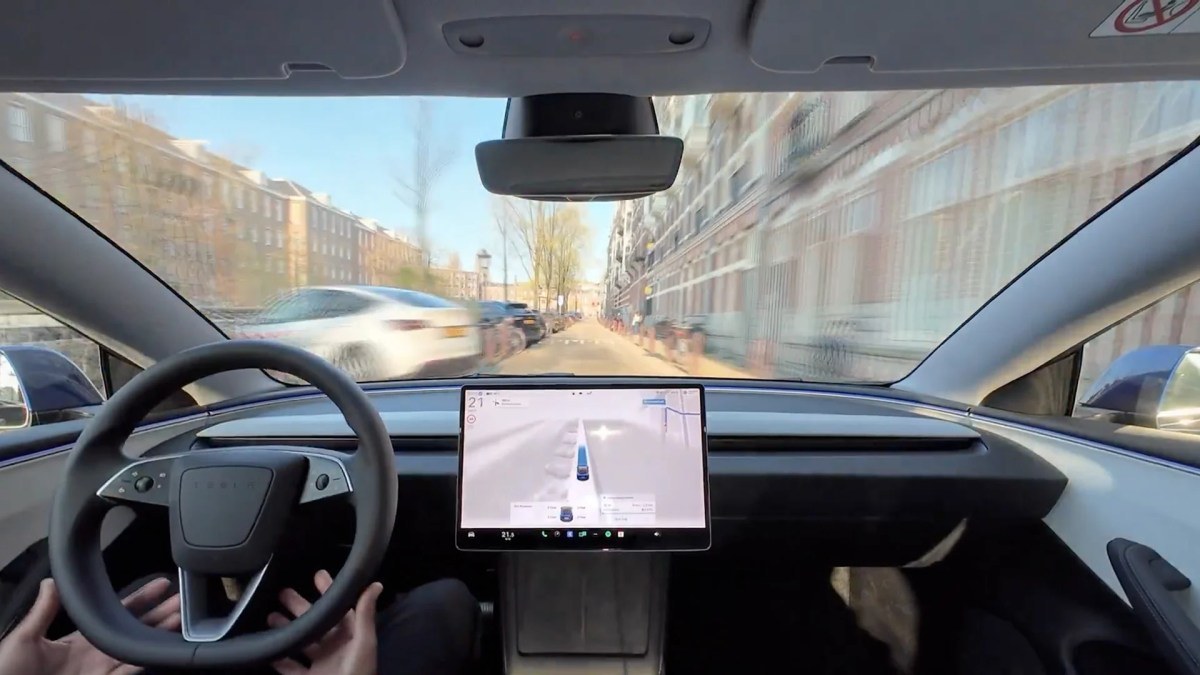
The approval is days away, and it will be granted quietly, in the administrative language of a government that few people outside the country follow closely. But when Slovakia formally clears Tesla’s Full Self-Driving software, it will become the latest European Union member to let the system on its roads, and one more crack in the wall Tesla has been pushing against for years.
The move was confirmed by Reuters on October 8. Slovakia is expected to authorize the driver-assistance system within days, adding the country to a small but growing list of EU members that have approved it individually while a Europe-wide process drags on.
The European Union has a unified vehicle-approval system, and in theory a car cleared in one member state can be sold across the bloc. In practice, Tesla’s Full Self-Driving, which the company now calls Supervised, a name that carries its own caution, has been caught in a country-by-country approval process, because the EU-level type approval has not been completed.
That has forced Tesla to negotiate separately with individual regulators, each with its own reading of the rules and its own appetite for the risk. The result is a patchwork: some countries have cleared the system, others have not, and the company has spent years arguing that the patchwork is precisely what a single European market was supposed to prevent.
Slovakia’s decision is notable less for its size than for its direction. Every country that approves the system makes it harder for the next to refuse, and the list of approving states is now long enough that Tesla can point to it as evidence that the technology has passed muster with real regulators, not just with its own engineers.
The system itself is the subject of the argument. Full Self-Driving, despite its name, still requires a driver to supervise, and that gap between the name and the reality is one of the reasons regulators have moved carefully. Tesla says the software has improved sharply, and the data it publishes on miles driven suggests it believes the safety case is made. Critics say the data answers a different question than the one regulators are asking.
The stakes for Tesla are commercial. Full Self-Driving is a product the company sells at a premium, and every market that approves it is a market where that premium can be collected. Europe, with its dense roads and its large electric-vehicle fleets, is one of the biggest prizes left.
The same week, Tesla opened what it says is the East Coast’s first megawatt-class charging station for its Semi electric truck, in Georgia, aimed at supporting long-haul freight. The two announcements point in the same direction: a company pushing its self-driving and heavy-truck ambitions forward on parallel tracks, one approval and one charging site at a time.
For Slovakia, the approval is a bet on a technology that its neighbors are watching. The country has positioned itself as friendly to automotive innovation, and clearing Tesla’s system is consistent with that stance. The question is whether the European Commission, which has been slow to act, will now feel pressure to resolve the continent-wide question instead of leaving it to a dozen separate decisions.
Tesla has not commented on the timing, and the European approval process has no fixed end date. But the company has learned to work the margins of that process, collecting national approvals the way a negotiator collects signatures, and Slovakia is the next name on the list.
Tesla has argued for years that its cars are among the safest on the road, and it points to crash data that it publishes quarterly. Regulators have been slower to be persuaded, partly because the data is reported by the company itself and partly because the legal framework for a driver-assistance system that can steer through city streets did not exist when the rules were written. The European process is, in effect, an attempt to write those rules in real time.
The commercial prize is real. Tesla’s European deliveries have grown, and Full Self-Driving is one of the few products the company can sell repeatedly to the same customer, through subscriptions and upgrades, rather than once at the point of sale. That recurring revenue is what the software represents, and it is why Tesla keeps pushing for approvals market by market.
Slovakia’s expected approval will not open the entire continent. But each national decision adds to the pressure on the European Commission to settle the question, and the company has grown practiced at turning a trickle of approvals into an argument that the technology is ready.
The Full Self-Driving rollout in Europe will be remembered, in the end, as a test of whether a single market can keep a single standard. Tesla’s bet is that it cannot, and that the countries that move first will do the deciding.



