
Apple introduced a suite of home hardware in New York on October 13, led by a seven-inch smart display called HomeView that goes on sale November 13 starting at $299. The device runs on an A18 chip, supports as many as six users, and uses face recognition to switch to a person’s own interface when they walk up to it.
The rest of the lineup fills in around it. A second-generation HomePod mini sells for $149, $20 more than the model it replaces, and a new Apple TV 4K costs $299. A wall mount for the display is sold separately, starting at $59. Apple said HomeView will not be sold in the European Union.
The pricing places Apple directly against displays from Amazon and Google that have occupied the category for years and sell at lower prices. Both rivals built their positions by charging less than a premium hardware maker can, and both have sold the devices on the promise that an assistant in the room is worth having. Apple’s answer is the same one it has given in watches and headphones: more capability, a higher price, and an assumption that customers inside its ecosystem will pay for integration.
Face recognition is the feature that separates the device from what came before. A shared screen in a kitchen or a hallway belongs to a household rather than to a person, and a system that identifies who is standing in front of it can show one user’s calendar, messages and reminders without exposing them to anyone else in the room. Apple has built the same idea into its other products, and this is the first time it has applied it to hardware meant to sit in a common space.
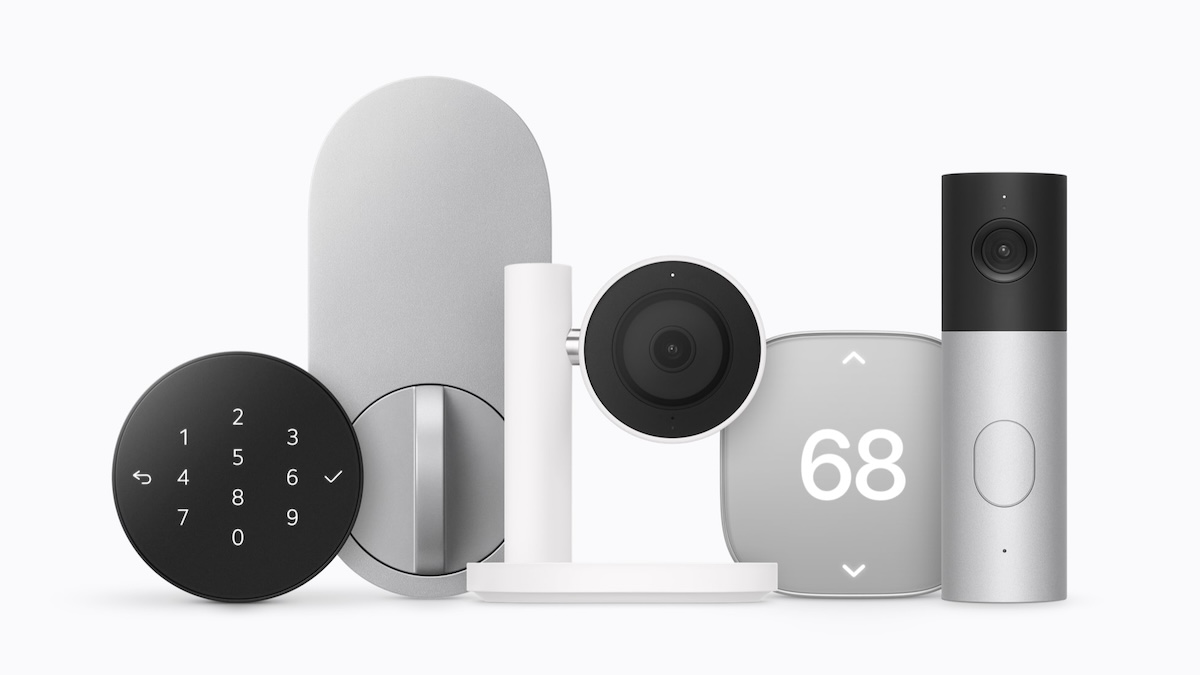
Alongside the devices, the company announced Apple Home Collection, a set of accessories developed with LG Electronics and Schneider Electric. The line covers nine products across cameras, thermostats and door locks, priced from $39.95 to $399.95, with availability beginning in December.
The decision to work with partners rather than build those accessories itself follows the path Apple took with the HomeKit standard a decade ago. Cameras, locks and thermostats are installed once and then forgotten, they vary by region, and they carry safety requirements that a phone maker has no reason to own. Renting another company’s manufacturing to reach the category is cheaper than entering it, and it lets Apple promise more options on day one than it could produce alone.
What the accessory lineup changes is the reason to buy the display. A hub with nothing to control is a screen in a hallway. With nine products attached to it, the display becomes the interface for lights, locks and climate, and the company has a reason to expect customers to pay $299 for the privilege.
Privacy questions follow face recognition into a shared room, and Apple has handled them by processing what it can on the device rather than sending it to a server. The company has made the same argument about photos and messages, and it will be asked to make it again about a camera that watches a hallway and a chip that reads faces to decide what to display. Regulators in several countries have opened inquiries into how consumer devices handle biometric data, and a product built around identifying household members within range hands them a concrete case.
Analysts said the home remains the hardest market for Apple to enter because the competition gives hardware away. Amazon and Google have both sold smart speakers below cost to place assistants in living rooms, and both have struggled to turn those positions into meaningful revenue. Apple has never discounted hardware to win a category, and its answer here is a margin structure its rivals have chosen not to pursue.
The European omission is notable for a product family Apple sells almost everywhere else, and the company did not explain it. Recent European rules have changed what technology companies may ship in the region and how long they must support it, and hardware that depends on sensors and continuous connectivity draws more scrutiny than most.
Siri’s performance sits underneath the pitch. A home display is used for short commands, timers and questions, and users judge it on the accuracy of those exchanges rather than on the sophistication of the model behind them. Apple has rebuilt its assistant around newer models and has said improvements are coming, and a device whose main interaction is voice will expose the results to customers more directly than a phone does.
Memory supply is a constraint the company named in the same week. Apple executives have described pressure on memory costs, which affects every device the company ships and matters more for a new product line than for an established one, since a new line has no volume to absorb a component increase.
Investors will watch the quarter that follows for how the display sells against expectations. Apple has built the device around a feature its rivals do not offer, priced it above what the category normally charges, and left its strongest market out of the launch. Whether households want a shared screen with a face attached will be answered in stores, not in the announcement.



