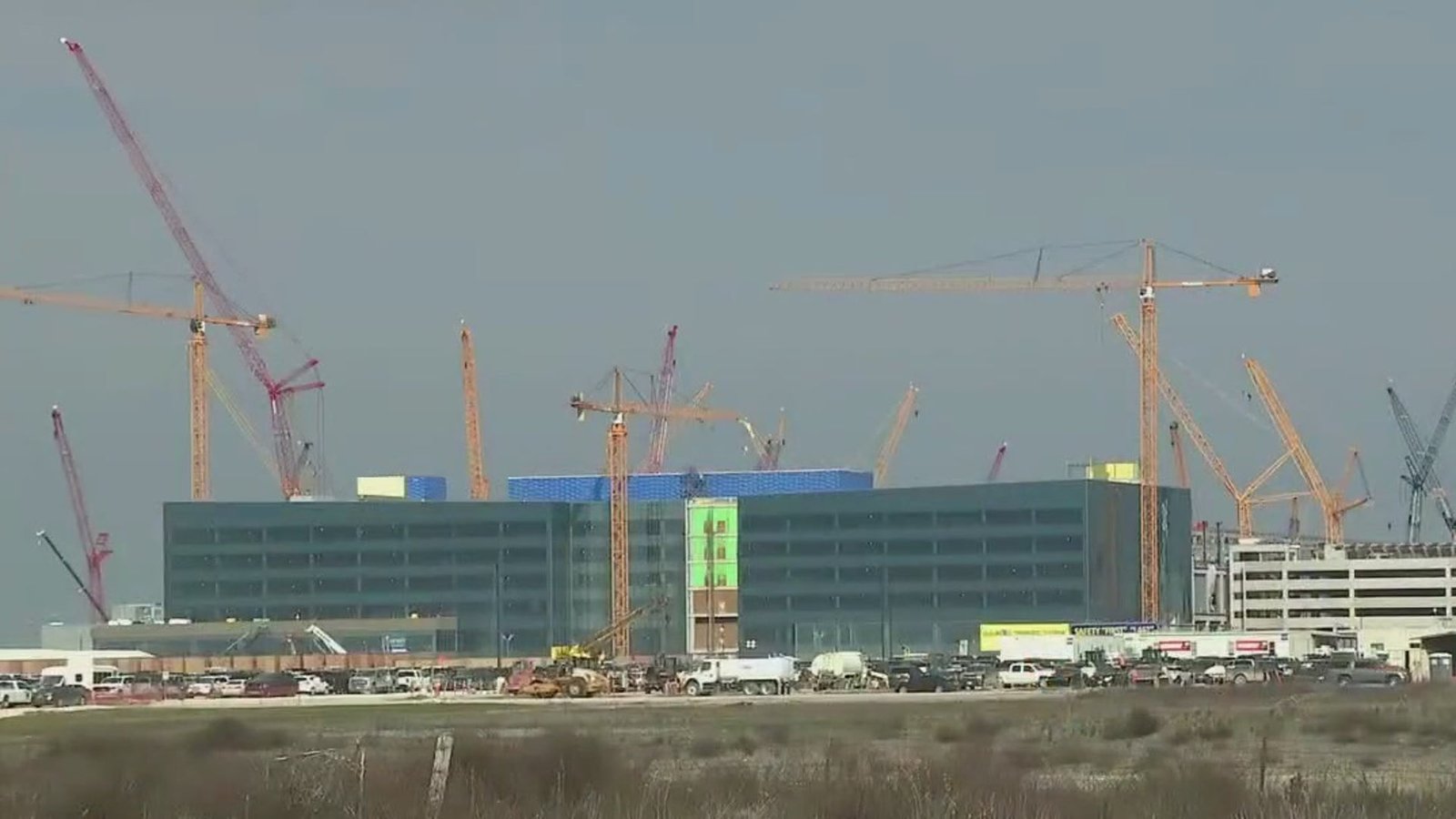
TAYLOR, Texas—The second building on Samsung Electronics’ chip campus here will cover about 2.7 million square feet, half again the size of the first, a figure the company disclosed on October 15 as it told an audience at the site that construction would begin in early November.
The plant is scheduled to start making wafers in 2030. Samsung did not say which generation of process technology it will use, a gap that leaves the company room to decide later and leaves the customers it is trying to win without an answer now.
The first fab, a short walk away, is the one the company has been building toward since it picked the site in 2021. It is equipped for extreme ultraviolet lithography and 2-nanometer production, with operations due to begin at the end of this year and volume output in 2027.
Five years between a groundbreaking and a first wafer is normal for advanced logic. A second groundbreaking before the first plant has reached volume is something else, and the audience in Taylor included state and local officials who have been waiting for the payroll that was promised.
Samsung said cumulative investment in central Texas will exceed $37 billion. Up to $4.745 billion of that is expected to come from the CHIPS Act, the federal program that pays companies to build leading-edge capacity inside the United States.
The arithmetic of a fab is unforgiving. A leading-edge plant costs several times what the same square footage cost a decade ago, most of it in tools that must be ordered years ahead of installation, and the building has to be finished before the first tool can be moved in. A company that breaks ground commits capital long before it knows what it will charge per wafer.
That is why the silence on the process node matters more than it might appear. Samsung’s roadmap runs from 2-nanometer through denser variants, and each step carries a different price per wafer, a different set of customers and a different date at which the equipment can be delivered. Naming the node now would amount to a promise to investors and to buyers of custom silicon. Leaving it open keeps the option to follow demand.
The money for all of this comes from memory. Samsung’s chip division earns most of its profit selling DRAM and flash, and the foundry business has been the division’s weakest unit for years. When memory prices rise, the company can carry a foundry that loses money; when they fall, the foundry becomes an argument inside the company rather than a bet on the future.
The demand side is where Samsung has struggled. The company’s foundry business has won few large external customers for its most advanced nodes, and reports of yield problems have followed each generation. TSMC, which builds for Nvidia, Apple and most of the industry’s largest chip designers, holds roughly two-thirds of the global foundry market by revenue. Samsung’s share is a fraction of that.
A second plant in Texas is therefore a bet on a market position the company does not yet have. Executives have argued that customers want a second source for advanced logic, and that governments want one on their soil. Both arguments are true and neither guarantees orders.
The subsidy changes the calculation without settling it. Federal money covers a slice of the capital cost, and the state and county have added property tax abatements that stretch over decades. The operating cost, which is where a fab lives or dies, is not subsidized.
Texas has become the densest cluster of advanced logic outside East Asia. Samsung’s site sits northeast of Austin, near its existing Austin fab and a day’s drive from the plants Texas Instruments is building in Sherman. Equipment vendors, gas suppliers and specialty chemical makers have opened offices in the region to serve all of them.
That cluster effect is the part officials in Taylor talk about. A supplier that can serve three customers from one warehouse will locate near the middle of them, and the middle is central Texas. The argument has been used to justify every incentive package in the region, and it has been right often enough that legislatures keep funding them.
Labor is the constraint that money cannot fix quickly. A fab needs technicians trained to run tools that exist nowhere else, and the construction phase needs trades that are booked years out. Companies in the region have started their own training programs with community colleges, which produces graduates on a schedule set by the curriculum rather than by the build.
Analysts who follow the foundry business said the announcement should be read as a statement about the company’s intent rather than about demand. A plant that starts production in 2030 will be judged by how full it runs in 2032, and utilization depends on customers who are choosing a supplier now.
There is a version of the story in which Samsung’s second Texas fab is the plant that finally gives the company a real position in the merchant foundry market, with American buyers unwilling to depend on a single supplier in Taiwan. There is a version in which it is a very large building with a subsidy attached.
Which one it becomes will be visible in the customer list, and that list is assembled years before the first wafer comes out. For now the company has committed the ground, the capital and the date, and left the technology open.