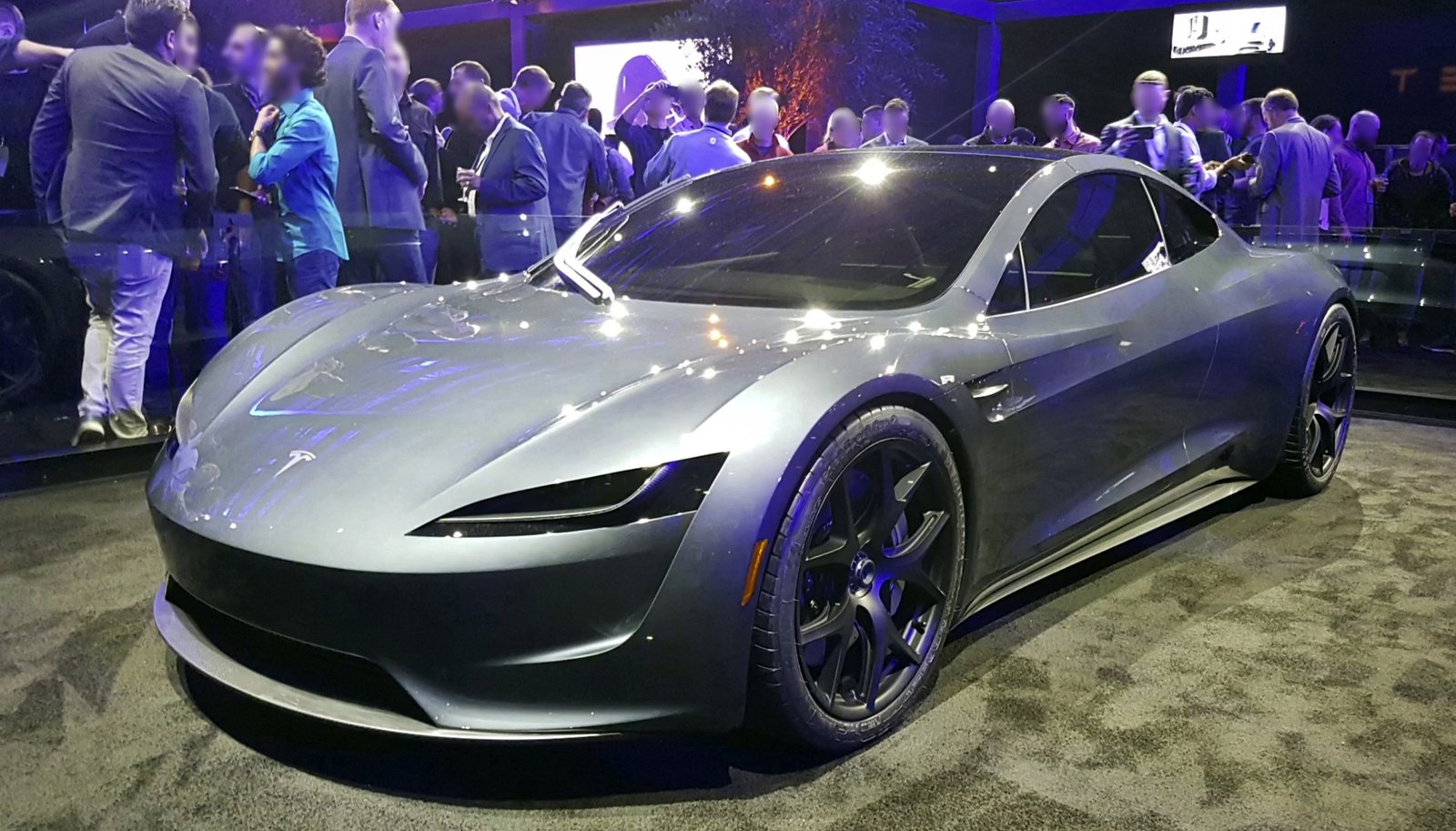
Tesla began taking reservations for its long-delayed Roadster on October 16, and the price of a place in line is not a deposit in the ordinary sense. The performance version requires $50,000 up front. The version with cold-gas thrusters requires $250,000.
A third variant, described as capable of briefly lifting off the ground, is available by invitation only. Tesla did not disclose the deposit for that one.
The company said production will begin in 2028, a date it has moved several times since the car was first shown in 2017. It also said the rocket-equipped version has not been approved for use on public roads.
That last sentence is the one that separates this launch from a normal product announcement. A car whose headline feature cannot be used where cars are used is being sold on the promise of a capability that regulators have not agreed to license.
The regulators, for now, have said the question does not arise. The Federal Aviation Administration told CBS and Politico that the vehicle does not meet its definition of an aircraft and therefore needs no airworthiness certificate. The Department of Transportation said the car must still satisfy federal vehicle safety standards.
Read together, the two statements leave an unusual space. The thrusters are not aviation equipment, so aviation rules do not apply. They are part of a motor vehicle, so vehicle rules do apply, and those rules were written for cars that stay on the ground.
The demonstration Tesla has shown involved an unmanned prototype that stayed in the air for a few seconds. Cold-gas thrusters produce a short push from compressed gas, which is enough to lift a light body briefly and nowhere near enough to sustain flight.
What the thrusters do on a road car is a question of physics and of law. A vehicle that lifts its drive wheels off the ground loses steering and braking authority, and a driver who triggers that at speed is in a different regime from one who does not.
The deposits are the part of the announcement that can be measured. Tesla has not said how many reservations it has taken, and it has not said whether the money is refundable. In 2017 the company took $50,000 deposits for a Founders Series car priced at $250,000, and those deposits have been outstanding for nine years.
Customer deposits are a cheap form of financing. They carry no interest, no covenant and no maturity, and they appear on the balance sheet as a liability that costs nothing to hold. For a company that funds a capital-intensive business from operations, a few hundred million dollars of customer money is useful.
The Roadster has also served a purpose that has nothing to do with cars. It is the product that establishes what the company can do, and every vehicle Tesla sells benefits from the impression that the engineers upstairs are working on something unreasonable.
That impression is harder to maintain when the core business is under pressure. Tesla’s deliveries have fallen year over year, competition in China has intensified and the company’s margins have compressed as it cut prices. A halo car is a distraction that costs little and buys attention.
Attention is what the announcement produced. The $250,000 deposit became the headline in coverage that otherwise would have been about quarterly deliveries.
Analysts who follow the company said the reservation numbers will be small relative to anything that affects earnings, and that the purpose is brand rather than cash. A few thousand reservations at $50,000 is a rounding error against Tesla’s revenue and a useful signal about the intensity of its customer base.
The 2028 date is the part to watch. Tesla has a history of announcing dates that slip, and the Roadster’s slip has been unusually long. A car shown in 2017 and delivered in 2028 will arrive into a market where electric sports cars from established manufacturers are already on sale.
There is also the question of what the car is for. A two-seat electric sports car at $200,000 and up sells in small numbers and generates little revenue. Its value to Tesla is in the technology it demonstrates and the attention it attracts, both of which are real and neither of which requires the car to be produced in volume.
The rocket version complicates even that. A feature that cannot be used on a road, demonstrated on an unmanned prototype, sold by invitation, is a marketing device with a deposit attached. It is not a product in the sense that a regulator, an insurer or a customer would use the word.
Tesla has been here before, in a sense. The company has a record of shipping features that regulators later examined, from the naming of Autopilot to the steering yoke, and of adjusting when the examination concluded. The pattern is to announce, ship, and negotiate.
That pattern works when the feature is software. It is harder to apply to a set of thrusters bolted to a chassis, which is a hardware change that must be certified before it can be sold as road-legal equipment.
For now the reservation page is live, the deposits are being collected and the production date is two years out. The cars that result will be judged on whether they exist, and on whether the feature that justified the deposit is one their owners are allowed to use.