The announcement is the easy document. A developer names a county, a capacity figure and a date, and the press release reads like a commitment. The documents that follow are less quotable and more binding: an interconnection agreement with a utility queue position, a conditional use permit, a lease with termination rights that trigger on a missed delivery date.
A count published this week puts a number on how often the second set of documents fails to arrive. The Financial Times reported on October 18 that at least 47 large data center projects in the United States have been delayed, withdrawn or stuck in permitting this year, citing RegLayer, a firm that tracks regulatory filings. RegLayer described the figure as a conservative estimate, which is the phrase to hold onto. It counts the biggest projects only.
The causes are the three the industry now recites from memory: the queue to connect to the grid, opposition from the towns that would host the buildings, and the cost of borrowing against construction that will not produce revenue for two years. What is new is that all three are biting in the same year, in the same market, against a buildout whose announced value is measured in trillions.
The number is also disputed, in a way that reveals how little anyone actually knows. Data Center Watch, a project of the research firm 10a Labs, counted 75 projects disrupted by local opposition in the first quarter alone, carrying roughly 130 billion dollars in proposed investment, and 45 more in the second quarter worth nearly 68 billion dollars. Bernstein Research, cited by the same newspaper, estimates that about 35 percent of the planned American pipeline is credible. The top-line estimate for the whole buildout runs to 10 trillion dollars.
Those counts do not measure the same thing, and the gap between them is the story. One tracks regulatory and permitting outcomes for large developments. The other tracks community opposition, including moratoriums and withdrawals that never reach a filing. Neither establishes how much computing capacity will be missing, for how long, or whether a customer has a remedy. A project counted twice in successive quarters is one project, not two failures.
What ties the numbers to money is the lease. A hyperscaler or a neocloud does not usually own the building it fills. It signs a long-term agreement with a developer who borrows against that agreement, and the agreement carries a delivery date. Miss the date badly enough and the customer can walk, or renegotiate at a lower rate, which is worse for the developer than losing the deal outright. The delay does not stay in the county. It travels back up the contract to the entity that owes the debt.
That mechanism is visible in individual cases now. Microsoft ended an agreement with Nscale for a site in Essex, northeast of London, after grid officials told the developer they did not expect to deliver power until the 2030s. Nscale is preparing a listing in the United States, and its prospectus names a small number of customers as the source of most of its revenue. One termination in the month before shares are priced changes how the collateral behind the borrowing reads, even when the termination is about a substation.
The regulatory apparatus is starting to produce information rather than anecdotes. On October 9, the Federal Energy Regulatory Commission approved a large-load registry proposed by PJM Interconnection, the grid operator for much of the mid-Atlantic and Midwest. The registry covers electricity users at a 50-megawatt threshold and will collect expected service dates and load requirements. FERC declined to approve separate provisions governing service and curtailment.
A registry will not settle the argument about how many projects are in trouble, because it measures requests rather than outcomes. It will, however, make the queue legible, and legibility changes behavior. A developer who must state a service date in a public filing has a harder time marketing a site whose power is speculative, and a utility that must publish its queue has a harder time being blamed for a delay it did not cause.
For the companies building, the practical response is already visible in capital allocation. Sites with energized capacity trade at a premium and get bought rather than built. On-site generation, gas turbines or fuel cells, shortens the wait at the cost of a fuel contract and a second permitting fight in a different jurisdiction. Waiting is cheapest and, for a company that has promised shareholders capacity in a specific year, unavailable.
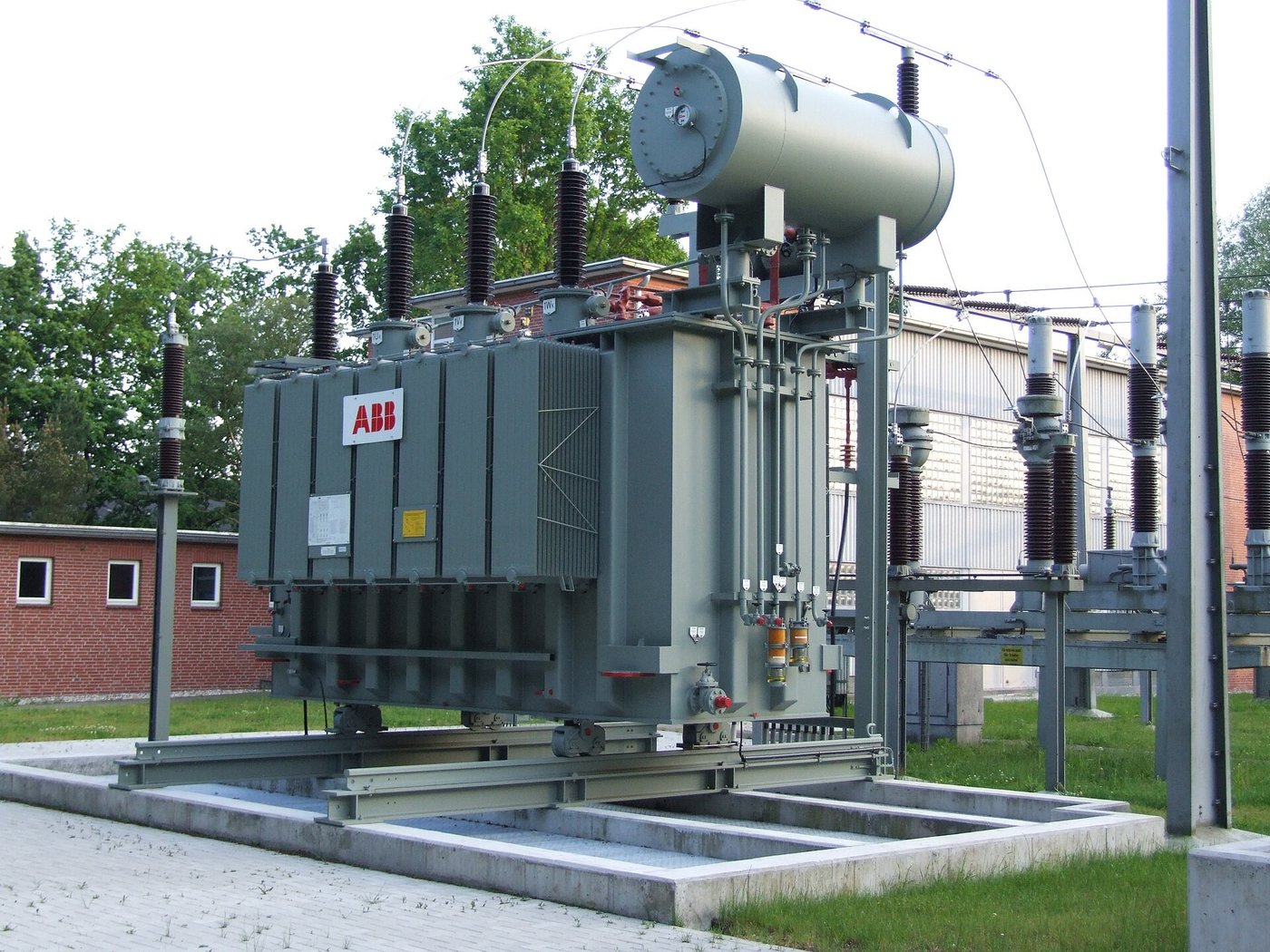
The deeper issue is that the industry’s forecasts were built on a schedule that assumed power would follow capital. For three years the binding constraint was accelerators, and the companies that could get them won. The constraint has moved to the substation, the transformer order book and the county zoning board, none of which respond to a term sheet. Capital committed against the old assumption is now exposed to a construction calendar set by other people.
Forty-seven is a small number next to the thousands of projects that have been announced. It is a large number next to the projects that were supposed to be serving customers this year, and the difference between those two populations is where the next phase of this buildout will be decided.