For the better part of a year, pallets of Apple’s newest product sat in warehouses, boxed, sealed and unsellable. The hardware was finished. The software that was supposed to make it worth buying was not, and so the boxes waited while the company cycled through launch dates.
Mark Gurman reported the arrangement in his Power On newsletter on October 18, describing a product postponed first to the spring of 2025, then to the summer, then to the fall, and then repeatedly through 2026. Without a working version of the new voice assistant, Apple could not deliver the experience it had designed around, so it did not ship. The company announced the device on October 13 and opened pre-orders the same day. The units in the warehouse had been finished for months by then.
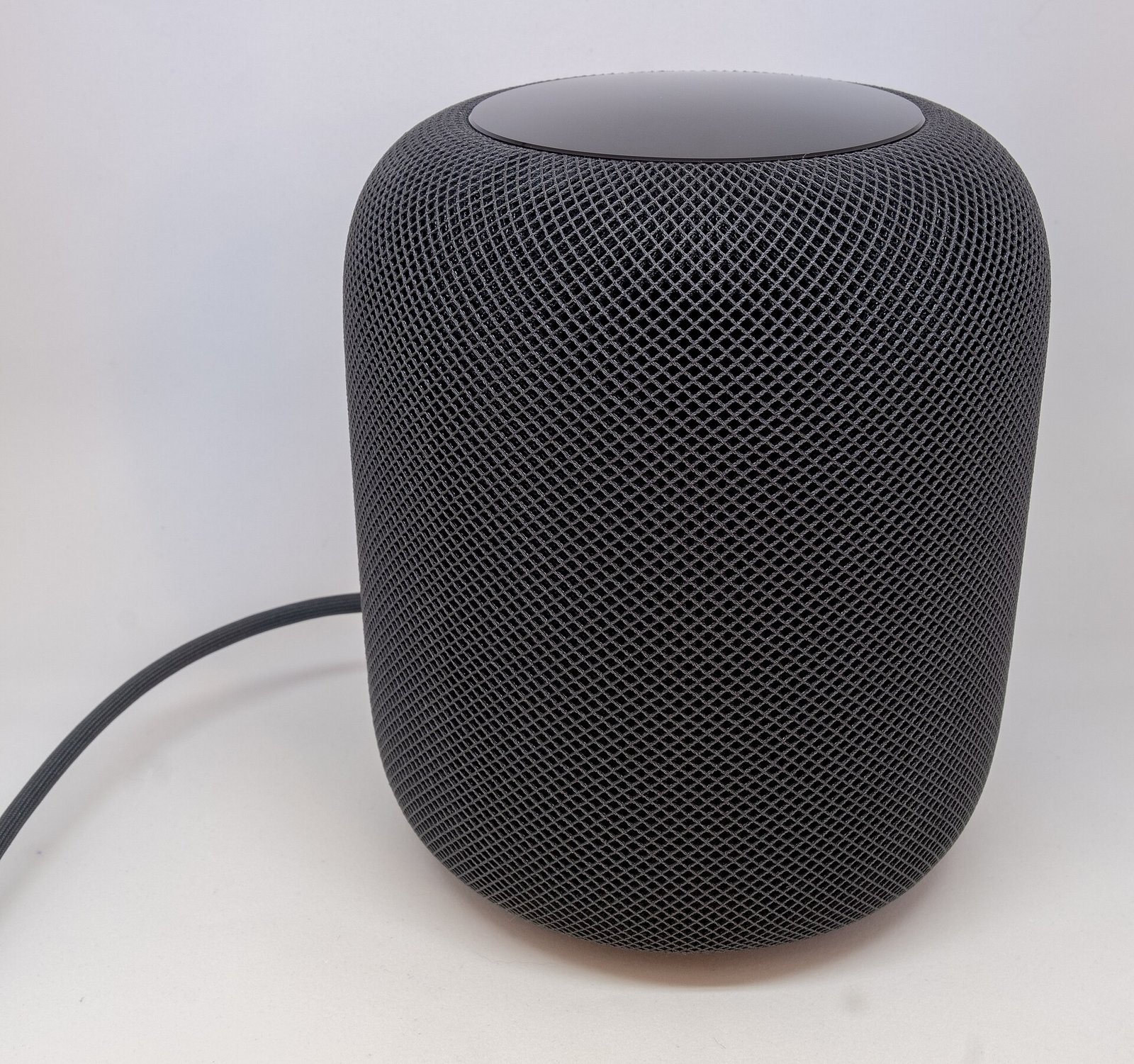
What Apple announced is a 7-inch touchscreen on a domed speaker base, mounted on a table or a wall, priced at 299 dollars and shipping November 13. It runs an A18 chip with 8 gigabytes of memory, recognizes as many as six people in a household by face, takes FaceTime calls through a 12-megapixel camera, and controls lights, locks and thermostats through the Home app. The pitch is a shared computer for the kitchen counter, personal to each person who walks up to it.
The personal part depends entirely on the assistant. Apple’s release describes Siri AI as an entirely new version of Siri, conversational and aware of what is on the screen, able to draw on a paired iPhone’s calendar and messages for context. Take that away and the device is a small television that plays album art and turns off lamps. That is the product Apple decided not to sell, twice a year, for two years.
The cost of the decision is visible in the specifications. The A18 shipped in the iPhone 16 in 2024. By the time a HomeView reaches a counter in November 2026, the phone lineup will be two generations past it, and the device will enter the market with the internals of a product from another cycle. Eight gigabytes of memory was generous for a phone in 2024 and is thin for a device expected to run on-device models for five years.
The case for the specifications is that a home hub does not need the newest silicon, because it does not do the work a phone does. That holds for the chip and less well for the memory, which is what limits how large a model the device can run on its own. The second-generation HomeView, the one with a motorized arm that Apple has been developing for 2027 or 2028, will arrive with a faster processor and probably more memory. The gap between the first model and the second may be shorter than the gap between the announcement and the first shipment.
The software dependency also has a map. Apple is launching the HomeView in the United States, Britain, Canada, Australia, India, New Zealand, Singapore and South Africa. It is not launching in the European Union, because Siri AI is not available there on iOS. A hardware company that cannot sell its hardware in the world’s second-largest consumer market because a software feature has not cleared local rules is a company whose product cycle is now set in Cupertino’s AI group rather than in its operations team.
The mirror image arrived the same week. Apple opened iPhone Duo pre-orders on October 16 knowing, according to Gurman, that supply would be severely constrained, and within minutes delivery estimates in the United States moved to January 25. He called the decision a major mistake, on the theory that a customer told to wait ten weeks will buy an iPhone 18 Pro instead. One product waited for software it did not have. The other was sold before the factory could make it. Both are failures of the same planning function, pulling in opposite directions.
For the finances, the inventory is not the problem. A 299-dollar device, even in volumes in the millions, is a rounding error against a company that generates close to 400 billion dollars of revenue a year, and Apple does not break out finished goods by product line. The cost that shows up is the one in the launch: a first-generation device that reviewers will compare to a phone from 2024, in a category where Amazon and Google have been selling screens for years and where the standard for a smart home is now set by cheap hardware and someone else’s assistant.
There is a defensible logic to waiting. Shipping a hub that cannot hold a conversation would have been worse than shipping late, and Apple has been punished before for announcing features it could not deliver on schedule. The company chose to absorb the delay in inventory rather than in reviews. What it cannot absorb is the second delay, because a device that arrives two years after its chip and one year after its announcement has to be good enough that nobody asks why it took so long.
The store reset scheduled for November 6, with new Macs expected, gives Apple a second chance to set the quarter’s narrative. The HomeView will be on the shelf five days later, next to phones that are two generations ahead of it, running an assistant that was supposed to be the reason it exists.
A product that waits for software is a bet that the software will be worth the wait. Apple has made that bet before and has usually won it. This time the wait was long enough that the box has a shipping date and the chip has a history.