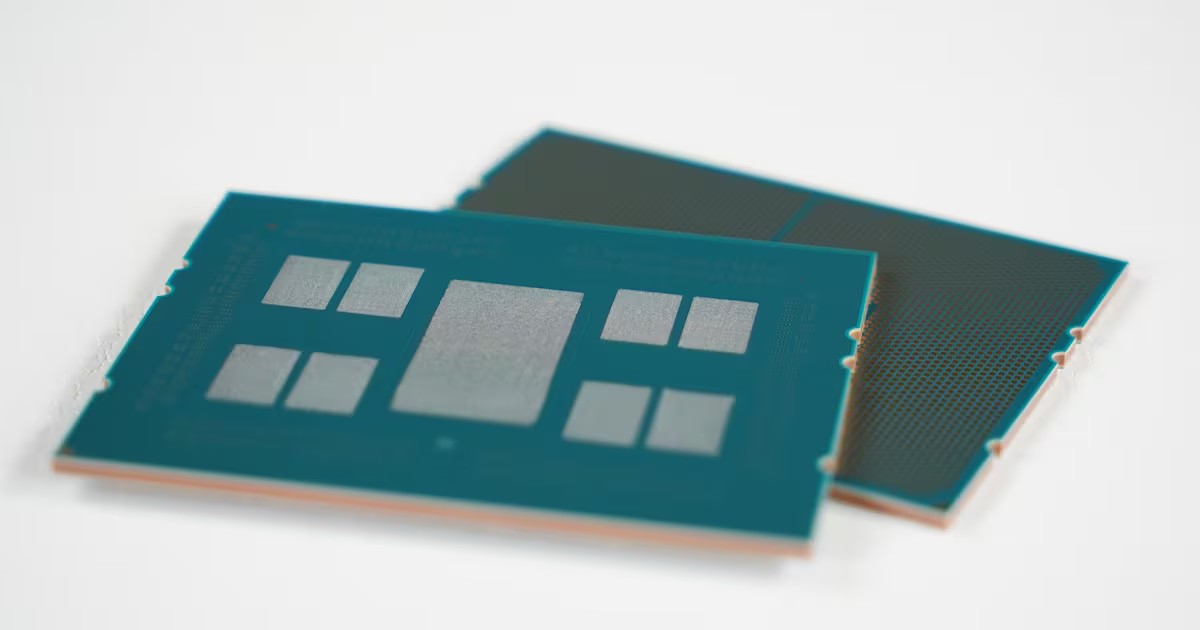
The scarcest part of an AI system is no longer always the processor. Increasingly it is the laminated rectangle underneath, a package substrate that carries thousands of signal traces from a chip’s silicon to the circuit board, and the companies that need it most have started paying to have it built.
Samsung Electro-Mechanics Co. will receive 3.7 trillion won, about $2.8 billion, from Tesla Inc. and Nvidia Corp. to expand production of flip-chip ball grid array substrates at its plant in Sejong, South Korea, according to the Maeil Business Newspaper, which Reuters cited on Thursday. Tesla’s share is 1.1 trillion won and Nvidia’s 2.6 trillion won, the report said. None of the three companies has confirmed the arrangement publicly.
The structure is unusual. Rather than a purchase order, the arrangement ties customer money to dedicated capacity under a long-term supply contract running five years, from 2029 through 2033. Tesla’s contribution covers part of a 4.27 trillion won expansion at Sejong that Samsung Electro-Mechanics disclosed in September, and in return Tesla receives guaranteed volumes, according to people familiar with the matter.
Construction is under way. The company plans to complete the buildings by the end of next year, finish equipment installation and test runs in the first half of 2028, and begin mass production in the second half of 2028, with deliveries to Tesla starting in 2029. The substrates from the Tesla line are intended for the AI chips in its driver-assistance systems and for Optimus, its humanoid robot program.
FC-BGA is the part of the package that makes high-performance computing physically possible. It accommodates denser circuitry across a larger area than conventional substrates and tolerates the heat that accelerators generate, which is why it sits under graphics processors, AI accelerators and server CPUs. Making one requires laminating layers of Ajinomoto build-up film, drilling and plating fine-pitch vias, and holding the finished panel flat enough that a thousand solder joints land where they should.
Capacity has been tight for two years. Ajinomoto Fine-Techno supplies more than 90% of the qualified build-up film, and the top substrate makers—Ibiden of Japan at roughly 35% of high-end capacity, Shinko Electric at about 18%, Taiwan’s Unimicron and Austria’s AT&S—have run near their limits as accelerator volumes climbed. Lead times for 14-layer parts peaked near 28 weeks in early 2025, and prices for the film rose roughly a quarter in twelve months.
Samsung Electro-Mechanics said in July that shortages were becoming more severe and that it was negotiating long-term agreements with customers building AI processors. That is the context for a customer-funded plant: a supplier unwilling to carry the entire capital burden alone, and buyers unwilling to discover in 2029 that someone else reserved the output.
For Tesla, the investment follows a pattern. The company designs its own inference silicon rather than buying finished accelerators, and it has spent the past several years trying to control the layers beneath the chip as well, from battery cells to casting machines. Paying a substrate maker to add a line is a way to secure supply without owning the factory, and it puts Tesla in the same queue as the largest buyer of AI hardware in the world.
For Nvidia, the logic is simpler and more urgent. Its accelerators are constrained less by wafer starts than by packaging and substrate capacity, and every rack it ships consumes a set of components that few suppliers can produce at the required layer count. Investing in a second source outside Japan reduces a concentration risk that has worried customers for several years.
The sums involved are modest against the scale of the build-out. A 4.27 trillion won expansion is roughly the cost of a single advanced logic fab module, and the plant will not produce a panel until 2028. What the money buys is not capacity this year but a claim on capacity in 2029, when the industry expects another round of accelerator demand driven by inference rather than training.
Analysts said the deal signals that substrate supply has moved from a procurement detail to a strategic question. When two of the largest chip buyers prepay a component maker, the message to rivals is that the constraint is real and that they will need similar arrangements to guarantee their own roadmaps. Smaller accelerator designers, without Tesla’s balance sheet or Nvidia’s volume, may find themselves at the back of the line.
The arrangement also shifts risk. Samsung Electro-Mechanics gets a customer that shares the capital cost and a five-year commitment that justifies the line; Tesla and Nvidia get priority access and price visibility. What none of them gets is flexibility, since a five-year contract signed before the first panel ships assumes that the packaging approach in use today is still the right one when the plant opens.
The open question is whether dedicated, customer-funded substrate lines become the standard way the AI supply chain allocates scarce capacity, or whether they turn out to be an expensive answer to a shortage that new entrants and thicker film supplies would have solved on their own.