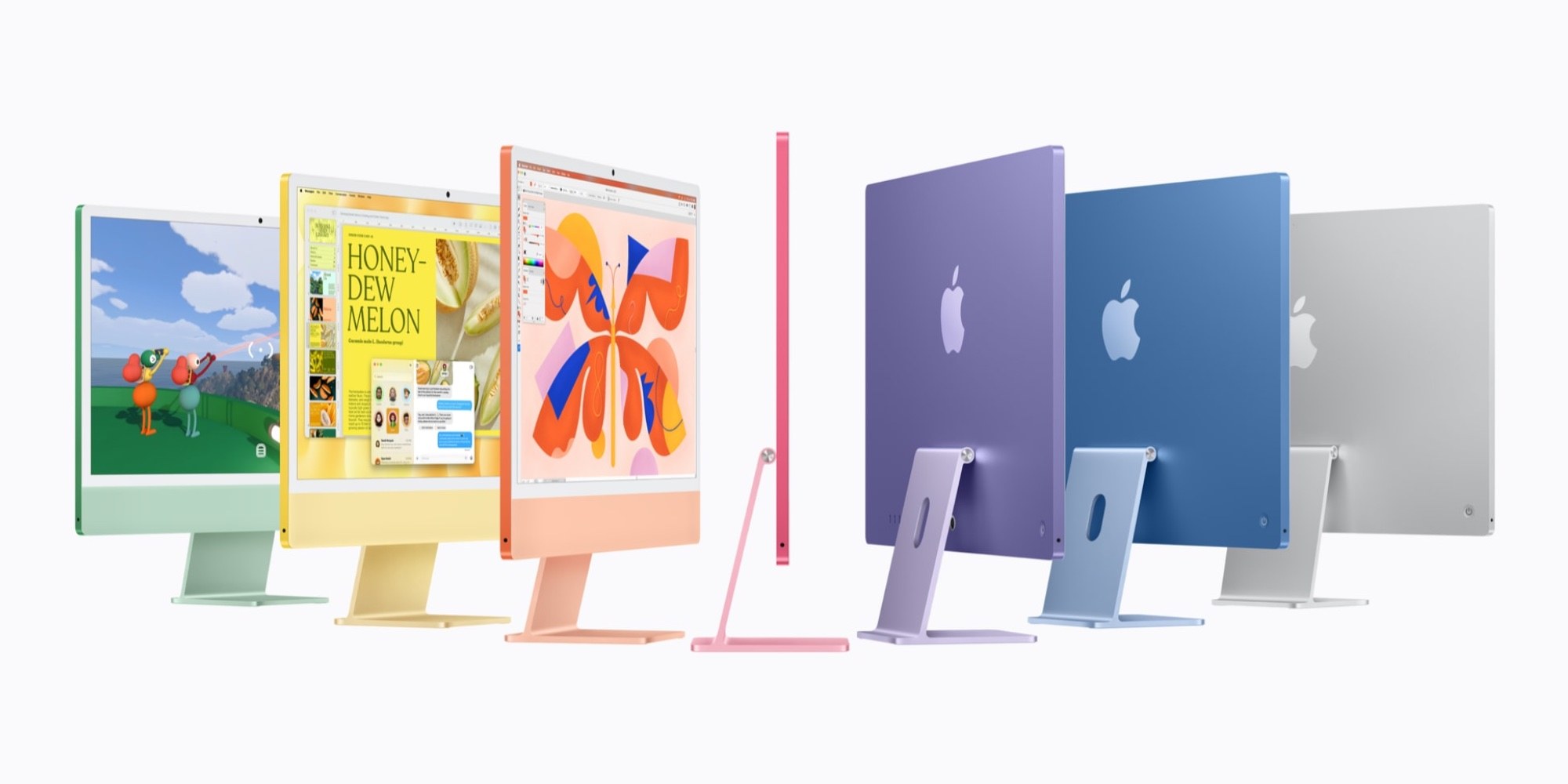
The iMac’s previous chip was the M4. Its new one is the M6. Apple released the desktop and a 14-inch entry-level MacBook Pro on Oct. 27, both built around the M6, and in doing so skipped a generation on the machine that has shipped every Apple silicon family since the line began.
The iMac comes in two configurations. The dual-Thunderbolt model pairs a 10-core CPU with a 10-core GPU and supports up to 24 gigabytes of memory and 1 terabyte of storage. The four-port model moves to a 12-core CPU and 12-core GPU, with up to 32 gigabytes and 2 terabytes.
The MacBook Pro is simpler. It offers only the 12-core M6, with up to 32 gigabytes of memory and 4 terabytes of storage, and it replaces an M5 machine rather than a two-generations-old one.
Both carry Apple’s N1 wireless chip, with support for Wi-Fi 7 and Bluetooth 6. The iMac starts at $1,499 for the dual-port version and $1,699 for the four-port. The M6 MacBook Pro starts at $1,999. Preorders open Oct. 28, with shipping Nov. 6.
Apple’s performance claims need to be read against different baselines, which the company does not go out of its way to emphasize. The iMac figures compare with the M4: up to 40% faster in CPU work, graphics performance up to double, and on-device AI roughly five times faster. The laptop figures compare with the M5: graphics up to 30% faster and a neural engine with twice the throughput. Two different predecessors, two different sets of percentages, one press release.
The most interesting number is the one Apple did not put on a slide. The desktop sat out an entire silicon generation. Apple has not explained why, and it rarely discusses future parts, but the pattern is legible enough. Desktop volumes are a fraction of laptop and phone volumes, and advanced-node wafer supply is allocated by volume. When capacity is tight, the product that sells in the smallest numbers is the easiest one to hold back a cycle. Buyers who waited through the M5 generation get a two-generation jump and no explanation.
For anyone actually choosing between the two machines, the memory ceilings matter more than the core counts. Twenty-four gigabytes on the entry iMac is the constraint for local model inference, not the GPU. Running a capable language model on device is a memory-capacity problem before it is a compute problem, and the four-port model’s 32 gigabytes is the configuration that makes the on-device AI claim usable rather than theoretical. The same applies to the laptop, where 32 gigabytes and 4 terabytes sit at the top of a single 12-core configuration.
The pricing tells a separate story. The education store’s MacBook Neo moved from $499 to $649, which leaves a $50 gap to the regular price. A discount that small is barely a discount. Apple has spent years using the education channel as a volume and loyalty instrument, and a $50 spread suggests the company now values the margin more than the channel, or that component costs have risen enough that the entry price could not hold.
Component costs are the plausible link between the two announcements. Memory prices have been rising across the industry as AI demand absorbs supply, and a machine built to a $499 education price is the least able to absorb that. Raising the education price by 30% while holding the consumer price is a way of protecting the headline number that shoppers see.
The generation skip also raises a question about cadence. Apple built its silicon reputation on predictable annual improvements and on the claim that every product line benefits from them. A desktop that waits two years while the laptop moves one year is a smaller version of the divergence that has appeared across the Mac range for a while: different products, different chips, different schedules, all marketed under one family name.
None of this makes the machines bad. A 40% CPU improvement and doubled graphics over an M4 iMac is a substantial upgrade for anyone on an M1 or an Intel model, and the $1,499 starting price is unchanged from the previous generation at a moment when most computer makers have raised prices. The laptop’s 30% graphics gain over M5 is the sort of increment that matters to people rendering video and very little to people reading email.
What it does suggest is that Apple’s silicon advantage is now being managed rather than pressed. The company can skip a generation on a low-volume desktop without losing a customer, because there is no competitor running macOS. That is the comfortable position every vertically integrated vendor eventually reaches: the roadmap stops being a promise to buyers and becomes an allocation decision made inside the company.
The practical advice for buyers is unromantic. If the machine on the desk is an M1 or an Intel iMac, the M6 is a large step and the timing is fine. If it is an M4, the upgrade is real but not urgent, and the memory ceiling is the specification worth paying for. If it is an M5 MacBook Pro bought this year, nothing in the announcement changes that decision.
The chip is the headline. The $50 education gap is the more revealing number.