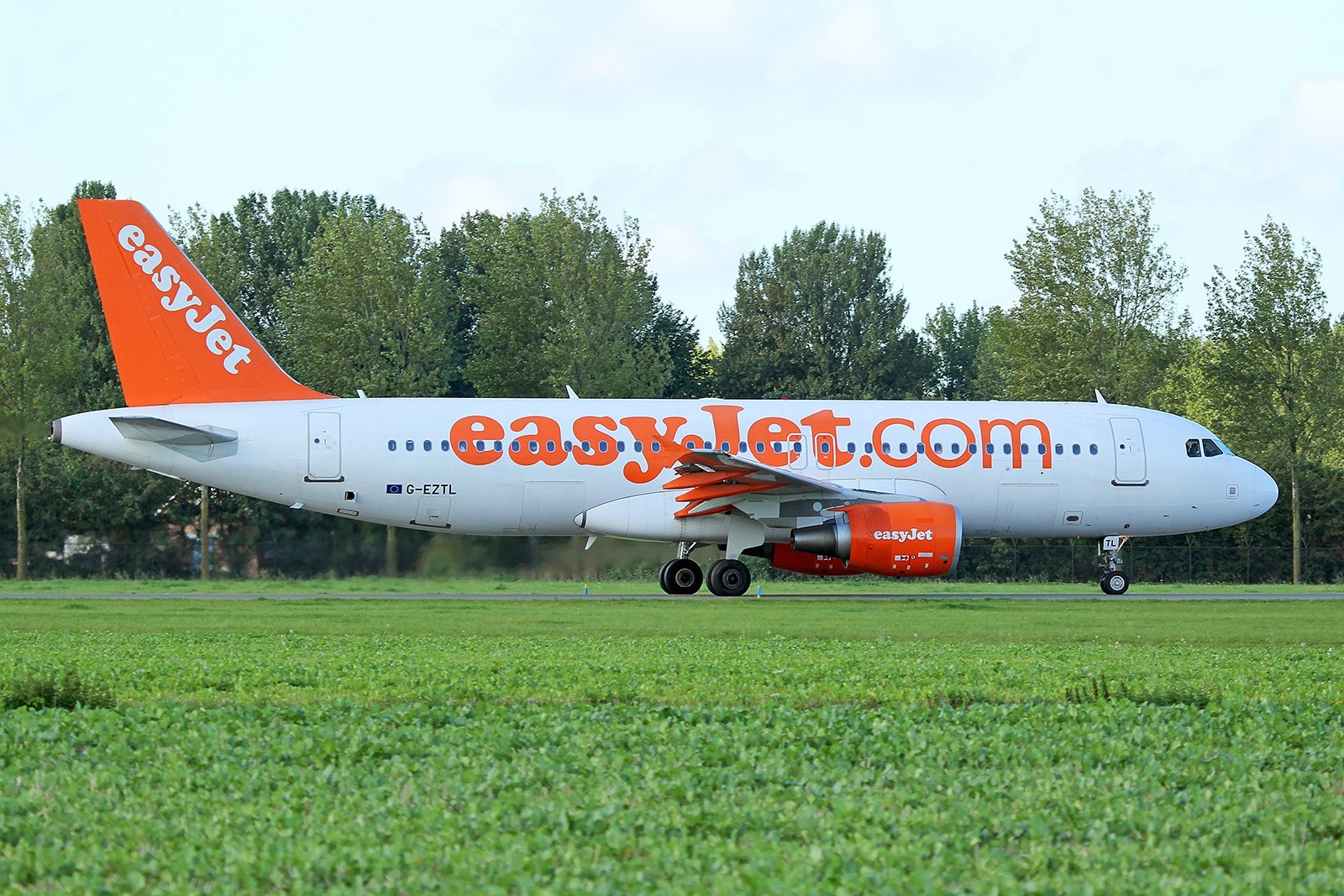
In January, Kenton Jarvis was asked about satellite internet and gave the answer a low-cost airline’s chief executive usually gives. The economics, he said, did not quite stack up for easyJet.
The airline has now confirmed a contract with Starlink to install high-speed satellite Wi-Fi across all 292 of its aircraft, the first time it has offered connectivity in the cabin. Installation begins in the first half of 2027 and is scheduled to finish early in 2028. Pricing has not been announced. The company says it will disclose access and charging details once the first aircraft are fitted.
A reversal of that kind is less mysterious than it looks. Equipment decisions in aviation are made against a ten-year horizon and remade whenever the supplier’s price curve bends. What is unusual is that the chief executive said the quiet part aloud in January, which gives the market a clean benchmark for what changed in the months since.
Three things usually change at once. The hardware gets lighter and cheaper to install, which matters more on a narrowbody than a widebody because a fuel penalty is spread across fewer seats. Bandwidth gets cheaper per aircraft, because a constellation with more satellites in orbit can serve the same terminal at a lower marginal cost. And the competitive floor moves: once a rival offers free messaging on the same routes, having no Wi-Fi stops being a neutral choice and becomes a line in a review.
The fleet is the enabler. A single-family fleet means one supplemental certification, one installation procedure and one spare-parts inventory, which is why a programme covering 292 aircraft can be scheduled inside about twelve months of work rather than dragged across several years. Installation still takes aircraft out of service, so the work has to be fitted around the winter schedule, when utilization is lower and hangar capacity exists.
The interesting question is not whether the antenna goes on. It is who pays for the bandwidth, and what the airline thinks it is buying.
Low-cost carriers treat connectivity as an ancillary product, and the arithmetic on a short-haul network is unforgiving. A two-hour sector leaves little time to sell anything, the passenger has already been sold a cheap fare and expects nothing included, and the price a leisure traveler will accept for two hours of email sits close to zero. That is the basis of Jarvis’s January remark, and nothing about the technology changes it.
What changes the arithmetic is a different business model. Connectivity can be sold to a sponsor, bundled into a subscription, or used as a retention tool instead of a product. easyJet’s other plans point that way: a loyalty programme due in 2027, and a new head of loyalty and subscription hired from Virgin Atlantic. An airline building a subscription business needs reasons for a customer to stay enrolled between trips, and the cabin is one of the few touchpoints a short-haul carrier has.
That reframes the decision. If connectivity is priced as a product, it has to cover its own cost per aircraft per month, and on short sectors it probably cannot. If it is priced as a marketing cost, the test is whether it moves bookings and renewals, which is an easier test to pass and a harder one to measure.
There is competitive pressure in the background. European short-haul is a commodity market with thin margins, and the differences left between carriers are schedule, price and the experience in the cabin. Connectivity has drifted from a premium feature toward an expectation, and carriers that install it early collect the credit for it while the ones that wait collect the complaints.
The risk sits in the rollout. Retrofits slip. Certification takes longer than the plan. The first aircraft fitted are the ones passengers will notice, and the first impression will be formed before the airline has settled on what to charge. Announcing a 2028 completion date two years ahead is a promise about execution, not about technology.
Then there is the question the airline left open. Starlink’s economics rest on a terminal that is costly to install and cheap to run, and carriers have signed on the theory that the second half of that sentence dominates. easyJet has not said whether passengers will pay, whether a sponsor will, or whether the cost is absorbed into the fare. Each choice produces a different return, and the airline has committed to the hardware before committing to the answer.
The January quote is the most useful thing in the announcement. It says the decision was made on price, and that the price moved. For an industry where connectivity was once a differentiator and is becoming a cost of doing business, that is the normal sequence: the technology arrives, the economics do not work, the economics change, the fleet gets fitted.
It is also a bet about passengers. Short-haul flying in Europe has been squeezed toward the fare for two decades, and anything that adds cost without adding revenue gets cut first. easyJet is adding something and telling investors, in effect, that it expects to recover the cost through loyalty rather than through a Wi-Fi fee. If that is right, the programme is cheap customer retention bought at a moment when the airline is building the machinery to sell subscriptions. If it is wrong, the airline will have equipped 292 aircraft and discovered that the only people who use the service are the ones who would have flown anyway.
The company has two years to work out which, and one advantage most of its competitors lack: it will know, from the first aircraft, what passengers actually do with the connection rather than what they say about it in a survey.