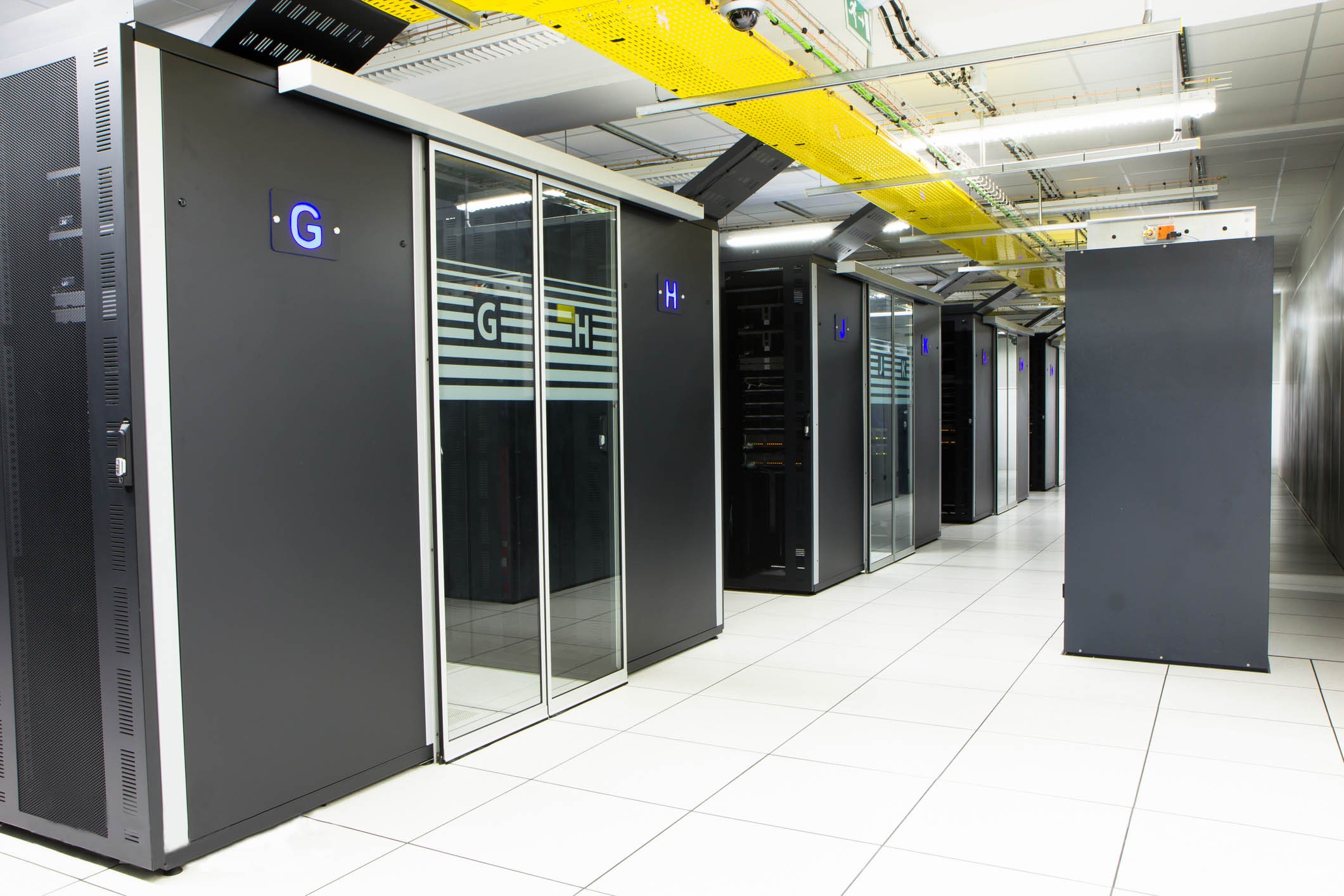
The weights went up on Thursday: roughly one trillion parameters in total, forty-nine billion of them active on any given token, a mixture-of-experts architecture with image and text inputs. Mistral Large 4 is, by parameter count, among the largest models any lab has released for anyone to download, and the Paris company published the files rather than selling access to them.
The number that matters commercially is the smaller one. Sparse models activate a fraction of their weights per token, so the cost of answering a query tracks the active count rather than the total. Forty-nine billion active parameters is a load an enterprise cluster can carry; the trillion-parameter weight file is what makes the download a project rather than an afternoon. Mistral is offering the reach of a frontier model at the operating cost of a mid-sized one, the pitch behind most open-weight releases since the format became standard.
The company says the model leads the open field on coding benchmarks and on defensive-security evaluations. Those are its own numbers, published alongside the weights, and independent replication will take weeks. The choice of benchmarks is the interesting part. Coding and security are the two workloads where enterprises will pay for a model they can run inside their own network, and where the buyer’s own legal and compliance staff decide whether a hosted API is acceptable.
Mistral has also given the model three reasoning modes, letting a user trade latency against deliberation per request. That is a product decision as much as a technical one. Reasoning models are expensive to serve, and a single setting that always thinks hard is unusable for the customer support queue or the log-triage pipeline that runs a hundred thousand times a day.
The release carries an awkward piece of recent history. Mistral has warned publicly that models of this capability can be turned to real offensive work — that the same weights which help a defender find a flaw help an attacker find it faster — and it released them anyway. The company’s position, stated across several releases, is that open weights distribute defensive capability more widely than offensive capability, because defenders operate inside systems they control whereas attackers must first get in.
That argument has never been tested, and the counterargument is not that open models are uniquely dangerous but that they remove the friction. A hosted model can be rate-limited, monitored, and withdrawn. A downloaded one cannot. Once the files are on a disk in a jurisdiction with no export control and no reporting requirement, the lab’s intentions stop constraining anything.
What Mistral gains is distribution. Enterprises that will not send data to a U.S. API — European banks, defense contractors, health systems, government agencies — will run a model on their own metal, and a company that supplies that model builds a relationship the hosted labs cannot easily displace. The three reasoning modes and the security framing are aimed at exactly that buyer. So is the licensing, which for earlier Mistral releases has been written to permit commercial deployment under conditions that vary with model size, a middle path between fully permissive terms and closed weights.
Europe’s regulators now hold the other end of the question. The AI Act’s treatment of general-purpose models includes a partial exemption for open-weight systems, on the theory that publishing weights is itself a form of transparency. That exemption does not apply to models judged to carry systemic risk, and the threshold separating the two is defined in training compute rather than in deployed capability. Where a model of this size lands against that line determines whether its release is a template or an exception.
The security industry is already the most active consumer. Firms that sell detection and response have spent two years assembling internal models for triage and code review, most of them smaller and fine-tuned on their own telemetry. A one-trillion-parameter base that can be fine-tuned locally is a different proposition, and the vendors most likely to use it are the ones least likely to discuss it publicly.
There is a second-order effect on pricing. Frontier capability that can be downloaded sets a ceiling on what hosted providers can charge for commodity tasks, and the ceiling moves down with every release of this kind. The labs selling API access have responded by competing on things weights cannot reproduce: long context, tool orchestration, uptime, and the compliance paperwork that lets a bank use them at all.
For Mistral, the open release is also a fundraising argument. Training a model at this scale is expensive, and the company has raised repeatedly to stay in a race whose leaders spend billions per year. Publishing weights converts that spending into a position in the enterprise stack, where the model is free and the support, the fine-tuning and the deployment contract are not.
The unresolved question is durability. Open weights can be copied, and a competitor can serve the same model more cheaply within weeks, which means the release buys attention and installation rather than recurring revenue. Mistral’s bet is that installation is the harder problem, and that the customer who has already integrated a model into an air-gapped cluster will pay for the next version rather than switch.
Whether European regulators let this become a pattern is now the variable that matters most. If open releases at this scale survive the systemic-risk test, other labs will follow, and the frontier will have a public tier. If they do not, Mistral Large 4 will read in retrospect as the last of something rather than the first.