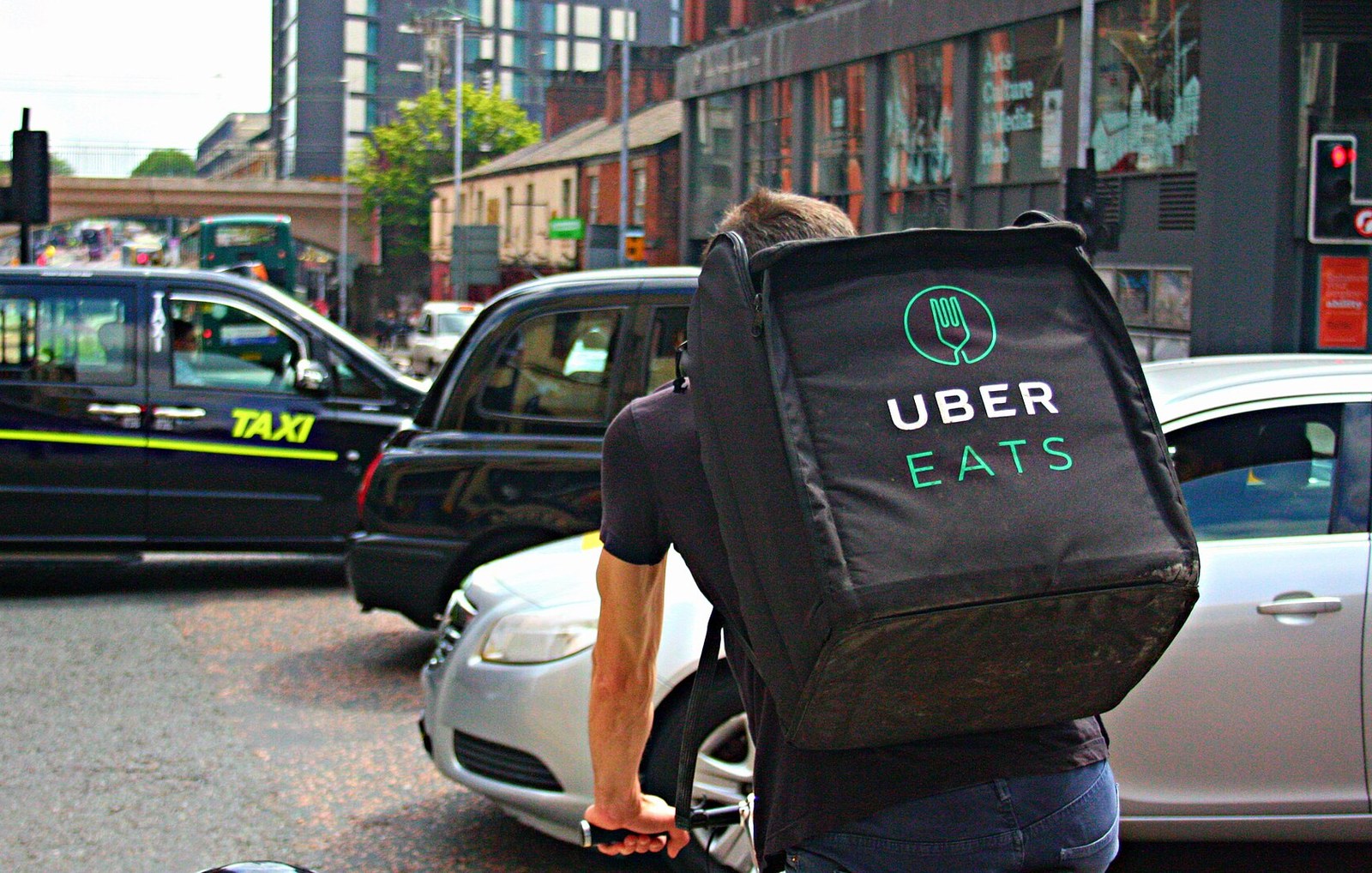
The order form will sit inside Amazon’s own app. The courier who arrives at the door will work for Uber.
Uber Eats becomes the official U.S. delivery partner for Amazon Prime, the two companies said on November 5. Prime members will be able to order from restaurants on Amazon’s website and in its app without creating an Uber account, and orders of $25 or more will carry no delivery fee. The arrangement replaces a partnership with Grubhub that Amazon signed in 2022 and that ends the same day.
An Amazon spokeswoman said the company will keep evaluating third-party benefits for members, a sentence that leaves the door open in both directions. For the first two weeks, members get $20 off a first order of $25 or more, a promotion that says something about how much the companies are willing to pay to move a customer from one habit to another.
The mechanics matter more than the announcement. A Prime membership has become a bundle of borrowed services: shipping, video, music, and now dinner. Each addition raises the cost of leaving and lowers the cost of trying. Amazon does not need to run a restaurant marketplace to capture the value. It needs only to own the moment when a member is hungry and already holding the phone.
That is the part Uber is buying. Delivery aggregators spend heavily to acquire users who order a few times and drift away. A placement inside Amazon’s app reaches people who have already paid for a subscription, already have a card on file, and already open the app several times a week. From Uber’s side, the payments look less like marketing and more like rent.
The rent is not cheap. A $20 credit on a $25 order is a discount of 80%, applied before anyone cooks anything and before a courier drives anywhere. Uber has not said who absorbs the delivery fee on larger baskets, and the answer decides whether this is a customer acquisition channel or a subsidy with a logo on it. Free delivery on every order above $25 is a promise that gets more expensive as the program succeeds.
For Grubhub, the change removes a distribution channel it has held since 2022. The company built part of its consumer strategy around the traffic that a Prime tie-up delivered, and that traffic now goes to a competitor with a larger courier network. The termination arrived with the announcement rather than ahead of it, which is how these arrangements usually end: a line in a press release and a spokeswoman’s promise to keep evaluating.
The choice also fits a pattern. Amazon and Uber already work together on cloud services, on the Zoox robotaxi program, and on Alexa+, and each of those deals gives the two companies another reason to prefer each other’s terms. Amazon gets logistics it does not have to build. Uber gets demand it does not have to buy at the market rate. The relationship has moved from a vendor contract to something closer to an alliance, and alliances of that kind are harder to unwind than a single agreement.
The risk sits on both sides. Amazon has now handed a consumer surface to one partner, and the Grubhub episode shows how quickly that partner can be replaced. Uber, for its part, is renting access to a customer base it cannot reach on its own, at a price set by the landlord. Every renewal is a negotiation in which Amazon holds the traffic and Uber holds the couriers, and neither has much reason to make the other comfortable.
There is a strategic point underneath the promotion. Food delivery has settled into a contest over frequency rather than reach. The major apps have national coverage and similar restaurant lists, so the difference between them is how often a household opens one. Amazon’s app is opened for reasons that have nothing to do with food, which makes it a cheaper place to remind people that dinner can be ordered. Uber is paying for that reminder, and the fee is the $20 credit plus whatever share of the delivery cost it has agreed to carry.
Competitors will read the deal as a signal about where demand is cheapest to reach. If a placement inside a subscription bundle produces orders at a lower cost than a television campaign, other platforms with large installed bases will be approached, and the price of those placements will rise. If it does not, the promotion will quietly expire and the arrangement will be reviewed at the next renewal, exactly as the Grubhub one was.
The Grubhub partnership lasted a little over three years. That is a useful benchmark for anyone modeling this one. Amazon’s statement that it evaluates third-party benefits is not a commitment to any duration, and the two-week credit window suggests the companies expect to learn quickly whether Prime members treat food the way they treat video: as something included rather than something chosen.
The interesting question is what Amazon does with the slot after the trial. A permanent rotation, in which the partner changes whenever a better offer arrives, would turn the Prime app into an auction and keep Uber and its rivals bidding against each other. A single long-term partner would turn Amazon into a distribution channel with a stake in one company’s success. The spokeswoman’s sentence supports the first reading. The size of the promotion suggests the second might be worth more.
Either way, the member sees a button, a delivery time, and a total. The companies see a toll booth, a courier network, and a negotiation that begins again the moment the credit runs out.