
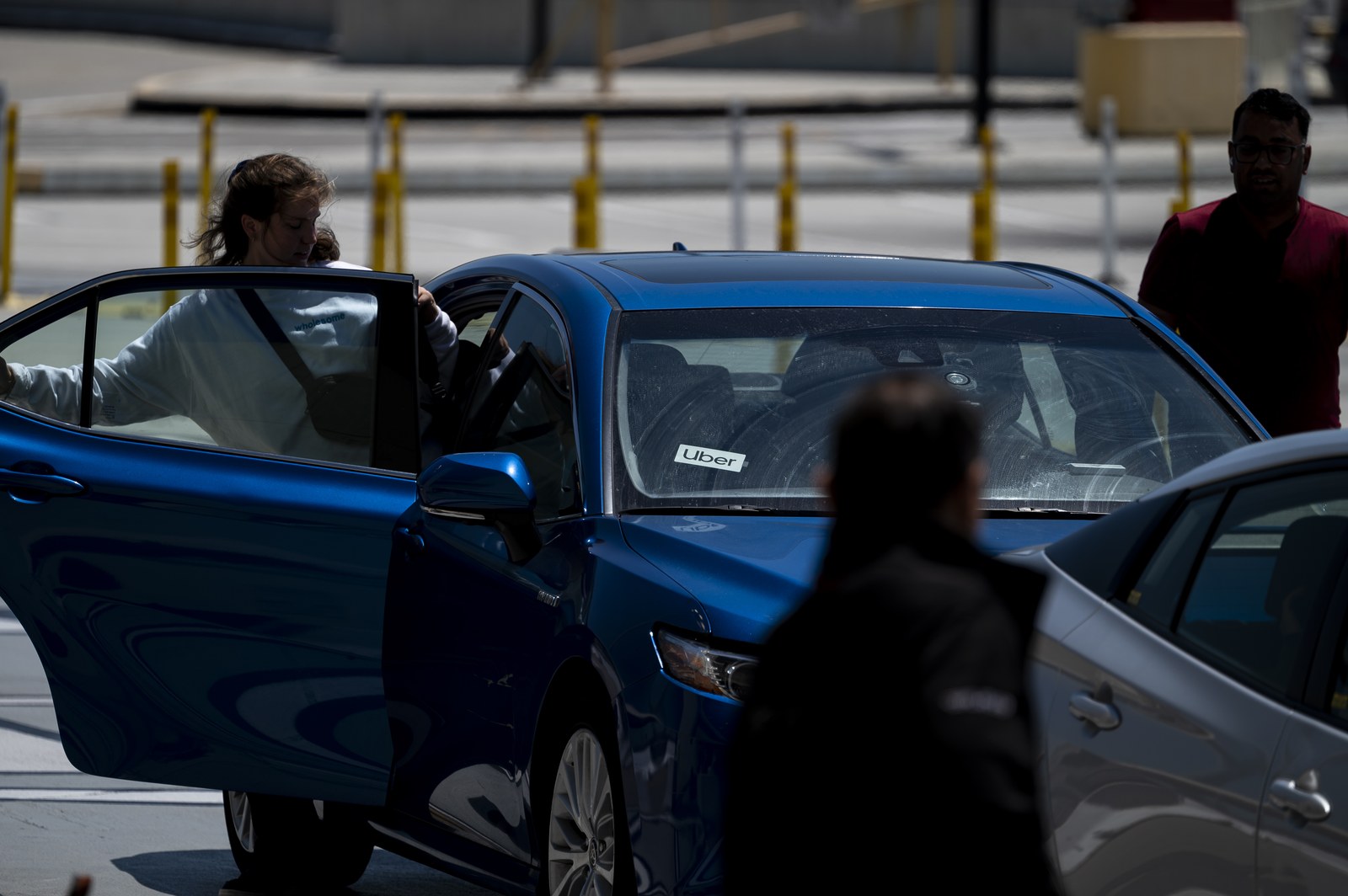
Uber’s net income fell 92% in the third quarter, to $512 million, and almost none of that decline has anything to do with how the business performed between July and September.
The comparison is the reason. A year earlier the company booked a $4.9 billion tax valuation release, an accounting gain that flowed through net income without any cash arriving. Against that base, this year’s profit looks like a collapse. Revenue, which is harder to distort, rose 10% to $14.77 billion and came in above what analysts had expected.
The composition of that revenue is where the quarter gets interesting. Mobility, the ride-hailing business that still defines the company, saw revenue fall 2% to $7.52 billion. Delivery rose 23% to $5.49 billion. Freight rose 34% to $1.76 billion, and the company identified that segment as the main reason the quarter beat expectations. Gross bookings across the platform rose 20% to $59.82 billion.
Freight is the surprise. The business Uber entered by acquiring Otto and later Transplace has spent several years as the segment investors discounted, a brokerage operation exposed to a trucking market that went from pandemic boom to a long freight recession. A 34% increase in revenue in that environment suggests either a recovery in volumes, a gain in share, or a change in how the business is priced, and the company’s release does not separate the three. What it does show is a segment large enough to move the consolidated number, which was not true two years ago.
The decline in mobility revenue alongside 20% growth in gross bookings is the divergence analysts will press on. Bookings measure the value of rides taken. Revenue measures what the company keeps after paying drivers and after accounting for incentives. When the two move in opposite directions, the explanation usually sits in driver incentives, in the mix of markets, or in how the company records the cost of insurance and support.
The robotaxi question came up as it does every quarter. Chief Executive Dara Khosrowshahi said the platform will have more than 2,000 autonomous vehicles on it in 2027, with volume scaling from 2028. That is a specific promise with a specific date, which is unusual in a category where most operators speak in ranges. It also implies that Uber intends to be the marketplace through which robotaxis reach passengers rather than a company that builds them, a position consistent with its partnerships across several developers.
Two thousand vehicles is a small number against a global fleet of drivers. The significance is not the count but the curve. If the company expects the number to grow quickly after 2028, it is betting that the cost per mile of an autonomous trip falls below the cost of a driven one in enough cities to matter, and that its dispatch system captures the demand that follows. If the curve is slower, the promise becomes a footnote in a later earnings call.
The quarter’s other news came from a courtroom in Canberra. The High Court of Australia ruled on November 4 that Uber must pay A$81 million in payroll tax on driver compensation, resolving a dispute about whether its drivers are employees for tax purposes or independent contractors using a platform. The amount is modest against quarterly revenue. The principle is not, because the same question is being litigated in several other jurisdictions where the answer determines both the tax bill and the labor protections attached to the work.
Uber has argued for a decade that its drivers are independent, and its business model is built on the flexibility that classification provides. Courts have been unconvinced in enough places that the company now operates under a patchwork of local rules, some of which treat drivers as workers entitled to minimum standards and some of which do not. Each ruling adds a line to the cost base and a precedent to the next case.
What the quarter shows is a company whose growth has moved away from the core product. Delivery is now larger than it was and growing four times faster than mobility. Freight, the segment written off during the downturn, is the fastest-growing piece. Rides, the business that made the brand, is shrinking on the revenue line while bookings expand.
Whether that mix is strength or a symptom depends on the next two quarters. A platform that grows through delivery and freight while rides mature is a logistics company with a consumer front end, and it should be valued on logistics multiples. A platform that uses those segments to fund an autonomous future is a different proposition entirely, and it is the one Khosrowshahi is asking investors to buy.
The market will want evidence on both before it decides. Freight growth that holds through a soft trucking market would suggest share gains rather than a cyclical bounce. A robotaxi count that reaches 2,000 on schedule would suggest the partnerships are converting. Until then the company has a quarter that beat on the top line, a profit figure that fell for accounting reasons, and a court ruling in Australia that says the classification argument is not settled anywhere.



