The money that builds a quantum computer does not usually arrive as a grant from a commerce ministry. It arrives as venture capital, as a corporate research budget, or as a contract with a defense agency that would rather not describe what it is buying. On Nov 13, Atom Computing confirmed a different arrangement.
The company said it signed a research agreement with the CHIPS Research and Development Office at the U.S. Department of Commerce, worth as much as $100 million, to push toward quantum computers that can tolerate their own errors and be used for real work. The funding comes from the research side of the CHIPS and Science Act rather than its manufacturing incentives, a distinction that matters to anyone who has watched the program’s money flow toward fabrication plants.
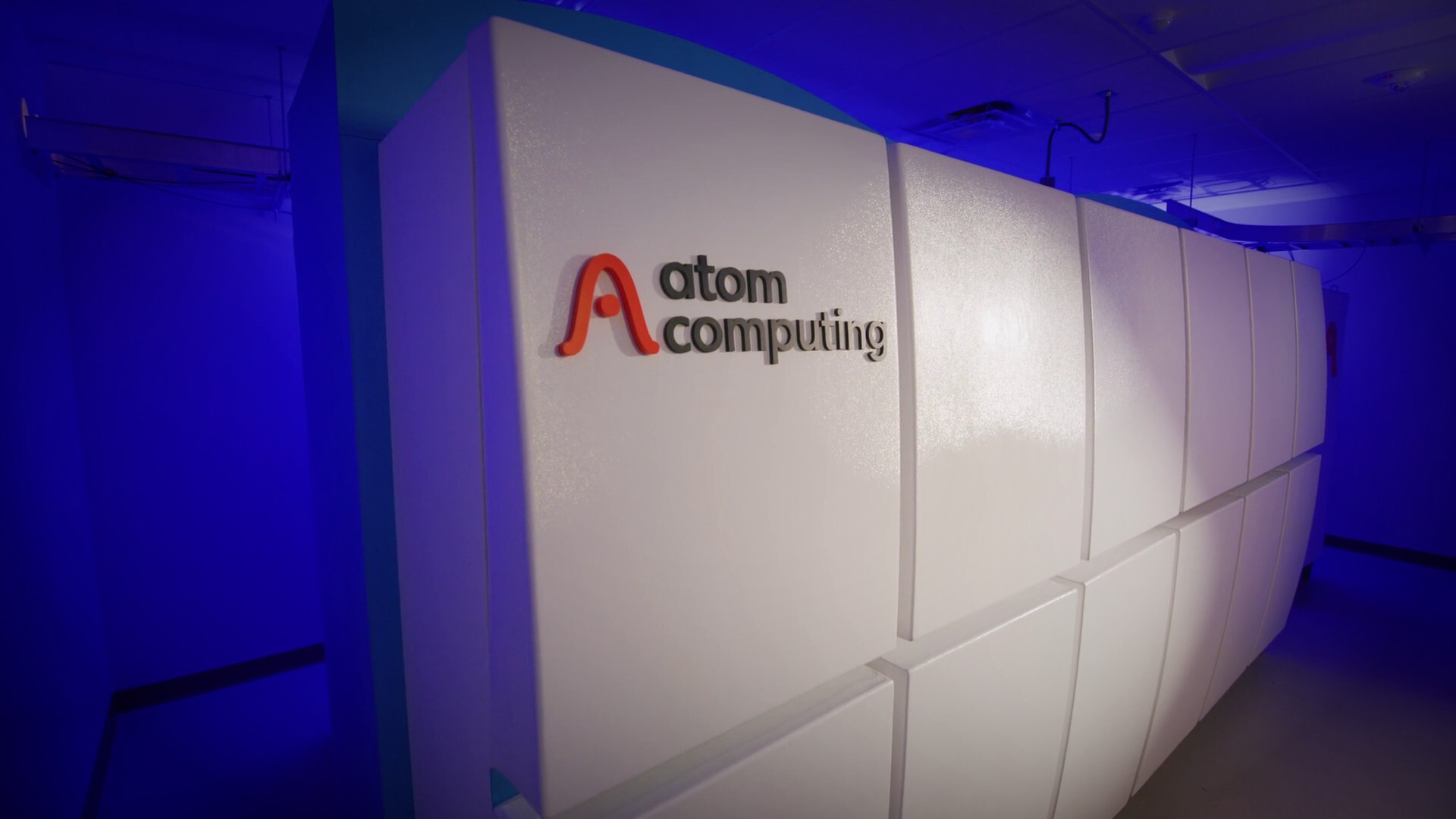
Atom Computing builds machines that hold individual atoms in place with laser light and use their internal states as qubits. The approach is one of several competing designs, alongside the superconducting circuits that IBM and Google have pursued and the trapped ions that sit at the center of Quantinuum’s systems. Neutral atoms have an advantage in scale, because an array of atoms can be enlarged by adding more light rather than by building a larger chip.
They also have a disadvantage that has kept the field honest. Atoms drift, lasers misalign, and the error rates that come with either problem are precisely what stands between a laboratory demonstration and a machine that a bank or a pharmaceutical company would pay to use.
That is the work the award is meant to fund. The office’s stated focus is error correction and the path to scale, not another prototype. Building a fault-tolerant machine means encoding one logical qubit across many physical ones, which multiplies the hardware required and turns every earlier result into a smaller achievement than it looked.
The Commerce Department has spent most of the past three years directing semiconductor money toward factories, workforce programs and packaging. Its research office has a smaller budget and a quieter mandate, and awards that go directly to a quantum company have been rare enough that this one stands out.
The research office sits inside a program that was written with laboratories in mind. Its money has gone to NIST, to university consortia and to shared fabrication facilities, on the theory that the government’s role is to fund the parts of a technology that no single company can justify. A direct award to one startup runs against that instinct, and the office has been selective about when to make one.
Atom Computing is not alone in the neutral-atom lane. QuEra, Pasqal and a cluster of university groups have built machines on the same principle, and several of them have published results on error correction that the field treats as the standard to beat. Being first to a fault-tolerant machine matters commercially, and being second matters much less than it does in a market where the product is a chip.
Analysts said the award is less a bet on one architecture than a decision to keep several alive. Superconducting machines have the deepest corporate backing, trapped ions have the cleanest error rates, and neutral atoms have the most room to grow. A government that funds only the leader risks locking in a design that turns out to be the wrong one.
There is a political dimension as well. Quantum computing has become a subject on which lawmakers can agree, and the CHIPS Act’s research title was written to keep the country ahead in technologies whose commercial timing nobody can predict. Money that arrives through that channel carries expectations about domestic manufacturing and domestic employment that venture funding does not.
For Atom Computing, the practical effect is a longer runway and a different kind of scrutiny. A private company can choose which results to publish. A company drawing on a federal research agreement reports its results to an agency, and those reports become the timetable against which its progress is measured in public.
The company has not said how the money will be split between hardware, software and hiring, or how many years the agreement covers. It has described the work as aimed at fault tolerance, which in this field is a statement about the next several years rather than the next quarter.
That timeline collides with the market’s patience. Investors have spent the past two years pushing quantum companies to name a customer, a use case and a date, and the answers have mostly been that the machines are not yet good enough to be useful. A research award does not resolve that. It buys the time to keep working on the part that is hardest to fake.
The comparison that analysts keep returning to is the early semiconductor industry, when government contracts and university laboratories carried a technology through the years before anyone could sell it. That comparison is flattering and slightly misleading, because the chip industry had a clear product at the end of the tunnel and quantum computing still does not.
What the award does establish is that the federal government is willing to put money behind a specific technical bet in a field where the commercial case remains unproven. For a company of Atom Computing’s size, that is worth more than the sum involved, because it tells customers, suppliers and future investors that someone outside the building has read the roadmap and accepted it.