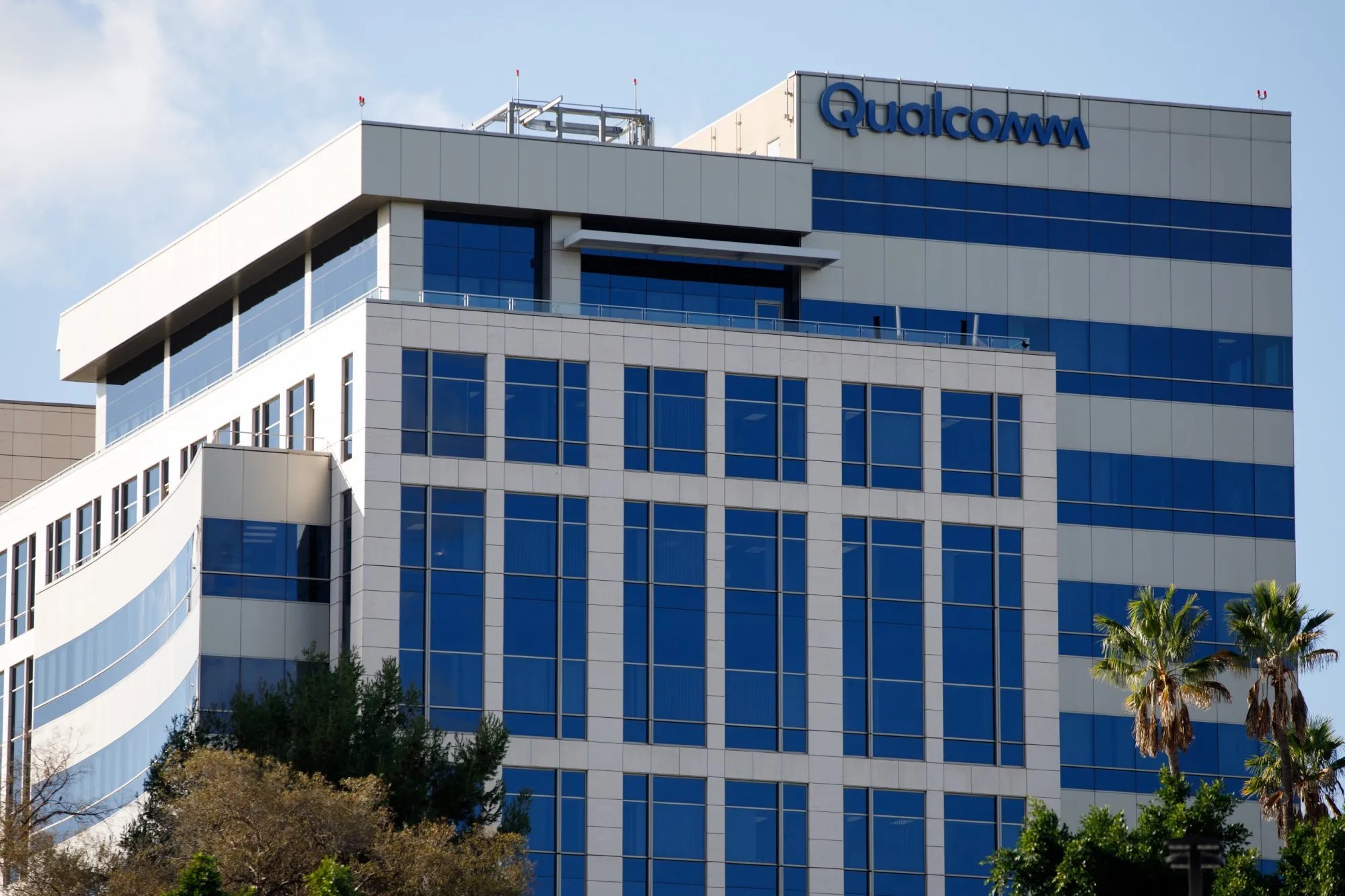
The confirmation came on Nov 20, in the flat language companies use for this kind of news: about 500 positions eliminated in California, spread across departments in San Diego and the Bay Area, the company said.
For anyone who does not follow chip companies, the detail that matters is what Qualcomm makes. Its chips connect phones to cellular networks, run the compute inside many Android handsets, and increasingly sit in cars and laptops. The cuts land on the teams that design and support that silicon, which means the effect will eventually reach products people buy, even if it arrives quietly.
They also land in a company town. San Diego’s technology economy leans on Qualcomm the way Seattle leans on its largest employer: the company is the anchor tenant for a cluster of suppliers, contractors and smaller firms that grew up around it. When several hundred paychecks stop, the effect shows up in hiring, in commercial real estate and in the local tax base, as well as in the severance rolls.
The company’s explanation was about placement rather than retreat. In an internal note, chief executive Cristiano Amon told employees that Qualcomm needed to put people in the right places as the business changes shape. That is the standard framing for a reorganization, and it is not wrong: the company is hiring in some areas while reducing in others.
What it is hiring for is the part investors watch. Qualcomm has spent several years pushing AI out of the data center and onto the device. In plain terms, that means running models on a phone or a laptop instead of sending every request to a server farm, which saves power, keeps data local and does not require a network connection.
The handset business sets the constraint. Global smartphone shipments have been roughly flat for years, and the premium segment where Qualcomm earns most of its licensing and chip revenue grows slowly. A company that depends on that market has to find growth elsewhere or shrink the cost base that serves it, and the two moves rarely happen in the same quarter without friction.
The company’s argument is that this is where most AI will eventually run, because it is cheaper and faster. Its Snapdragon chips carry neural processing units built for the job, and its laptop processors have taken share in the premium end of the Windows market.
Cars are the second bet. Qualcomm’s automotive line bundles cockpit electronics, connectivity and driver assistance onto a single platform, and the company has signed design wins with most large automakers. Revenue from that business has grown faster than the handset division for several quarters.
Data centers are the newest addition. Qualcomm told investors last quarter that it would treat data center silicon as a growth area, a late entry into a market dominated by Nvidia and pursued by every large chip company. The opportunity is real and the competition is severe.
The counterargument deserves room. Analysts who follow the company say the reductions are modest against a workforce of roughly 49,000 and consistent with a pattern of annual rebalancing. Qualcomm has cut staff in California before, in larger numbers, and hired again once demand returned. A company trimming 1% of its payroll is not necessarily a company in trouble.
History offers a partial guide. Qualcomm cut more than a thousand California jobs in 2023 as handset demand fell, then rebuilt in automotive and computing as the market recovered. The pattern repeated after earlier downturns. Each round was described as repositioning, and each one was followed by hiring somewhere else.
There is also the Apple problem, which is neither new nor fully priced. Apple has been building its own modem chips, and as those parts improve, Qualcomm’s share of iPhone connectivity business is expected to shrink. Qualcomm has said publicly that it plans for a smaller contribution from that customer. The transition is the reason the company is spending on cars, laptops and data centers at all.
Employees experience the arithmetic differently. A reorganization that moves work from one team to another is a spreadsheet for the people designing it and a disruption for the people living it. Severance terms, notice periods and the possibility of relocation determine whether five hundred cuts read as a trim or as the beginning of something larger.
California law gives workers some protection through notice requirements, and large employers must file notices when cuts cross a threshold. Those filings become the public record of what happened, weeks before the company says anything.
Back in San Diego, the practical question is the same one that follows every cut in a company town. Whether the roles that disappear are replaced by different roles in the same buildings, or whether the work moves to a cheaper site and the buildings empty out.
In that note, the chief executive said the company was placing people for the next phase of its business. The next two earnings reports will show whether the phase needs as many people as the last one did.