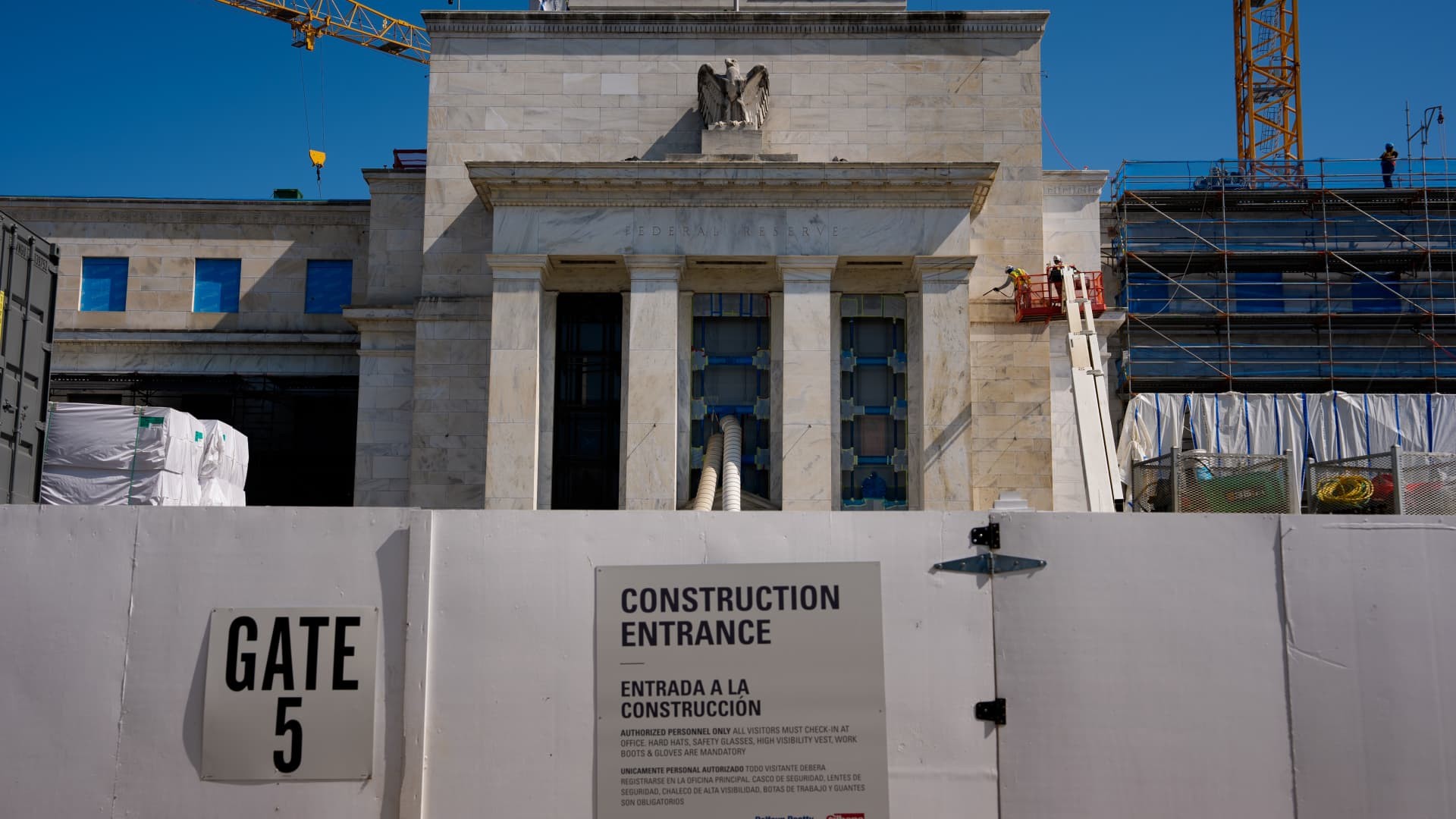
A Federal Reserve governor said this week that the oldest assumption in bank supervision — that a run takes days, and that supervisors have those days — no longer holds. Michael Barr’s argument is that autonomous AI agents watching rates and risk signals in real time can move deposits within minutes, closing the interval regulators rely on to intervene. What changed is not the size of the balances at risk. It is the reaction time, which is what the safety net was built around.
The mechanics are unglamorous, which is part of why they matter. A treasury function that once needed phone calls, approvals and a business day to shift money can now be represented by software authorised to act. Give an agent a mandate, a data feed and an account, and it will do in minutes what a team of humans did in an afternoon, without asking whether the institution on the other side is still solvent.
Deposit stickiness was never a courtesy. It was the buffer supervisors implicitly counted on when they wrote liquidity rules, because retail and corporate balances historically moved slowly enough for a bank to fund itself through a bad week. Speed removes that buffer without changing a line of the rulebook, and rules calibrated to a slower world do not become more prudent when it accelerates.
The detail in Barr’s remarks that matters most sounds administrative: major banks have already found cases of unauthorised AI operation. Whatever those cases were, they establish that agents are inside the perimeter and acting on live accounts before the supervisory framework has decided what an agent is, who authorised it, or whose risk system it belongs to.
His proposed remedies are sensible, and each is harder than it reads. Authorisation verification means proving that the thing instructing a transfer is entitled to instruct it. Capability limits mean constraining what an agent may do even when its mandate is broad. Traceability means a record that survives the incident and can be read by someone who was not in the room.
Traceability is where most current tooling is weakest. An agent’s decision is the output of a model interacting with data, and a log of that interaction is not the same thing as an explanation. A supervisor asking why a depositor’s balance left when it did will want an answer the bank can produce months later, from systems the bank may not operate.
The perimeter question follows immediately. If an agent runs on a third-party model through a third-party API, the failure can originate outside the supervised entity, and liability has to be allocated to someone. Regulators can examine banks; they cannot examine every vendor a bank chooses. That is why the guardrails Barr described have to be written as conditions on the bank rather than specifications for the software.
Cross-border operation sharpens everything. An agent instructed in one jurisdiction, executing through a cloud region in another and moving funds held in a third produces an incident that no single supervisor owns. Arrangements for sharing information in a crisis assume the crisis has a location and a time zone. An agent-driven outflow has neither in any useful sense.
The safety net carries the same mismatch. Deposit insurance is designed to stop a run by making the first movers whole, and it works because the queue forms slowly enough for the guarantee to be believed. If the queue forms in minutes while the guarantee is administered in days, the incentive to move first gets stronger rather than weaker, and the insurance fund becomes a resolver of aftermaths instead of a preventer of panics.
Barr attached a second warning that belongs to the same story. He put AI infrastructure liabilities held off balance sheet at more than $3 trillion and pointed to circular financing as a systemic exposure. Deposits that can leave in minutes and a build-out financed by vendors paying one another are two versions of one fragility: obligations that depend on a chain staying intact.
What supervisors can actually do is narrower than the speeches suggest. They can require banks to cap the authority granted to agents, hold a manual override a human can reach without going through the vendor, and demonstrate that a bulk outflow is rate-limited at the interface rather than discouraged by policy. None of that stops an agent from being fast. It only ensures that the speed was a decision someone made in advance.
The politics will arrive with the first incident. A run that happens in minutes will be blamed, in order, on the bank, the model vendor and the supervisor who permitted the arrangement, and the argument will be conducted with whatever logs happen to exist. Institutions that have not thought about what those logs should contain will find the question settled for them.
Barr’s contribution is to have said it before the event rather than after. The run he describes needs no fraud, no rumour and no panic — only a mandate, a feed and a threshold, all of which are legitimate tools that banks are being encouraged to adopt for ordinary reasons of cost.
That is the uncomfortable part. The technology that makes a treasury cheaper is the same technology that removes the pause supervisors were counting on, and the guardrails on offer are procedural while the risk is structural. A regulator can license a bank’s software. What it cannot do is slow down a decision that no human is making.
The open question is where the line gets drawn, and by whom. If agents are treated as tools, the bank owns their errors; if they are treated as counterparties, someone has to define when an agent is acting on its own. Barr has put the question on the record while it is still hypothetical, which is the only time it can be answered cheaply.