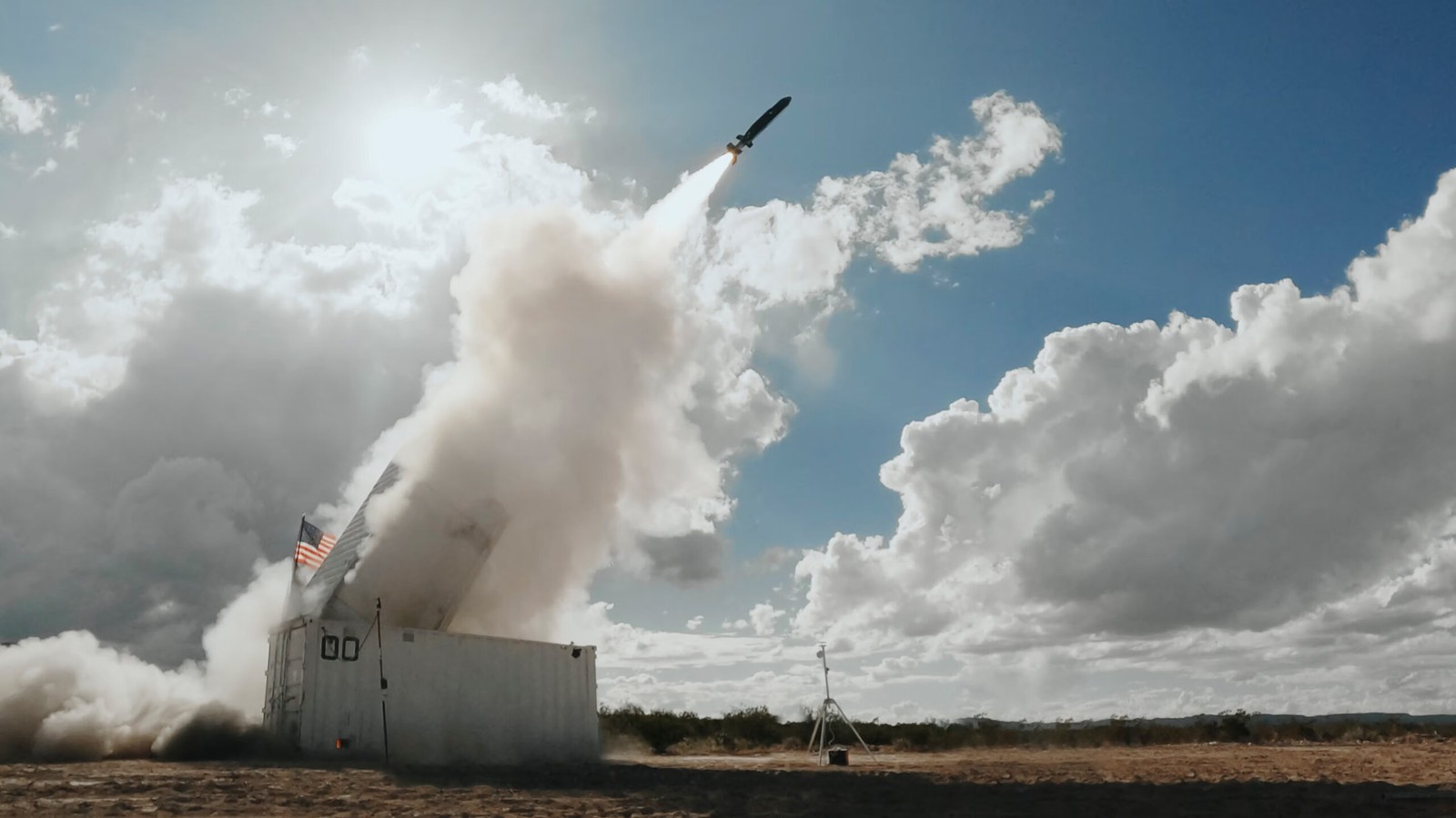
The Air Force chose Anduril Industries this week to design the containerized launcher for its new class of cheap anti-air missiles, a piece of hardware that determines how quickly and how widely the service can fire them. The award sits under the Counter-Air Missile Program, known inside the Pentagon as CAMP.
The launcher is meant to work with interceptors from more than one manufacturer, which is unusual in a market where weapons and the boxes that fire them have traditionally been sold together. Anduril has 10 months to complete preliminary design. The Air Force has said it wants interceptors that cost less than $500,000 each, a figure that shapes everything around them.
That price target is the point of the program. Air defense has spent two decades building interceptors that can hit almost anything and cost more than the drones and rockets they are fired at. A military that runs out of ammunition in the first week of a conflict has a technology problem dressed as a budget problem, and the Pentagon has been saying so in public for three years.
CAMP splits the work. One set of contractors builds the missile, another builds the launcher, and the service keeps the interfaces open enough that a third supplier can join later. Anduril’s job is the container: a box that can be shipped, dropped on a flatbed, left unattended and fired without a crew standing next to it.
The company’s software platform, Lattice, is central to that. Anduril has built its business on the argument that weapons should be networked from the start rather than integrated after delivery, and a launcher that has to talk to a radar, a command post and a missile from another vendor is a reasonable place to demonstrate it.
The company was founded in 2017 by Palmer Luckey and has grown from a maker of surveillance towers on the southern border into one of the largest privately held defense contractors in the United States, valued at $30.5 billion in its 2025 funding round. It builds autonomous aircraft, undersea vehicles, rocket motors and the software that ties them together.
On Tuesday, company executives also addressed a question that has followed Anduril for years. Asked about the public markets, they said a listing is possible in the next few years. That is a softer formulation than a plan, and executives at private defense companies have learned to keep it that way, because the disclosure requirements of a public listing sit badly with classified programs.
The industrial side of the business expanded the same week. Anduril and HD Hyundai launched a 600-ton unmanned surface vessel at the Korean shipbuilder’s yard in Ulsan, a ship the two companies funded themselves and completed in about a year. The vessel is designed to operate without a crew for long periods, and its rapid construction is as much the point as its capabilities.
Shipbuilding is the hardest part of the defense industrial base to speed up. American yards build submarines slowly and surface ships slower, and the Navy has spent years looking for ways to add capacity without adding decades. Partnering with a Korean yard is one answer, and it comes with political complications that neither company has been eager to discuss.
Cost per shot is the metric the program will be judged on, and it is not the same as the price of the missile. A launcher that requires a crew, a generator and a dedicated radar has costs that arrive outside the contract line, and the Air Force has asked for designs that can be placed with minimal support. Containerization is an old idea in air defense, revived because the alternative is a fixed site that an adversary can map.
For Anduril the launcher contract is smaller in dollars than the ships and aircraft that made its reputation. It matters because of what it sits between: a cheap missile on one side and a networked command system on the other. Whoever owns the box in the middle owns the integration, and integration is where margins and influence accumulate.
Anduril’s own manufacturing strategy is part of the pitch. The company builds in its own factories rather than through traditional prime contractors, arguing that the standard subcontracting chain adds years and margin without adding capability. That approach has worked for smaller products. Whether it scales to a program the size of CAMP is untested.
The risks are ordinary and real. Prototype contracts are not production contracts, and the Air Force has awarded several of them across the program, which means Anduril is one of a group rather than the sole supplier. Ten months is a short window for hardware that has to survive field conditions, and the cost target applies to the missile rather than the launcher, leaving the box to compete on price against simpler designs.
There is also the question of whether the strategy survives a change of administration. CAMP has support across both parties because the underlying problem, insufficient interceptor inventory, is not ideological. Programs with that kind of support usually persist. They also usually get stretched, and the timetable slips in ways that hurt small suppliers more than large ones.
Anduril has spent eight years arguing that the Pentagon buys software badly and hardware slowly, and that a company built differently can do both faster. A launcher delivered on schedule, at a price the service can afford in quantity, would be the cleanest evidence yet. A listing would be the market’s verdict on the same claim, priced in public.