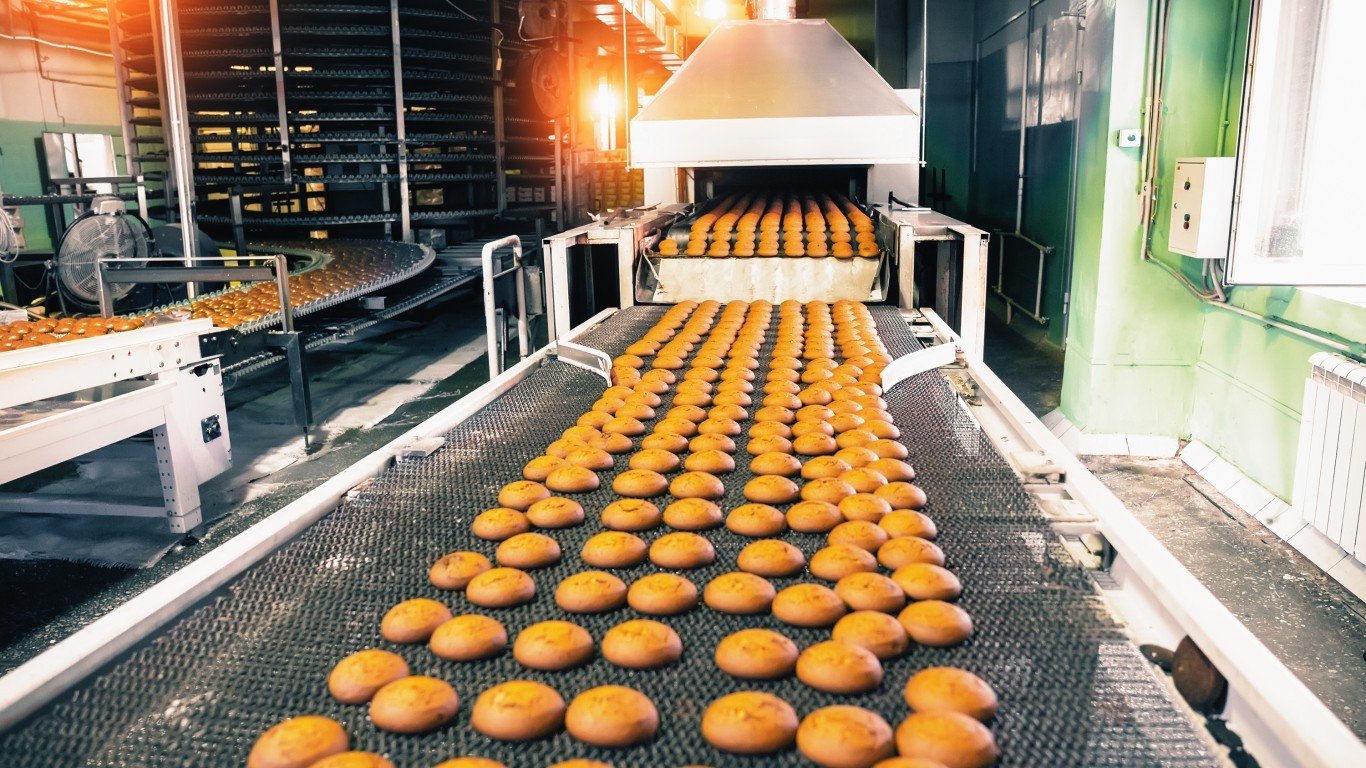
The changeover between two production runs is the part of a food plant that automation has never really solved. A line stops, a crew cleans, paperwork moves, and an hour disappears. Nestle said on Nov. 20 that it will build a center with Microsoft and Boston Dynamics aimed at that hour, and at the walk-through that follows it.
The facility, which the company calls Future Food and Factory, will work on three things it named: scheduling production lines, inspecting equipment, and developing products. The Wall Street Journal described it as the largest industrial AI program Nestle has run.
Size is the reason the project is worth watching. The company reported CHF 91.4 billion in sales for 2024, made in hundreds of factories that turn cocoa, milk powder and coffee into branded goods, and it employs roughly 270,000 people. Food manufacturing earns thin trading margins in the mid teens, so a few points recovered on changeover time and unplanned downtime reach the income statement quickly.
Microsoft’s contribution sits at the edge. Running a vision model inside the plant, on a server a few meters from a filling line, avoids the round trip to a distant cloud region that a camera inspecting 400 bottles a minute cannot afford. Azure has sold that architecture to factories for several years; a customer of Nestle’s reach is the reference case it has lacked.
The robots come from the third partner, the Waltham, Massachusetts company that Hyundai Motor Group bought in 2021. Its Spot machine walks inspection rounds with a thermal camera, and its Stretch unit unloads trailers, both of which generate the repetitive readings that a model needs before it can flag a bearing running warm.
Inspection is the easiest of the three problems to describe and the hardest to make pay. A person with a clipboard notices a sound or a smell and writes a note that nobody can compare across plants. A robot walking the same route every night produces numbers that can be compared, and a schedule that changes when they drift. The saving is not the technician’s salary; it is the stoppage that a technician’s round finds two days before it happens.
Scheduling is where the money is. Demand forecasts, ingredient arrivals and allergen rules all constrain the order in which products run, and the expensive switch is the one that requires a full wash-down between a nut product and one that must not contain nuts. Getting that sequence wrong costs hours rather than minutes, and a plant that runs four product changes a week pays for the error four times.
The data problem is unglamorous and large. Decades of acquisitions left Nestle running different systems in different countries, and a model that schedules a line needs one vocabulary for what a line is. The company has tried this before: its GLOBE program, a single SAP system across the group, began in 2000, ran for most of a decade and overspent its budget by a wide margin before it settled. Executives who lived through that project are wary of any promise that one platform will unify the plants.
The macro backdrop explains the timing. Food manufacturers face an aging workforce, tight labor in rural plant towns, and retailers who push cost increases back down the chain. Unilever, PepsiCo and Mondelez have all signed similar agreements with industrial software and chip vendors in the past two years.
Plant workers are the other constituency, and the one least represented in announcements of this kind. European and Latin American sites are heavily unionised, and the usual commitment is retraining rather than headcount pledges. A maintenance technician who learns to read a model’s alert has a different job title and, in most agreements, no different pay.
Nestle did not put a figure on the investment or on expected savings. Analysts said the payback will be measured in changeover minutes and maintenance calls avoided, both of which the company already tracks plant by plant, so the first honest reading may come with a quarterly report rather than a press release.
Food safety rules set the limits. Inspectors expect a documented reason for every deviation, and a model that moves a production order has to explain itself to someone with a clipboard and a legal mandate. That requirement pushes the project toward tools that log their reasoning, which is not where most consumer AI development has gone.
For Microsoft the deal is a foothold in process manufacturing, a segment where Amazon and Google have also been selling with modest results. For Hyundai the payoff is volume for a robot business that has spent years looking for repeat orders beyond research labs and warehouses.
Nestle did not say which plants will go first, or when the center’s output reaches a line. The announcement named the partners and the three workstreams, and left the schedule for later.