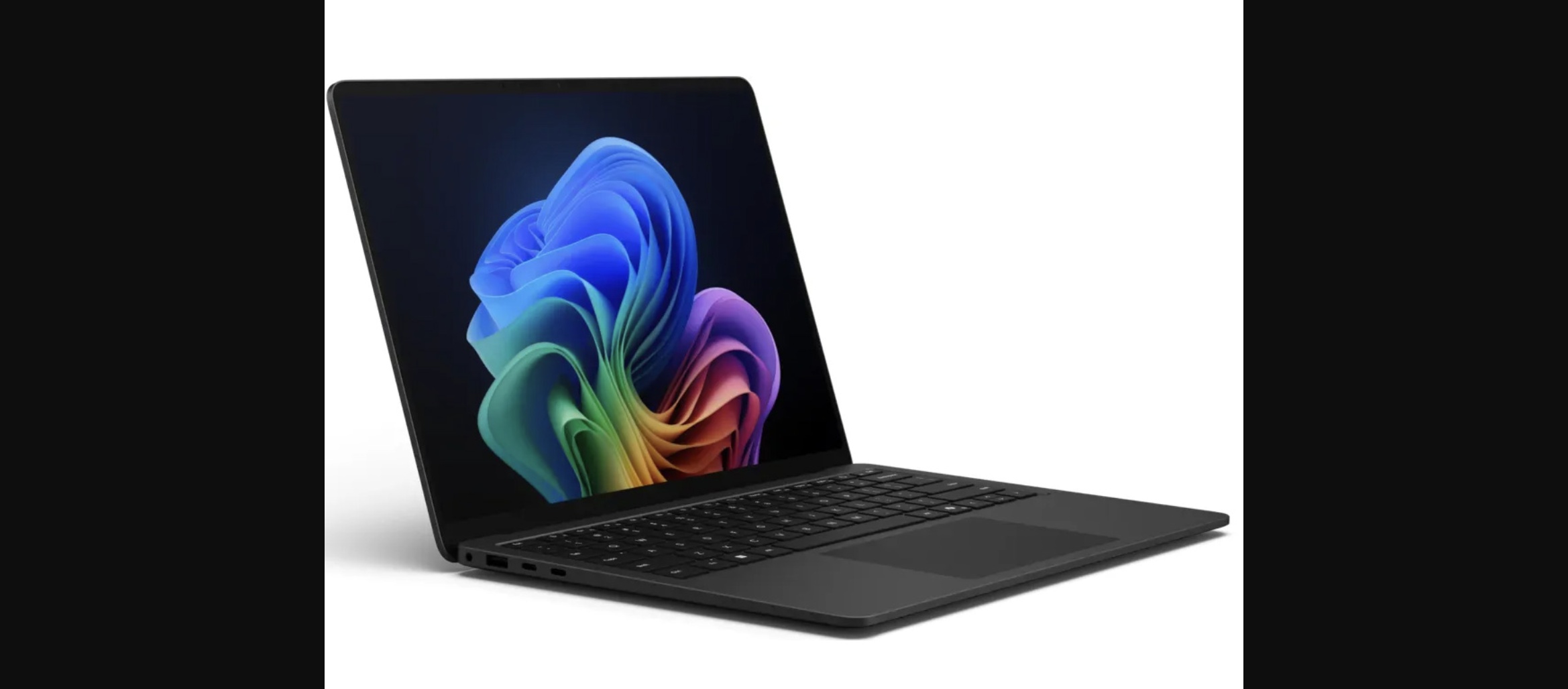
The announcement came during Nvidia’s Computex presentation, a sign of how intertwined the two companies have become. Microsoft unveiled the Surface Laptop Ultra on May 31, its most powerful laptop ever, built around a new Nvidia chip and aimed squarely at Apple’s MacBook Pro. The machine combines an Nvidia Blackwell RTX GPU with up to 128 gigabytes of unified memory and full CUDA support, delivering about one petaflop of AI compute, enough according to Microsoft to run models with up to 120 billion parameters locally.
The chip inside is Nvidia’s RTX Spark, a processor long known inside the industry by its internal code name, N1X. It pairs a 20-core Arm-based Grace CPU with a Blackwell GPU containing up to 6,144 CUDA cores, connected through Nvidia’s NVLink-C2C interconnect to a shared pool of LPDDR5X memory with up to 300 gigabytes per second of bandwidth. Nvidia says the graphics performance is comparable to a desktop GeForce RTX 5070, in an 80-watt envelope. The whole package is designed for a specific kind of user: creators, developers and AI builders who want workstation-class performance in a thin laptop.
The significance is partly historical. Microsoft has tried to take on Apple’s pro laptop franchise before, with the Surface Book and the Surface Laptop Studio, but both came with convertible designs and compromises that limited their appeal. The Laptop Ultra follows the MacBook Pro formula directly: a conventional clamshell, a 15-inch mini-LED display with up to 2,000 nits of peak brightness, and a port selection that includes USB4 and Thunderbolt. It is Microsoft’s first genuine attempt to compete with Apple on its own terms, and the industry noticed, with coverage of the device climbing to the front page of Hacker News within hours.
The reaction online was skeptical in the way only developers can be skeptical. Comment threads filled with arguments about whether Microsoft can finally deliver a machine that feels as polished as a MacBook Pro, whether Windows on Arm is ready for professional workloads, and whether the RTX Spark’s performance claims will survive real-world benchmarking. The question underneath all of it is whether Windows can match the platform cohesion Apple has built, where hardware, silicon, operating system and software ecosystem are designed together.
The hardware story is genuinely strong. The unified memory architecture is the key advance. A typical laptop with a discrete GPU can allocate only 8 or 12 gigabytes to the GPU, but the RTX Spark’s GPU can access nearly all of the system’s memory, which matters enormously for AI work. Loading a large model into memory and keeping it there while the CPU and GPU work on it simultaneously is exactly the workflow that Apple’s silicon made popular, and Nvidia’s implementation brings the same approach, plus CUDA, to Windows. For developers who live in the Nvidia ecosystem, the Surface Laptop Ultra offers something no MacBook can: the full CUDA software stack, running locally, on a laptop.
The software question is where it gets complicated. Windows on Arm has improved dramatically, with emulation of x86 applications now mature enough for most productivity work, but professional applications remain a mixed bag. Video editors, 3D tools and plugins often lag on Arm, and the history of Windows on Arm includes failures like the original Surface RT, which ran a stripped-down version of Windows and vanished. Microsoft has learned those lessons, and the company is pre-announcing the platform well ahead of availability to give developers time to port their software, but compatibility risk remains the biggest unknown.
The competitive math is not obviously in Microsoft’s favor. Apple’s M5-class MacBook Pros offer similar unified memory configurations, mature creator software and a track record of battery life and reliability that Windows laptops have struggled to match. Nvidia’s answer is CUDA: Apple’s platform has no equivalent of the Nvidia software ecosystem that dominates AI and professional graphics, and for the growing population of developers who run local models, the choice may come down to which platform runs their tools natively. Analysts said the Surface Laptop Ultra is less about beating Apple on benchmark scores than about establishing RTX Spark as a credible third platform for Windows, alongside Intel and Qualcomm.
The pricing has not been announced, which is itself notable for a product this close to launch. Microsoft is expected to position the Ultra above its existing Surface Laptop line, which starts at roughly $1,000, and the hardware inside suggests a price in the MacBook Pro range, likely $2,000 and up depending on configuration. At that price, buyers will expect the kind of everyday polish that MacBook owners take for granted: quiet operation, reliable sleep and wake, long battery life and software that does not surprise them. Those are the things that win or lose professional laptop customers, and no spec sheet can deliver them.
The stakes extend beyond one product. Microsoft has been locked out of the high-end laptop market for years, ceding it to Apple almost by default, and the Ultra is its most serious attempt to change that. The bet is that a new wave of AI developers will choose the machine that runs their models locally with full CUDA support, and that Windows’ broader software compatibility will win over the rest. The answer will come when the laptops ship this fall and the benchmarks start rolling in. Until then, Microsoft has done something it has not done in years: given Apple a reason to look over its shoulder.