
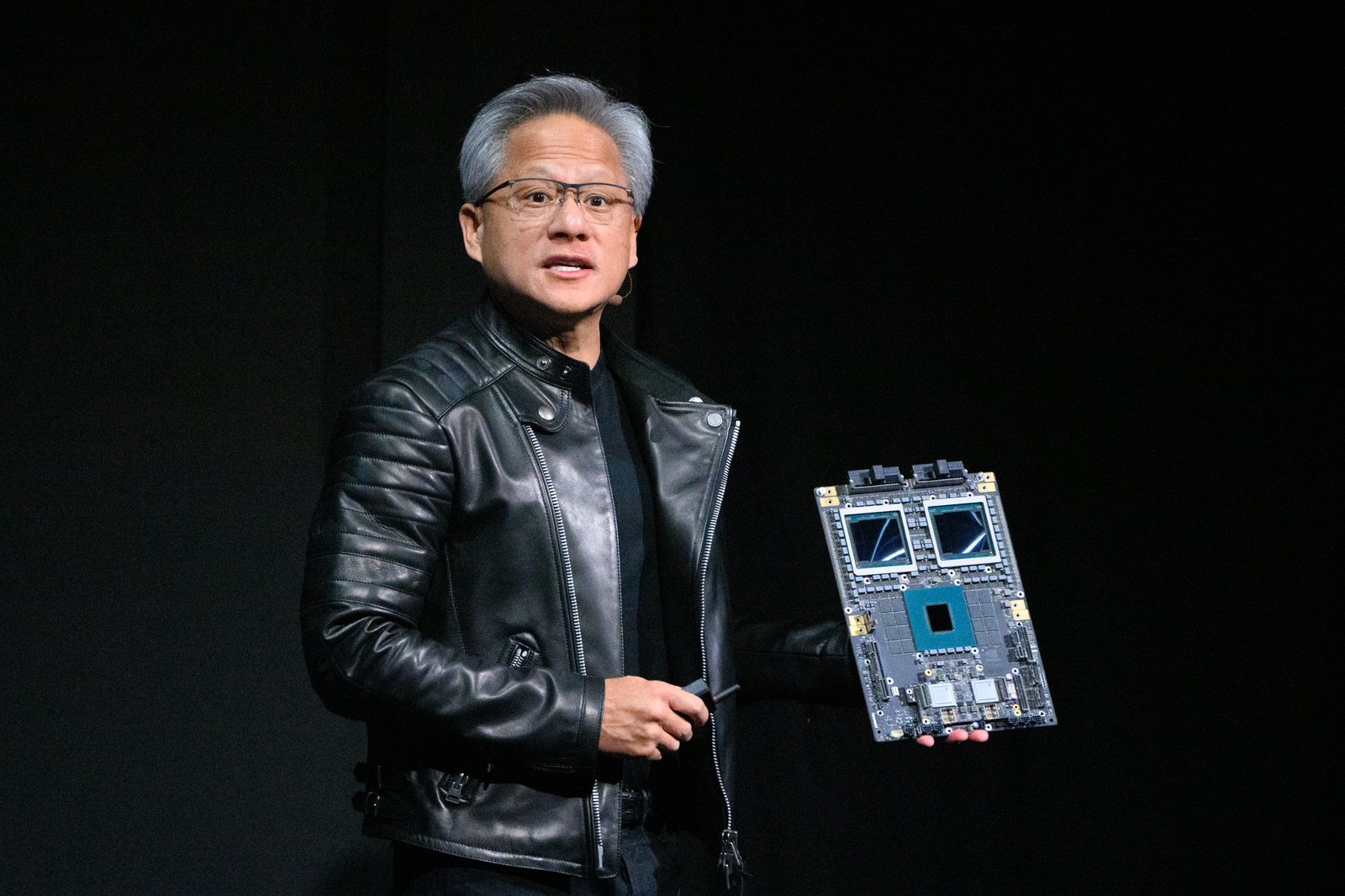
Nvidia on July 22 introduced two products aimed at expanding its reach beyond the training chips that made it the most valuable company in the semiconductor industry. The first, Cosmos 3 Edge, is a world model with four billion parameters designed to run on robots and other edge devices. The second, Spectrum-6, is an Ethernet platform built for large-scale AI data centers. Together they show a company determined to be the infrastructure provider for every layer of AI, not just the one it dominates.
Cosmos 3 Edge is the smaller sibling of Nvidia’s Cosmos line of world models, which generate realistic simulations of physical environments. The edge version is designed to run on devices themselves rather than in the cloud, giving robots a built-in model of the world they move through. Nvidia said the model can help robots anticipate what happens next in a scene — a hand reaching for an object, a door opening, a person stepping into a hallway — which lets them plan movements faster and with less reliance on a network connection.
The Spectrum-6 platform targets a different problem: moving data inside AI data centers. Training runs move enormous volumes of data between chips, and the networking layer has become a bottleneck as clusters grow. Nvidia’s answer has been InfiniBand, its proprietary high-speed interconnect. Spectrum-6 is built on Ethernet, the standard networking technology that most companies already run, and Nvidia is pitching it as a way for enterprises to build AI clusters without rebuilding their networks around proprietary gear.
The two announcements fit a strategy Nvidia has pursued since the AI boom began: sell the full stack. The company has moved from chips into networking, software, servers and, increasingly, the systems that tie them together. Each layer reinforces the others — a customer using Nvidia software is more likely to buy Nvidia networking, and a customer running Cosmos models is more likely to buy Nvidia chips to train them. The edge model opens a front that Nvidia has not yet fully captured, where small, power-constrained devices run models locally.
The timing was less favorable on the stock side. Nvidia shares have been under pressure since Alphabet’s earnings raised questions about whether the industry’s AI spending can continue at its current pace. Investors have begun asking which companies will actually profit from the buildout, and Nvidia, as the largest supplier of its components, is the most exposed to any slowdown. The company’s response has been to argue that demand is broad enough to absorb any single customer’s caution.
Chief Executive Jensen Huang addressed the concern directly in remarks accompanying the announcements, saying fears of an AI-driven catastrophe are overstated. “AI doom fears are exaggerated,” Huang said, in comments aimed at the debate over AI risk that has simmered through the year. His remarks served a dual purpose: reassure investors that the market for Nvidia’s products remains intact, and position the company against the wave of safety regulation that has begun moving through Washington.
Analysts said the product launches will not change Nvidia’s near-term fortunes — the edge model is a long-term bet, and Spectrum-6 faces competition from established Ethernet vendors like Broadcom and Arista — but they broaden the company’s exposure to AI’s next phases. If AI moves from data centers into physical devices, Nvidia wants to be the company supplying the brains and the connections in both places.
The edge computing market has been a difficult one for chip makers. Devices that run at the edge — in factories, on vehicles, in robots — are cost-sensitive, power-constrained and fragmented across dozens of form factors. Companies from Qualcomm to Intel have chased the market with mixed results, and the economics rarely match the margins of data-center hardware. Nvidia’s Cosmos 3 Edge is a software bet layered on top of its existing edge chip line, a way to give developers a reason to run Nvidia hardware where the power budgets are tight.
The model’s four-billion-parameter size is worth parsing. That is small by data-center standards, where models run into the trillions of parameters, but large for a device that must run without a network connection. Nvidia said the model is designed to be pruned and compressed for specific robots, letting developers trade capability for speed. The company’s pitch is that a robot with a built-in world model can operate more safely around people, anticipating motion rather than reacting to it.
Spectrum-6, the Ethernet platform, addresses the data-center networking market that Nvidia entered several years ago with its acquisition of Mellanox. The company has since become a major supplier of networking gear, and its InfiniBand products dominate the largest AI clusters. Ethernet is a different fight: it is a standard that every networking vendor supports, and customers can buy it from multiple suppliers. Nvidia’s argument is that its Ethernet offerings are tuned for AI workloads, with features InfiniBand pioneered, and that enterprises already standardized on Ethernet can adopt them without a forklift upgrade.
The two products also signal where Nvidia sees the next phase of AI. The industry’s first phase was training — enormous clusters building ever-larger models. The second phase, already underway, is inference, running those models to answer questions for users around the world. The third, Nvidia is betting, is physical: models that perceive and act in the real world, on devices and through networks that reach everywhere. Cosmos 3 Edge and Spectrum-6 are bets on that third phase, and the company is positioning itself to supply both the intelligence and the plumbing when it arrives.



