
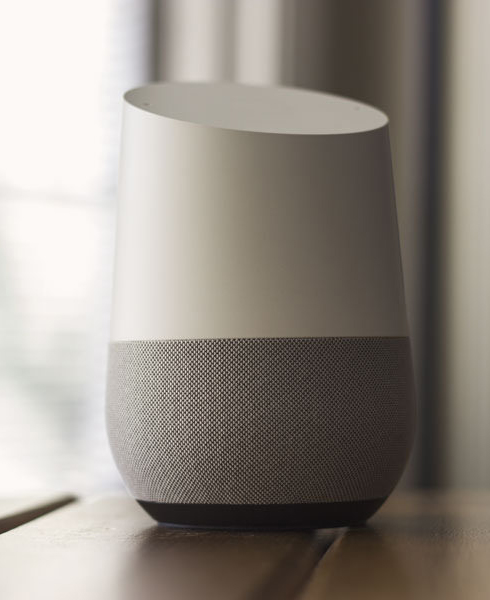
The speaker Google unveiled this week looks like the Home models the company stopped updating years ago, but the inside is different: Gemini. The device, priced at $99, is Google’s first newly designed Home Speaker in years, according to Mashable, and it comes with the assistant’s most capable models built in, no subscription required.
The same day, Google’s June Pixel Drop brought Gemini 3.5 Live Translate, a feature that translates spoken conversation in real time across more than 70 languages. The two announcements fit one strategy: use cheap hardware and free AI features to put Google’s models into as many homes as possible, and let the data and the habits follow.
The smart speaker category had gone quiet. Amazon’s Alexa dominated the market for years, then stumbled as the company struggled to make the assistant useful or profitable, and the category’s growth stalled as consumers realized that most speakers were better at answering trivia than running a home. Google’s new entry is a bet that AI models have changed the math.
The price is the message. At $99, the speaker undercuts the premium devices from Apple and undercuts the cost of a phone, making it the cheapest way to put a frontier AI model in a room. Google has done this before, selling hardware near cost to build an installed base for its services, and the speaker extends that playbook to the assistant war.
The competitive field has shifted since the first speaker wars. Amazon is rebuilding Alexa around its own models, Apple has added AI to Siri, and Chinese makers have flooded the market with cheap AI devices. Google’s answer is the one it has used against each of them: better models, tighter integration with its services, and a price that makes comparison painful.
The hardware itself is a vehicle for the software. The speaker’s usefulness will be judged by what Gemini can do with voice, and the company has spent two years making its assistant conversational rather than command-driven. Live Translate points at the ambition: a speaker that mediates between languages in a living room is a different product from one that plays music on request.
The risks are the ones that killed the first generation. Voice assistants have a habit of being used for three tasks and ignored for the rest, and the hardware cycle for speakers is long, which means the installed base turns over slowly. Google will need to show that its models make the device worth owning months after the novelty fades.
The Pixel Drop timing is not accidental. Google has used the seasonal updates to push its AI features into existing devices, and the translation tool gives the speaker a reason to exist beyond the living room. A family that speaks two languages at home is the target customer, and the feature list reads like a checklist of that household’s needs.
For the industry, the $99 price is a warning shot. The cost of AI inference has fallen fast enough that a capable assistant can run on modest hardware, and the margin structure of the speaker business is about to feel the pressure of a company willing to sell at cost. Rivals that priced their devices for profit will have to explain why theirs cost more.
The speaker is also a statement about hardware strategy. Google has spent years arguing that its models are best delivered through its phones, but a phone is a personal device, carried by one person and used privately. A speaker sits in the shared space of the home, where the assistant’s voice becomes a household feature rather than an individual’s. The decision to rebuild the category around Gemini reflects that shift from personal assistant to household utility.
Translation is the feature with the broadest appeal. Live Translate’s promise, real-time conversation across more than 70 languages, turns the speaker into a bridge for families and guests who do not share a first language, and it is the kind of capability no rival speaker matches. The company has demonstrated the feature across its devices, and the speaker is where it will be heard most often.
The timing has a competitive edge. Amazon has been rebuilding Alexa around new models, but its hardware lineup is aging, and Apple’s HomePod has never found a mass audience. Google’s entry at a price that undercuts both puts pressure on rivals to justify their premium positioning, analysts said.
The company has a history of entering categories late and winning on integration. It arrived late to smartphones, late to smartwatches and late to voice assistants in speakers, and in each case its advantage was the same: services that only Google can offer, tied to the devices it sells. The $99 speaker is the latest application of that pattern.
The broader play is about distribution. Every speaker sold is a surface where Google’s models appear first, a point of entry for the company’s services and a listening post for the advertising business that funds it. The Home Speaker’s return, at $99 with Gemini inside, is Google’s way of saying the home is still worth fighting for.



