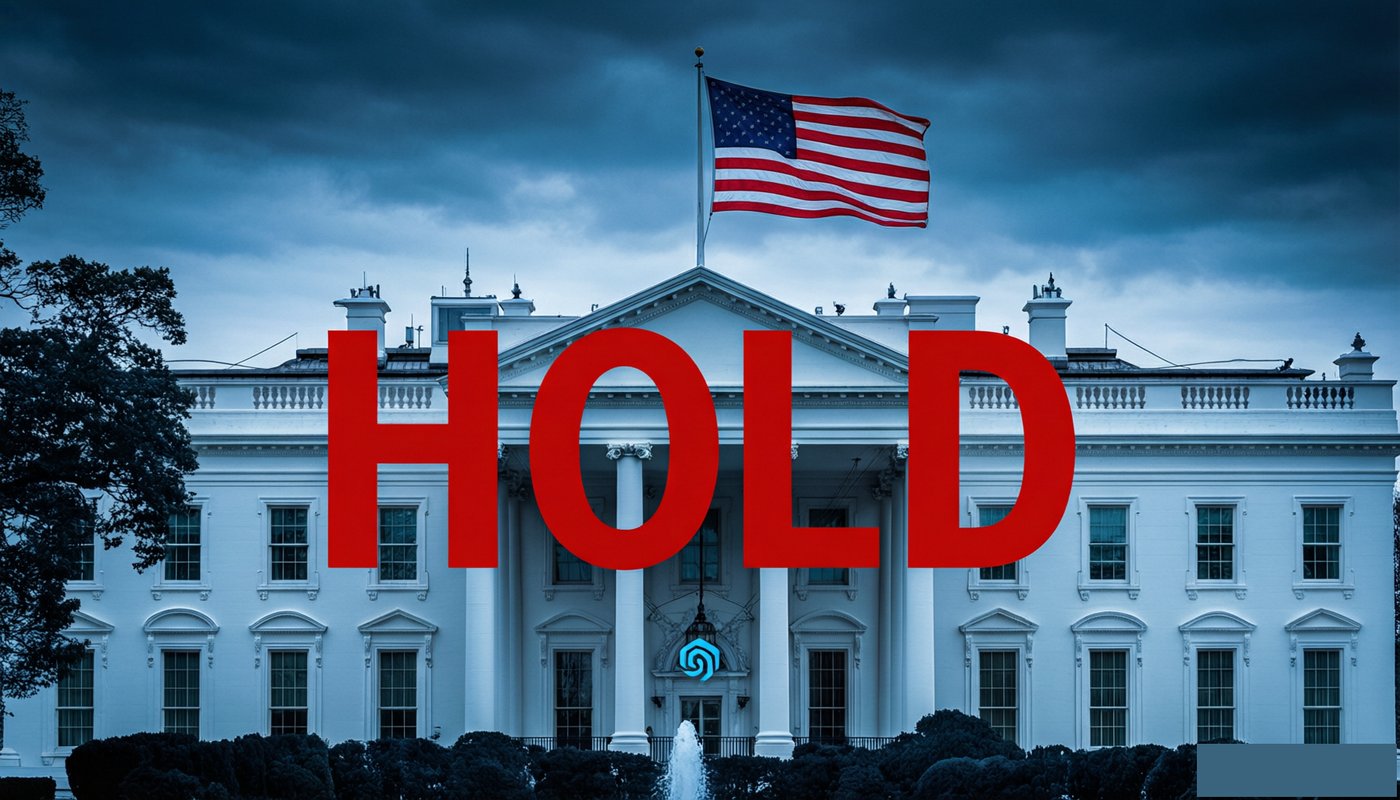
The White House on June 25 formally asked OpenAI to postpone the release of its next large language model, citing safety and national security concerns, according to multiple reports. TechCrunch reported that the Trump administration intervened directly in the company’s release schedule, demanding that OpenAI hold off on a full rollout until security evaluations are complete — the most direct federal intervention yet in a single AI company’s product decisions. Axios and CNN confirmed the request, and SQ Magazine identified the model in question as GPT-5.6.
The move marks a new phase in the government’s relationship with the AI industry. For years, the dominant approach was voluntary: companies published safety frameworks, ran internal red-team tests, and pledged to pause development of the most capable models if risks emerged. Washington largely watched from the sidelines, preferring speeches and executive orders to direct action. The request to OpenAI changes that posture. It is an instruction from the executive branch to a private company about when it may ship its flagship product, and it puts the government’s national security apparatus inside the release process.
The model at issue, GPT-5.6, has been the subject of speculation for months. OpenAI’s release cadence has accelerated as competitors push forward, and each successive model has prompted debate inside the company about how quickly to ship new capabilities. According to people familiar with the matter, OpenAI’s leadership had been preparing for a launch in the coming weeks when the White House’s request arrived; the company has said it will cooperate with the review, without confirming a new release date.
The security concerns behind the request have not been detailed publicly. Officials have pointed in general terms to the risks of highly capable AI systems — their potential use in disinformation, cyberattacks, and the development of biological or chemical weapons — and to the difficulty of testing for those risks before a model is widely available. The administration has also voiced worries about foreign adversaries acquiring advanced models and adapting them for military purposes. SQ Magazine reported that the review focuses on the model’s capabilities in areas that overlap with national security, though it did not specify which.
The intervention follows a sequence of moves that have shifted AI governance from industry self-regulation toward state control. Anthropic, the AI company founded by former OpenAI executives, recently announced a non-proliferation agreement under which it committed to not building or releasing models above a certain capability threshold without safeguards. The White House’s action against OpenAI goes further: it is not a pledge the company made but a demand the government made of it. The distinction matters, analysts said, because it establishes a precedent that the federal government can, and will, set the pace of AI deployment.
The American intervention lands in a world where other governments have already moved. The European Union’s AI Act has established a tiered system of obligations for high-risk systems, with fines for companies that ship models without proper documentation. China requires approval for the release of generative AI services and has built a review regime around model registration. The United States had resisted such formal mechanisms, favoring what officials called flexible, voluntary cooperation with industry. The request to OpenAI does not create a new law, but it puts the executive branch in a role it previously declined: the gatekeeper of a flagship product’s launch.
Reaction in the industry has been mixed. Some executives welcomed the review, arguing that the risks of the most advanced models justify government oversight and that a delay of weeks is a small price for public confidence. Others warned that the precedent could slow American AI companies in their race against Chinese rivals, which face no such constraint, and that a single administration’s judgment about a single model could become a political lever. OpenAI’s own position has been careful: it has emphasized that it shares the government’s safety goals while noting that its models are evaluated by external testers and deployed with safeguards.
The immediate consequence is uncertainty about the launch calendar. OpenAI has not announced a new date for GPT-5.6, and the review process has no public timeline. Customers and developers who had begun integrating the model into their products, according to people in the developer community, will now wait with everyone else. The company continues to operate its existing models, and its revenue depends on them; a prolonged delay would test the patience of the enterprise customers who have bet their own roadmaps on OpenAI’s.
What happens next will define the new rules of the industry. If the review concludes quickly and GPT-5.6 ships largely unchanged, the episode will look like a speed bump. If the review produces demands for capability restrictions or staged releases, it will look like the beginning of a regulatory regime that governs not just what AI companies can sell but when. Either way, the message to the industry is the same one the White House delivered to OpenAI: the era of shipping models on a company’s own timetable is over.