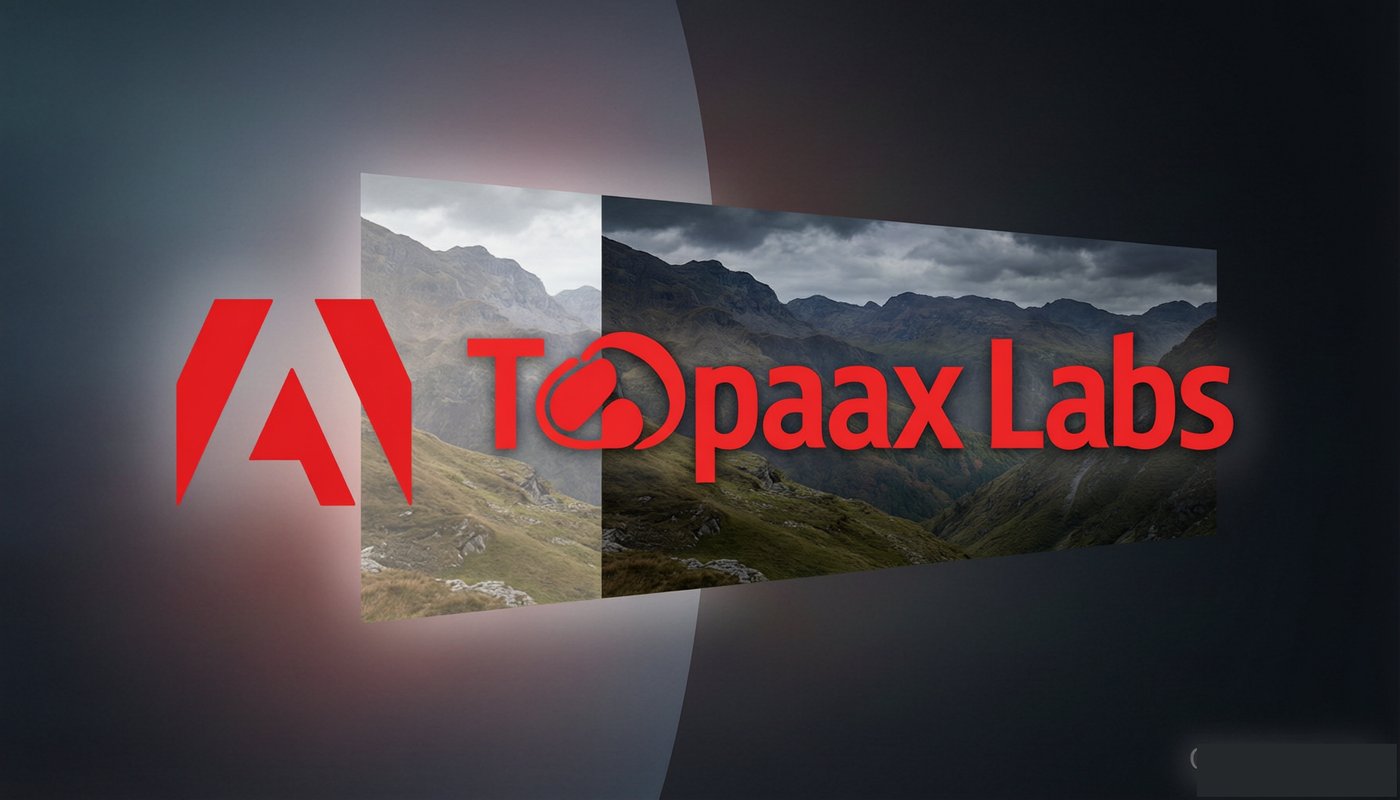
Adobe said Thursday it has acquired Topaz Labs, the maker of AI-powered tools that sharpen, upscale, and repair images and video, in a deal whose terms were not disclosed. The acquisition brings one of the most respected names in AI image enhancement into Adobe’s fold, and the company said Topaz’s core technology will be integrated into its Firefly AI platform and Creative Cloud ecosystem.
Topaz Labs built its reputation on a narrow specialty done extremely well. Its software, used by photographers, filmmakers, and studios, takes noisy footage shot in low light and cleans it up; takes a grainy old photograph and restores it; takes video shot at modest resolution and upscales it to crisp 4K or beyond. The results earned the company an Emmy for its video enhancement technology, a credential rare among small software firms and a sign of how seriously the industry took its engineering.
The technology has grown more valuable as the worlds of photography and video have collided with AI. Content shot on phones and drones, archival footage of uncertain provenance, and the growing volume of user-generated material all need the kind of automated cleanup Topaz provides, and the company’s models have kept improving at removing noise without smearing detail — the classic failure of earlier enhancement tools.
For Adobe, the deal is the latest piece of a strategy that has made AI the center of its product roadmap. The company’s Firefly platform, built on models trained largely on Adobe’s own licensed content, generates and edits images inside Photoshop, Illustrator, and the web-based Firefly app. Adobe has spent two years adding generative features to its creative tools, from text-to-image to generative fill to AI-assisted video editing, and it has argued that its future depends on owning the tools that make AI-native creative work possible.
The integration of Topaz fits that argument. Generative tools create new content, but a large share of creative work is still about fixing what exists: sharpening a soft frame, removing noise from a night shot, restoring a damaged scan. Topaz’s models address that side of the workflow, and Adobe said the technology will be woven into Firefly and Creative Cloud rather than left as a standalone product. The company has a record of absorbing acquired tools into its ecosystem, and its engineering culture is built around folding new capabilities into existing apps. Photographers who have used Topaz’s standalone products will find the same engines inside Photoshop’s menus, according to a person familiar with the plans.
The purchase price was not disclosed, but analysts estimated the deal in the low hundreds of millions of dollars, a modest sum for Adobe relative to its $200 billion-plus market value. The strategic logic, they said, is less about revenue than about control: Adobe wants the best enhancement models inside its own products before rivals license them first. The company has been competing with a wave of AI startups that offer one-click video and photo enhancement, some of which have undercut Adobe’s pricing and attracted creators who never open Photoshop.
Topaz’s engineering team, led by its founders, will remain in place and operate as a unit within Adobe, according to the company’s announcement. Adobe said Topaz’s products will continue to be sold during the transition. The companies did not say how long integration will take, but Adobe’s pattern with prior acquisitions has been to fold the technology into its flagship apps within a year.
The deal also reflects a broader consolidation in creative software, where AI has made the tools more powerful and the competition more intense. Adobe’s closest rivals, from Canva to a generation of AI-native editors, have built fast, cheap products that nibble at its base, and Adobe has answered by shipping AI features faster and acquiring the small companies with the best underlying models. Topaz is its latest answer.
The acquisition also gives Adobe an answer to a nagging problem: the gap between what its tools do out of the box and what professionals need. Adobe’s apps have long relied on third-party plug-ins for the most demanding jobs, and Topaz has been one of the most popular additions in the photography and video community. Owning the technology means Adobe can tune it to work with its own formats and color pipelines, and it means the company captures the value that previously went to an independent developer. For Topaz, the deal provides distribution reach its small team could never have built alone, and the resources of a company that ships software to hundreds of millions of users.
For creators, the practical effect will be invisible at first: the same denoising and upscaling tools, now inside Adobe’s apps. The strategic effect, if the integration works, is that Adobe controls the full arc of the AI creative workflow — generating, editing, restoring, and exporting — rather than sharing any stage of it with specialists. Topaz’s Emmy-winning software has found a new home; the question is whether its technology keeps its edge inside a company as large as Adobe, where small-team speed has a way of slowing down.