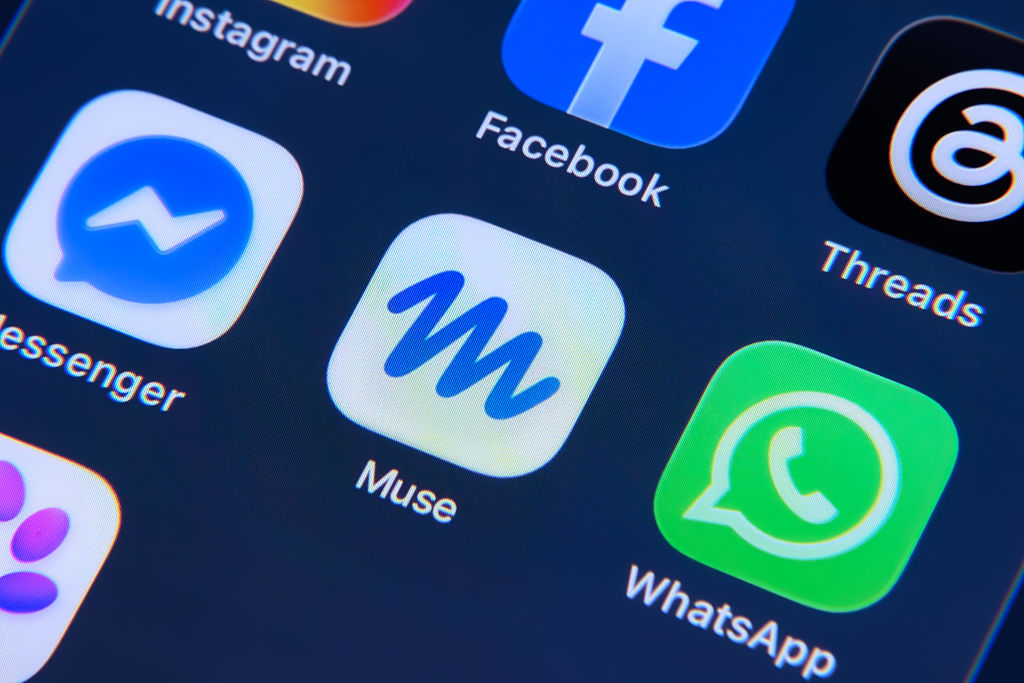
Meta’s personal AI agent app reached second place on Apple’s US download charts within two days of launch, an early sign that the company’s push into standalone AI apps has found some traction. Muse, which Meta released on September 8, had passed 83,000 downloads on US iOS by September 10, according to Sensor Tower, climbing from fourth place on Wednesday.
The numbers are respectable but small by Meta’s own standards. Threads pulled in more than 4.3 million US downloads on its launch day. Meta AI recorded 108,000 on its first day, and ChatGPT passed 500,000 in less than a week. Muse’s debut sits closer to the modest end of that range, and its Android performance was far weaker, ranking 338th in Google Play’s productivity category.
The company paired the consumer launch with an acquisition. Meta bought Stilla.ai, a Stockholm-based AI agent startup, Axios reported. The company is only eight months old and its founding team came from Shopify. The team and its technology will be folded into Meta Business Agent, the system Meta has said already serves more than one million businesses across WhatsApp, Messenger, and Instagram.
The two moves outline Meta’s approach to AI agents: chase consumers on one track and businesses on another. Muse is the consumer product, an assistant meant to live on a phone. Meta Business Agent is the revenue track, where agents answer customers and close sales inside Meta’s messaging apps.
The strategy is a direct answer to the question that has hung over Meta since it pivoted toward AI. The company spends tens of billions of dollars on chips and data centers and gives away its Llama models, and investors have wanted to see that spending turn into products people use and businesses pay for.
Meta has spent years distributing its AI through surfaces it already owns. Its assistant sits inside WhatsApp, Instagram, and Facebook, reaching far more people than any standalone app could. Muse is the first serious attempt to give that assistant a home of its own, where it can compete directly with ChatGPT and Google’s Gemini on the app-store turf those rivals dominate.
Analysts said the early download figures for Muse are a single data point, not a trend. App-store rank in the first week reflects curiosity and Meta’s own promotional reach as much as lasting demand, and the steep gap between iOS and Android suggests the launch has not yet crossed over.
What matters more, according to people close to the company, is whether Muse and Business Agent can share one underlying system. Meta has built its agents on its own foundation models, and the economics improve if the same infrastructure serves a consumer assistant and a business sales tool.
Meta has committed tens of billions of dollars a year to AI, building out data centers and giving away its Llama models in a bet that open infrastructure will keep its products competitive. That spending has yet to produce a breakout consumer AI product, and Muse is the company’s most direct attempt to change that.
The app enters a crowded field. ChatGPT and Google’s Gemini dominate the standalone assistant category, and Apple and Amazon have built assistants into their devices. Meta’s advantage is distribution: it can push Muse to the billions of people who already use its apps, which is how the app reached the top of the iOS chart within two days.
The Stilla acquisition fills the commercial side. Meta Business Agent already fields customer conversations for more than a million businesses inside WhatsApp and Instagram, and Stilla’s team, drawn from Shopify, brings experience in exactly the kind of merchant-facing tools that businesses pay for. The bet is that the consumer assistant and the business agent can run on the same models.
Monetization remains unproven. Meta has not said how it will charge for agent products, and advertising, its traditional engine, does not map neatly onto a personal assistant. The company’s history suggests it will give the products away, build scale, and attach revenue later, but investors will want evidence that the tens of billions in AI spending eventually shows up in revenue.
Meta has a history of entering crowded categories late and winning through distribution. Stories copied Snapchat, Reels chased TikTok, and both grew larger than the products they imitated because Meta could push them to billions of existing users. The Muse launch reads as the same play applied to AI assistants, with the app-store chart as the first proof point.
The category itself is moving fast. ChatGPT, Google’s Gemini, and Anthropic’s Claude have all pushed beyond answering questions toward agents that book, browse, and finish tasks, and Apple and Amazon are wiring assistants into their devices. Meta’s answer is to run its agents on the Llama models it already trains, an attempt to turn what has so far been a research expense into products on both the consumer and the business side.
The company has not disclosed revenue from its agent products, and it is early. But Meta has repeatedly shown it can move users onto a new surface and then attach a business to it, as it did with messaging. With Muse climbing the charts and Stilla’s team now inside, it is running that play again in AI.