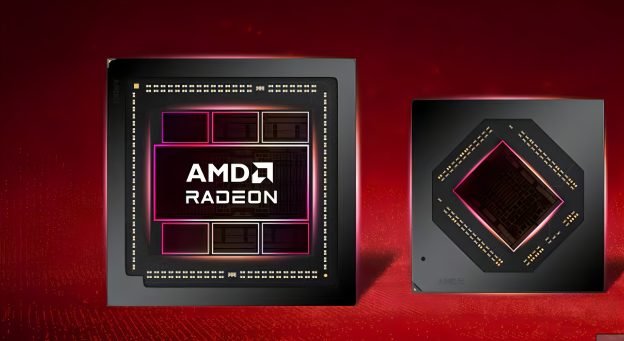
AMD has begun telling its partners what they will pay for chips next quarter, and the message points up the supply chain. Around September 17, the company notified graphics card and motherboard partners that fourth-quarter chip prices would rise by roughly 10 percent, according to supply chain sources. The increase covers AI accelerators, consumer Radeon graphics cards and motherboard chipsets.
The most telling detail is what the notice did not include. Ryzen processors, AMD’s core CPU line, did not appear on the list. But the company depends heavily on TSMC for its manufacturing, and the question of whether CPUs will follow the same path has not been settled. A price rise that starts in the graphics division has a way of spreading when the same foundry bills every part of the product line.
The origin of the increase sits one step up the chain. TSMC, the foundry that makes the most advanced chips in the world, is reported to have raised its prices for processes below five nanometers by between 5 and 10 percent. Those advanced nodes account for about 70 percent of TSMC’s wafer business, which means the increase lands across most of what the company ships.
TSMC has the pricing power to do this. The company is the only foundry that can make the leading-edge chips at the scale the market demands, and its customers, from AMD to Nvidia to Apple, have nowhere else to go for their most advanced parts. When the foundry raises prices, the increase flows down to every customer, and every customer passes it along to the next link.
AMD is not the first to pass it along. Intel has already raised prices on consumer processors, and the memory, SSD and graphics-memory markets have been stacking price increases of their own. What was a single supply shock at the foundry has turned into a broad repricing of the components that go into a computer, and AMD’s notice is the latest layer.
The timing is awkward for consumers. The fourth quarter is the holiday season, the part of the year when graphics cards and gaming hardware sell in volume, and a 10 percent increase on the components inside those products will show up in the prices on the shelf, or in the margins of the companies that absorb it. Either way, someone pays.
For AMD, the decision is a test of its own pricing power. The company has gained share against Intel in recent years, and the question is whether its customers will accept a price increase from a challenger the way they would from a leader. A company that is still fighting for position has less room to pass along costs than one that owns the market.
The AI accelerator business complicates the picture. That segment is in a boom, with demand running far ahead of supply, and in a boom the customer will pay almost any price for the chip. The 10 percent increase lands more easily on an AI accelerator than on a consumer graphics card, which is why the notice may matter less in the segment where AMD is growing fastest.
The Ryzen omission is the loose thread. If TSMC’s increase applies to the advanced nodes, and AMD’s CPUs are built on those nodes, then the absence of CPUs from the notice is a matter of timing rather than exemption. The company may be holding the CPU decision while it watches how the market absorbs the graphics increase, or it may have already absorbed the cost in its own margin. Either reading points to the same conclusion: the foundry’s price rise is not finished working its way through AMD’s product line.
The graphics and motherboard partners are the ones who carry the immediate decision. They order chips at the new price and decide whether to raise their own prices, cut their margins, or wait for the foundry’s increase to soften. Those decisions, made quietly across a network of smaller companies, are how a foundry price change becomes a visible price on a store shelf.
The broader question is where the repricing ends. Foundry capacity is tight, memory prices are rising, and every link in the chain is testing how much it can pass along. AMD’s notice is one data point in a repricing that has been building for months, and it suggests the fourth quarter will be more expensive for everyone who builds or buys a computer. The foundry moved first; the rest of the chain is still sorting out who absorbs the rest.
For the broader PC industry, the increase is another cost in a year of them. Component prices have been rising together, and the manufacturers who build the finished machines are the ones who will decide, product by product, how much of the increase reaches the buyer and how much stays in their own margins.