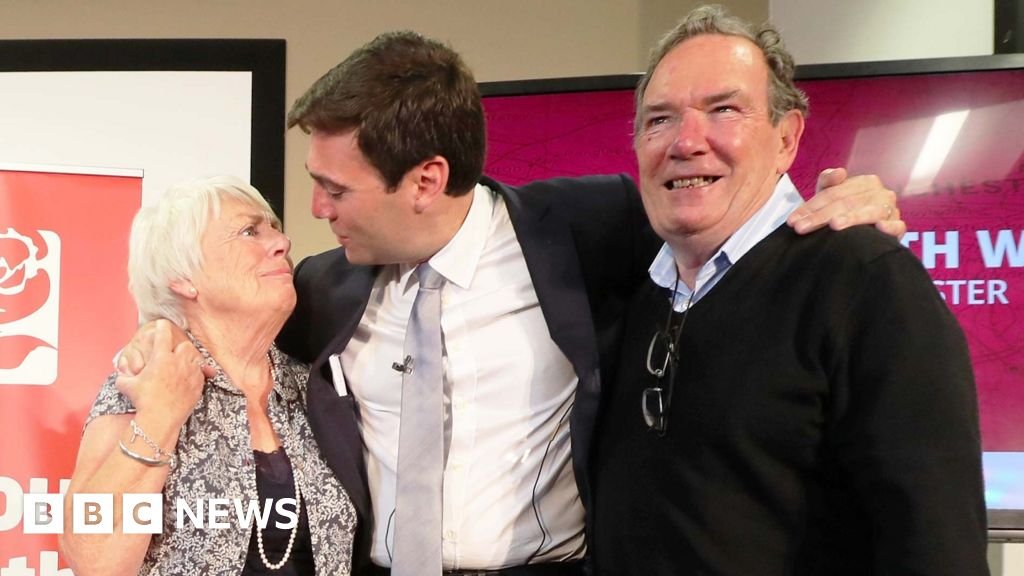
The death was announced without fanfare, the way a family announces such things. Roy Burnham, the father of the British prime minister, died on September 14, 2026, at the age of 86. His son, Andy Burnham, who took office as prime minister in July, left Downing Street for two days to grieve.
The leave was brief and, by the standards of a premiership, modest: two days away from the machinery of government while the deputy prime minister handled routine business. Downing Street described it in a short statement, the kind that attends the private loss of a public figure, and the prime minister’s office asked that the family’s privacy be respected.
Burnham’s path to Downing Street is unusual in modern British politics. He spent years as the mayor of Greater Manchester, a region rather than a parliamentary seat, and built his national reputation on transport, housing, and the plain-speaking style of a politician who never left the northwest. His election as Labour leader, and the party’s return to government in July, made him prime minister at the end of a long climb.
Burnham’s career before the premiership was long and regional. He was a member of parliament for Leigh, a constituency in Greater Manchester, held cabinet posts including health secretary, and ran for the Labour leadership before leaving Westminster to become the region’s mayor. The premiership, when it came in July, was the culmination of a route few leaders have taken, and it gave his father, in his final months, the sight of his son at Number 10.
His father was a constant in that story. Roy Burnham worked in the trades, the detail the prime minister returned to in interviews over the years, and the son’s politics carried the imprint of a household in which work, and the dignity of it, were the measure of things. The prime minister has often framed his policies as a defense of the kind of life his father lived.
The timing of the loss placed it against a difficult diplomatic backdrop. Two days earlier, President Trump had voiced support for Irish unification during a visit to Ireland, remarks that reignited a debate the British government has spent decades trying to keep settled. The prime minister’s two days of leave coincided, awkwardly, with a moment that demanded a response from London.
The Irish question is among the most delicate in British politics. The Good Friday Agreement of 1998 established a framework for the future of Northern Ireland, and the principle of consent, that unification could come only through a majority vote there, has been the foundation of every administration’s position since. Trump’s remarks cut against that principle, and the government’s reply, delivered while its leader was away, was carefully calibrated.
Burnham returned to Downing Street after the two days and resumed his schedule, the private grief folded back into the public job. The rhythm is familiar to any leader: the work does not pause for long, and the office has a way of reasserting itself. But the images of the week, the statement, the empty lectern, the deputy speaking, told their own story about the cost of the office.
The deputy prime minister’s role during the leave was procedural, and the government’s business continued without interruption, a reflection of how thoroughly a modern premiership is delegated. The prime minister’s absence of two days was a private matter handled publicly, and the office absorbed it as it absorbs everything else.
The death of a parent is a fixed point in any life, and for a prime minister it is also a public event, managed through statements and schedules in the same week that the private person is simply trying to arrange a funeral. The line between the two is impossible to hold cleanly, and no leader has held it.
Burnham’s colleagues described him as composed in the days that followed, attending the meetings the office required and keeping the private matters private. The prime minister’s relationship with his father was, by his own account, close, and the loss landed in a life that had already changed almost beyond recognition in the space of three months.
The political week continued around him. The Irish statement was followed by the ordinary traffic of government, and the prime minister was back at his desk in time for the parliamentary business of the following week. The machinery of the state does not slow for grief, and it did not.
What the episode will leave behind is small and private, and that is precisely its meaning. A prime minister lost his father, took two days, and returned to work, while a foreign president’s remarks about Ireland showed the country how quickly the ground can shift under a government. The two events, unrelated and barely a day apart, shared the same week and the same man.
Burnham has spoken rarely about his father in public, and he is unlikely to speak more now. The statement Downing Street released was short, and the funeral will be private. In an office built for the management of public events, some things remain the family’s alone.