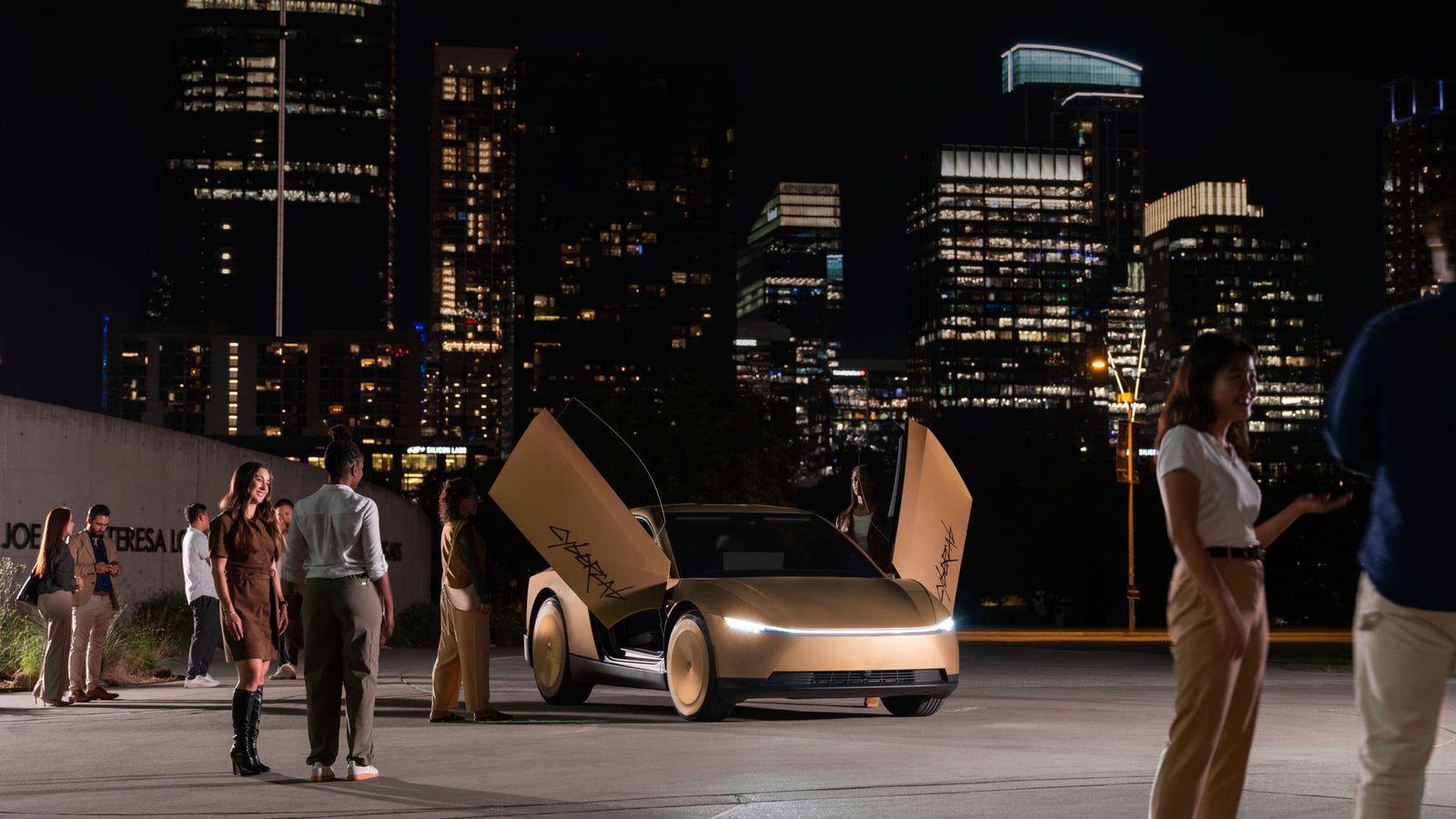
The top legal officer at the National Highway Traffic Safety Administration signed a special order on September 10 directing Tesla to answer 21 questions, in writing and under oath, explaining how a vehicle with no steering wheel, no pedals, and no mirrors can satisfy federal safety standards written for cars with a human driver. The answers are due by September 30.
The order escalates an inquiry that began the same day Tesla started charging passengers for rides in its Cybercab in Austin on September 3. That day, the agency opened an audit query designated AQ26002, a routine first step. The special order is a harder instrument, and it carries legal force: false or incomplete responses can draw civil penalties up to $139.35 million, and responsible individuals can face as much as 15 years in prison.
The regulator’s questions center on two specific problems. The first is whether the manual controls Tesla temporarily installed to make the vehicle operable counted as part of its compliance basis, and whether removing them would violate the rule that prohibits rendering required safety equipment inoperative. The second is the braking standard, FMVSS 135, which explicitly requires a foot-operated brake pedal, a device the Cybercab does not have.
Tesla has chosen a different path from its competitors. Zoox, the Amazon-owned robotaxi company, sought and received a Part 555 exemption that allows it to deploy up to 2,500 vehicles a year without meeting every standard. Tesla instead relied on self-certification, the process by which a manufacturer declares its own vehicles compliant without waiting for the agency to approve. The special order now puts that declaration directly in question.
The Cybercab is central to Tesla’s stated future. The company has described a network of autonomous vehicles that would carry passengers without drivers, generating revenue from each trip, and has told investors that the robotaxi business is the foundation of its long-term valuation. A regulator’s demand that Tesla justify the vehicle’s legality is, in effect, a demand that it justify the premise of that business.
Tesla’s road to this point has been long and uneven. Elon Musk has promised full self-driving capability for more than a decade, repeatedly predicting that the technology was a year or two away, and the company has shipped a sequence of driver-assistance systems while insisting that true autonomy was imminent. The Cybercab, unveiled as a two-seat vehicle built without driver controls, was meant to be the product that finally cashed that promise, and the Austin launch was its first commercial outing.
NHTSA’s authority here rests on a mismatch. The federal motor vehicle safety standards were written for cars that a person operates, and they assume the presence of controls that a driverless car eliminates by design. The agency has spent years debating how to update those standards for autonomous vehicles, and in the meantime it has held companies to the old ones through exemptions and enforcement actions rather than through new rules.
Tesla’s self-certification argument has served it in the past, and the company has a long history of treating its vehicles as compliant because it says they are. The special order signals that NHTSA’s chief counsel intends to test that position in detail, question by question, with the answers recorded in a form that can be used against the company if they prove wrong.
The timing matters. Tesla began operating the Cybercab commercially before the agency had resolved the compliance questions, a sequence that gives the regulator a public record of the vehicle in service while the legality of that service is still open. The order asks Tesla to explain what it believed when it launched, and on what basis.
Tesla has not publicly responded to the substance of the order, and the company’s representatives did not immediately comment on the questions. The deadline leaves the company three weeks to assemble its answers, a tight window for a response that will be reviewed line by line and, if found lacking, escalated again.
Tesla is not the only company operating driverless vehicles on public roads, but it is the only one doing so under self-certification rather than an explicit exemption. Waymo has run a commercial robotaxi service in several cities under state permits and a vehicle that retains conventional controls, a path that has kept it largely out of the federal dispute that now surrounds Tesla. The Cybercab’s lack of controls is the difference, and it is the specific choice the special order now forces Tesla to defend.
The outcome will shape more than the Cybercab. If NHTSA concludes that a driverless vehicle cannot be certified as compliant, Tesla would face a choice between redesigning the vehicle, seeking an exemption like Zoox’s, or fighting the agency in court. Each path leads somewhere expensive, and the sworn answers due at the end of September are the first step down whichever road the company takes.