Google spent Sept. 24 making three announcements at once, and each one pointed in a different direction. The company confirmed that its first artificial-intelligence satellite would launch on Oct. 1, that its next model is nearing release, and that its self-driving unit has now logged 2.71 billion miles on public roads.
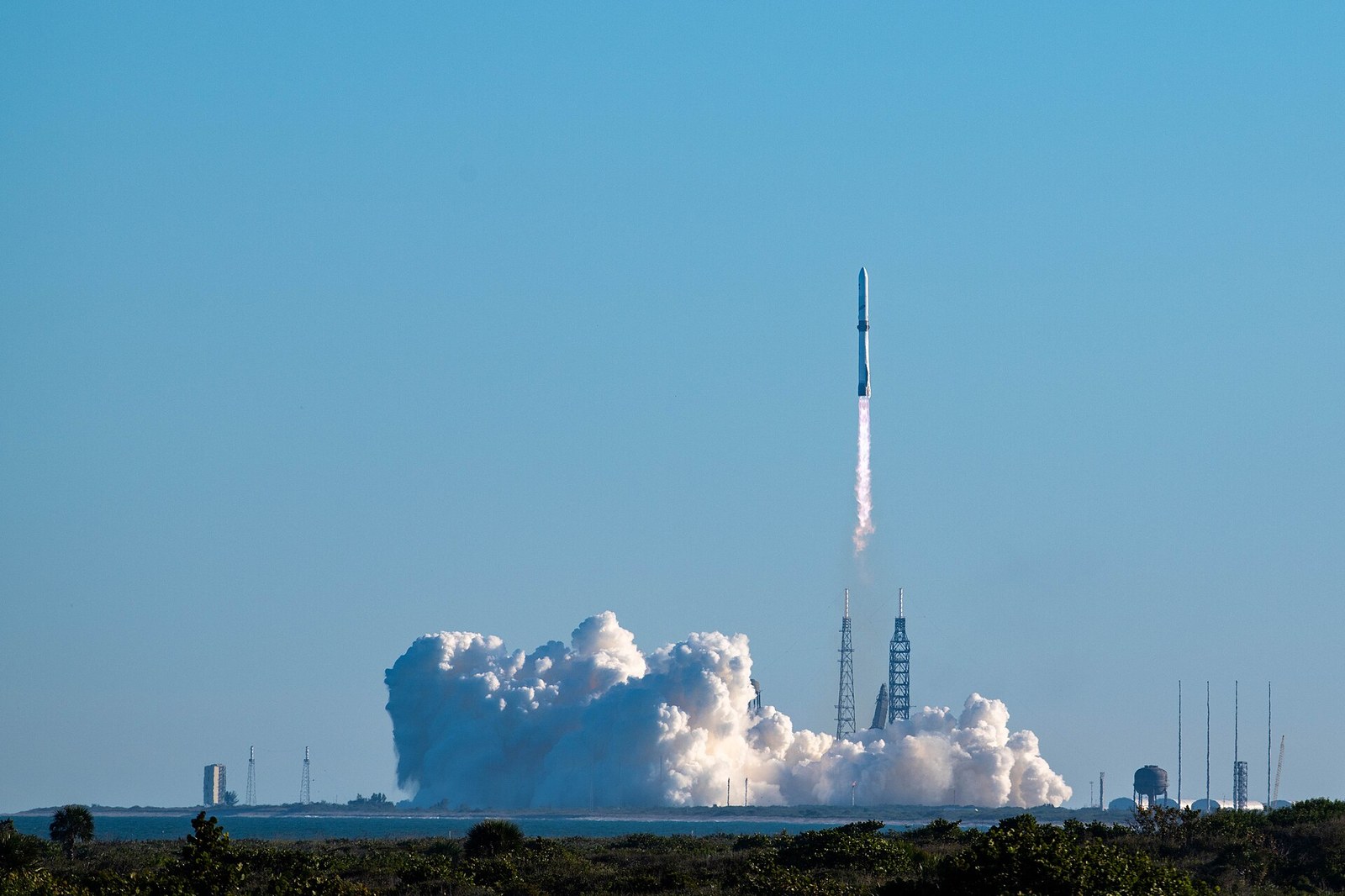
The satellite is the most unusual of the three. Under a program called Project Suncatcher, Google will send a prototype spacecraft into low Earth orbit aboard SpaceX’s Transporter-18 rideshare launch, a Falcon 9 flight scheduled for Oct. 1. The satellite, built in partnership with the imaging company Planet Labs, carries four of Google’s tensor processing units, the chips that power its AI systems.
The mission’s question is simple and strange: can AI computing run in space? The satellite, about the size of a refrigerator, will test how the chips hold up against radiation, the vacuum and the violent shaking of launch, and whether they can shed heat with nothing but radiators in orbit. Google said the chips had already been tested in a proton beam at a nuclear laboratory, but that some things can only be learned by putting them in space.
The bet behind Suncatcher is that orbit could one day host large-scale AI computing, powered by near-constant sunlight and free of the electricity constraints that now throttle data centers on the ground. The name is literal: satellites in low Earth orbit catch sunlight around the clock. The first satellite is modest, drawing only about a kilowatt, and its cooling system will run in short bursts of roughly fifteen minutes at a time. Google has said the real test of laser-linked clusters comes in 2027, when it plans to put two satellites in orbit.
The project sits inside Google’s broader moonshot tradition, the research culture that produced self-driving cars and stratospheric balloons, where ideas are allowed years to fail before anyone asks for a product. Suncatcher fits that mold: the company has framed it as a question rather than a business, and has said it will decide later whether orbital computing is worth building at scale. SpaceX, with its own orbital data-center plans, has drawn the same conclusion about the prize and moved faster.
The model announcement pointed the other way, toward the race on the ground. Demis Hassabis, who leads Google DeepMind, said the next version of the company’s Gemini model, Gemini 4, has entered the early stages of post-training and will be released as soon as possible. The timing is a direct response to OpenAI and Anthropic, which have been moving their own frontier models forward while Google works to keep pace.
The framing matters. Google has spent years being seen as the company with the deepest research but not always the fastest releases. Hassabis’s comment, that Gemini 4 would arrive as soon as possible, was a signal that the company no longer intends to let rivals set the calendar.
The model itself has become the yardstick by which Google is measured against its rivals. OpenAI has moved its flagship line forward through successive releases, and Anthropic’s Claude has carved out a following among developers. Gemini 4, entering post-training, is Google’s bid to reclaim the front of that race rather than respond to it, and the sense of urgency in Hassabis’s words was hard to miss.
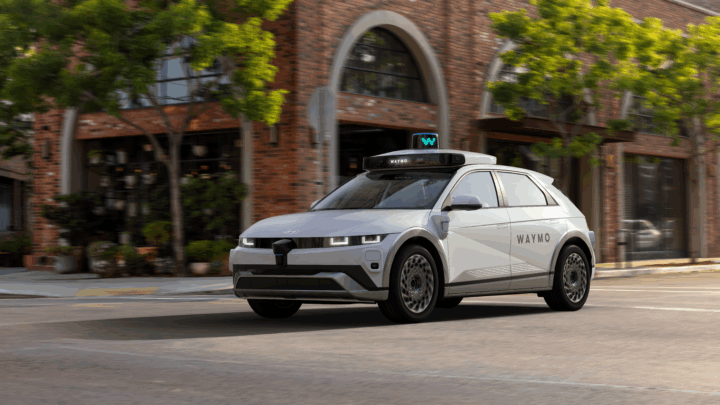
The third announcement was the quietest and, by some measures, the most concrete. Waymo said its driverless fleet has now driven 2.71 billion miles, and that its rate of crashes involving serious injury is 95 percent lower than the human-driver benchmark. The figure is Waymo’s latest attempt to make the safety case for autonomous vehicles in a single number.
Waymo, a sibling of Google under Alphabet, has expanded from its early Phoenix testing ground to paid services in San Francisco, Los Angeles and Austin, and its mileage total has climbed fast as the operations scaled. The safety claim is built on comparing its crash record with a statistical estimate of how human drivers would perform over the same distance, a methodology the company has defended against critics who want more direct evidence.
Taken together, the three announcements describe a company pushing outward in every direction at once: into orbit, into the model race, and onto more city streets. Analysts said the strategy is to avoid ceding any frontier to a competitor, even at the cost of spreading attention across very different problems.
The common thread is computing. The satellite is an experiment in where AI chips can live. The model is the software those chips run. And Waymo is the company’s clearest proof that AI, when it works, becomes a physical product that moves through the world. Google’s challenge is that all three bets have to pay off on very different timelines, and the market is watching each one on its own clock.
For now, the launches are set. The satellite flies on Oct. 1, Gemini 4 moves through post-training, and Waymo’s cars keep adding miles. None of the three is finished, but on the same day, all of them moved forward.