The NVIDIA Accelerated Quantum Research Center in Boston was built to pair quantum processors with supercomputers. It now has its first tenant. IonQ said its Superion 256, a 256-qubit machine, will be the first quantum computer installed on the center’s floor, with the deployment scheduled for 2027.
IonQ announced the deal on Sept. 23, and investors took notice: the company’s shares rose about 4.9 percent to $42.73 in the day’s trading. The installation will land alongside the first commercial deliveries of the Superion 256, which IonQ introduced on Sept. 8.
Under the arrangement, the Superion 256 will be connected directly to an NVIDIA GB200 NVL72 system through NVQLink, NVIDIA’s high-speed interconnect, with workloads orchestrated by the open-source CUDA-Q platform. The goal is a machine that mixes quantum and classical computing in a single rack.
The joint research program will focus on hybrid software and large-scale system prototyping, with target applications that include portfolio optimization and risk modeling in finance, materials science, and computational chemistry for drug discovery. Both companies say they will publish open results for the broader quantum community.
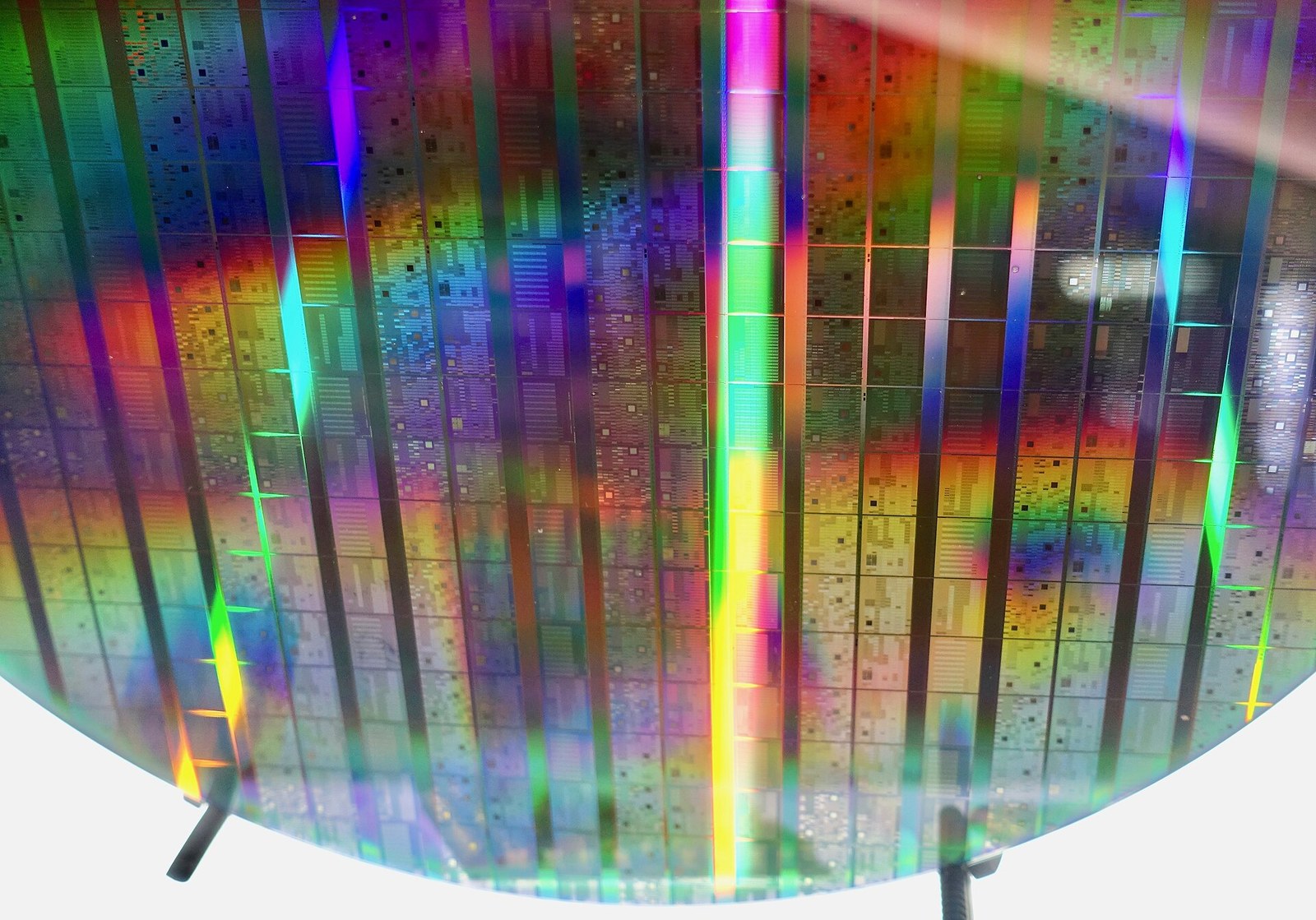
The Superion 256 is IonQ’s sixth-generation machine and the first built around a fully integrated 256-qubit processor fabricated at SkyWater, the chipmaker IonQ acquired for $1.8 billion in January 2026. The design replaces bulky free-space laser systems with chip-scale electronic qubit control, letting a full quantum computer fit in a standard server rack.
IonQ was founded in 2015 by Chris Monroe and Jungsang Kim, two physicists who built their careers on trapped ions at the University of Maryland, and it went public in 2021 as the field’s first pure-play stock. The company has argued that trapped-ion qubits hold their state longer than competing approaches, at the cost of slower operation, and the Superion 256 is its attempt to shrink that technology into something a data center can host.
IonQ chief executive Niccolo de Masi framed the deployment as the start of hybrid quantum-classical computing and pointed to a roadmap toward 10,000 qubits and full fault tolerance. “Every supercomputer will become a quantum supercomputer,” said Timothy Costa, NVIDIA’s vice president and general manager for quantum.
For NVIDIA, the move is another step in a long effort to make quantum computing practical by tethering it to the GPUs that already dominate data centers. CUDA-Q is central to that strategy, giving developers a single software stack for code that runs partly on quantum hardware and partly on classical chips. NVIDIA announced the center in 2025 as a place to develop exactly those links.
The partnership builds on recent work: IonQ, NVIDIA, Oak Ridge National Laboratory and the University of Tennessee presented joint research at IEEE Quantum Week this month, combining generative AI with distributed quantum algorithms on CUDA-Q.
The choice of a GB200 NVL72 rack is telling. That system is the flagship of NVIDIA’s Blackwell line, built for the largest AI models, and wiring a quantum processor to it positions the QPU as an accelerator next to GPUs rather than a science experiment in a corner.
The arrangement also signals where the quantum industry has landed after years of competing architectures. Rather than promising a standalone quantum machine that replaces a supercomputer, the leading players now talk about quantum processors as accelerators that work alongside GPUs, with the software stack doing the hard work of splitting problems between them. That shift favors companies like IonQ, whose rack-mounted design is built to plug into existing infrastructure, and it explains why a chip vendor and a quantum startup would share a press release.
The announcement is as much about credibility as hardware. Quantum computing has spent years promising machines that can do useful work, and linking a QPU to NVIDIA’s AI infrastructure is a signal that the two computing worlds are moving closer. Analysts said the practical test is whether hybrid systems deliver results a classical computer cannot.
The word “first” in the announcement carries real weight. Until now, the center has existed mostly as an aspiration and a set of partnerships; installing a working 256-qubit machine on its floor turns it into a place where quantum and classical chips actually sit side by side, sharing the same rack.
For IonQ, the tie to NVIDIA also answers a persistent question about its trapped-ion approach, namely whether its machines can integrate with the rest of the data center rather than sit in a specialized lab. A rack-mounted QPU wired to a GB200 system is a direct attempt to show they can, and IonQ’s broader pitch is manufacturability: because the processor is built on a CMOS process at SkyWater, the company says it can produce quantum chips at scale rather than assembling machines by hand.
For now, the Superion 256 is not yet installed, and useful quantum applications remain years away. But a machine that sits inside NVIDIA’s research center, wired to a GB200 rack, is a concrete step toward the day when a data center’s most powerful computer includes a quantum processor.