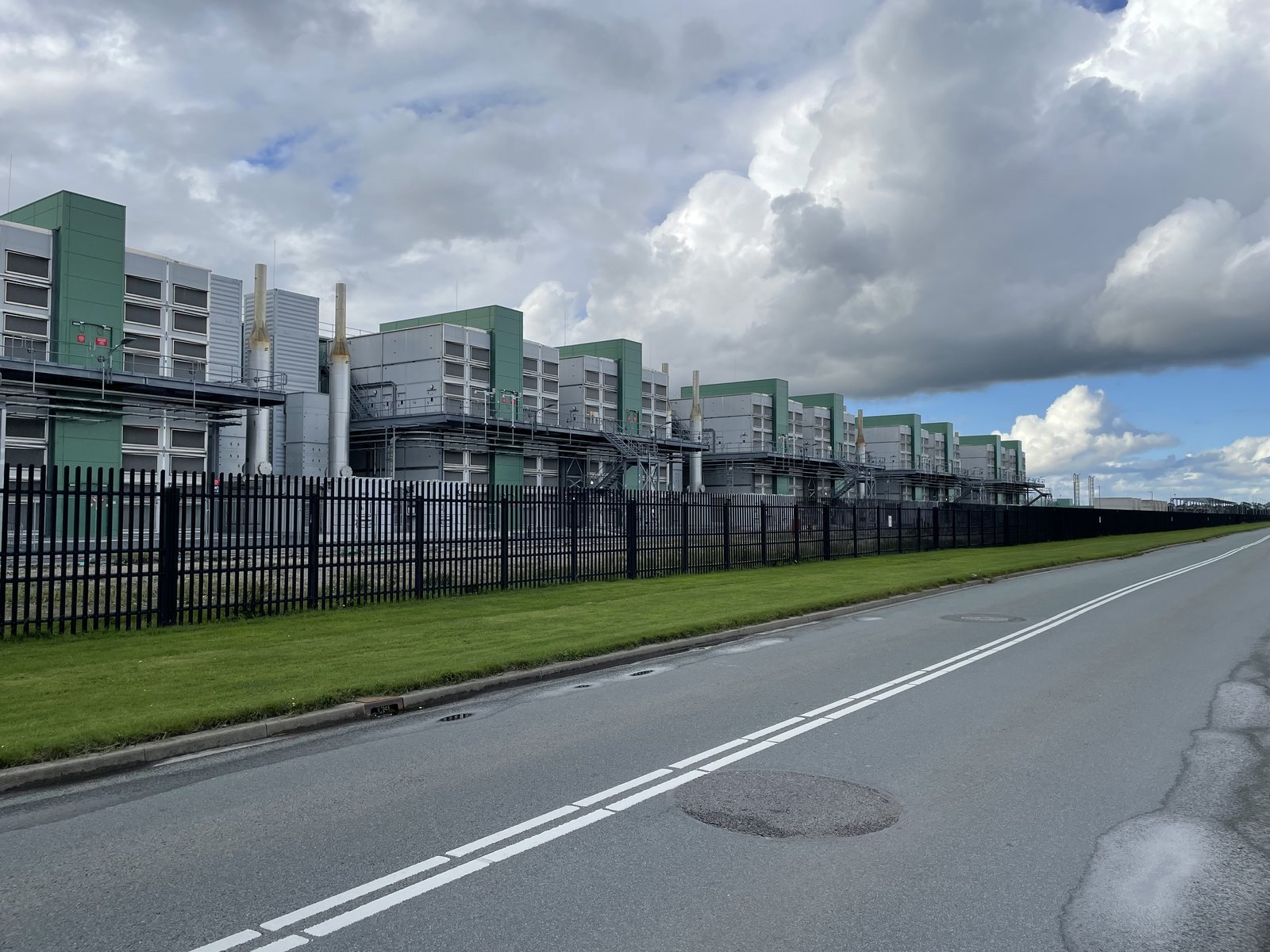
The site is in Loughton, in Essex, a short drive northeast of London, on land that has been cleared for a data hall and prepared for equipment that has not arrived. What the project does not have is a date for its electricity. Grid officials told Nscale, the British cloud company building there, that they did not expect to deliver power to the site until the 2030s, according to a report in the Telegraph.
Microsoft has ended its agreement for that project, the newspaper reported on October 18, and Bloomberg and Reuters carried accounts the same day attributed to the report. The company did not explain the decision and did not respond to requests for comment made outside business hours. Nscale would not discuss the termination beyond a short statement.
The withdrawal is more than the loss of one building. The Essex site was the part of Microsoft’s 22 billion pound commitment to British computing that had a name and an address attached to it, and Nscale was the partner that would build and run it. A pledge measured in billions stays an abstraction until someone signs for the land, the transformers and the fiber. This one had signed.
Nscale’s account of the split points at the power supply rather than at the relationship. “Our relationship with Microsoft remains strong and long-term, and this unfortunate London-wide grid issue has no impact on our other contracts,” a spokesperson said, adding that the company remains committed to the site and is examining alternative sources of electricity for it, along with other locations in Britain.
The timing is uncomfortable for reasons that have nothing to do with Essex. Nscale filed for an initial public offering in the United States last month, and its prospectus named Microsoft and Anthropic as the customers expected to account for most of its revenue. The company, which is backed by Nvidia, has grown from 100 million dollars in contracted value to more than 103 billion dollars in about two and a half years, a rate that puts it in the same conversation as CoreWeave, Nebius, Crusoe and Lambda.
A neocloud sells a simple thing: access to machines that other companies would rather not own. The business runs on contracts that stretch for years and on debt raised against those contracts. When a customer of Microsoft’s size walks away before the first server is installed, the effect is not a hole in this quarter’s revenue. It is a change in the collateral behind the borrowing.
That is why the power date matters more than the announcement. For most of the past three years the binding constraint on artificial intelligence capacity has been the supply of accelerators and the small number of companies able to get them. The constraint has been migrating. Substations, transmission lines and the queue to connect to them now set the schedule in several markets, and a data center without an interconnection date is a warehouse with unusually good cooling.
Analysts who follow the sector said the decision reads as a scheduling problem rather than a judgment about Britain. A site that cannot be energized until the next decade cannot host a customer buying capacity for models it intends to train within two years. Microsoft can move the workload to a site that has power. Nscale cannot move the site.
The episode also shows how thinly the promises of the past two years are documented. Governments announce investment totals, companies announce partnerships, and the underlying agreements carry conditions that rarely appear in the announcement: completion tests, termination rights and dates that depend on someone else’s construction schedule. The public number outlives the private contract.
For Nscale, the alternatives are the ones every developer now weighs. On-site generation, whether gas turbines or fuel cells, can shorten the wait at the cost of fuel contracts and a separate permitting fight. Buying existing capacity is faster and more expensive. Waiting is cheapest, and for a company preparing to price shares, the least available option.
Britain’s position is the larger question. The country has spent two years courting American computing investment and has the land, the fiber routes and the customers. What it lacks in the London region is the ability to connect large electrical loads on the timetable the industry now works to. That is a construction and planning problem, and it does not yield to tax incentives.
Microsoft has not described the decision as a retreat from the country, and its other British projects are unaffected as far as anyone has said. Companies in its position routinely sign more sites than they expect to energize, holding options open while demand forecasts move underneath them.
What Loughton illustrates is the order in which a buildout actually happens. Capital is committed first, because capital is the easy part. Permits follow. Power arrives last, and the date it arrives is negotiated with a utility that has its own queue and its own regulators.
For the market, the test is what happens to Nscale’s offering. A prospectus that lists two anchor customers reads differently when one has terminated a contract in the month before the shares are priced, even when the termination concerns a substation. Investors in these companies are being asked to underwrite execution, and execution now includes the grid.
The site in Essex will probably be built by someone, eventually. What the industry has not settled is who holds the contract when the power finally arrives, and what price the capacity behind it was sold at.