Blacksmith Reaches $1 Billion Valuation as AI Code Chokes Build Pipelines
Every change a developer proposes still has to be built and tested before it can be merged, and that step is where software teams now wait. Blacksmith, a startup that runs that work on infrastructure purpose-built for it, said Wednesday it raised $66 million at a $1 billion valuation.
Sequoia Capital led the Series C. Premji Invest joined, along with existing backers Peak XV Partners, GV and Y Combinator, bringing total funding to $125 million. The new price roughly doubles the $550 million valuation set by a $45 million Series B that Peak XV led in August, according to people familiar with the matter.
The company says annual recurring revenue has grown 17-fold since January. The number of continuous-integration jobs it runs each week climbed from 5 million to more than 90 million over the same stretch. More than 10,000 companies now build and test software on the platform, among them Ashby, Granola, Handshake and LangChain.
The arithmetic behind that growth is the volume of code now written by machines. Anthropic reported last month that its own CI volume grew 25 times in six months as Claude took over most of its code output. Developers who once pushed three or four pull requests a day push far more, and the machines that compile and test the results have not kept pace.
“Since Claude Code took off in March, almost every conversation we’ve had with a large engineering team has started the same way,” said Aditya Jayaprakash, Blacksmith’s co-founder and chief executive. “Developers who used to push three or four pull requests a day are now pushing orders of magnitude more and their CI infrastructure can’t keep up.”
CI is an awkward workload for conventional clouds. A single customer’s demand routinely jumps from zero to tens of thousands of processors and back again, which makes provisioning a permanent guess between idle capacity and long queues. Blacksmith sells the alternative as a one-line change to a workflow file, after which the customer never provisions or maintains build machines again. The company says jobs finish twice as fast at about 60% lower cost on average.
The money is largely headed for compute. Blacksmith manages just under 10 megawatts of capacity across data centers in the United States and Europe and aims to expand that footprint at least fivefold in 2027. That is a capital-hungry plan for a company that has raised $125 million in total, and it puts the firm in the same queue for chips, power and land as the model developers whose output it is trying to validate.
“What stood out to us was their deep systems expertise and speed of execution,” said Isaiah Boone, a partner at Sequoia. He argued that foundation gives Blacksmith room to build more as software development changes.
The Series B closed in August, which means the company raised twice in roughly ten weeks at valuations that doubled. Investors have been willing to pay up for infrastructure that sits between AI agents and the production systems they touch, in part because the spending shows up as a line item customers can measure rather than a promise about future productivity.
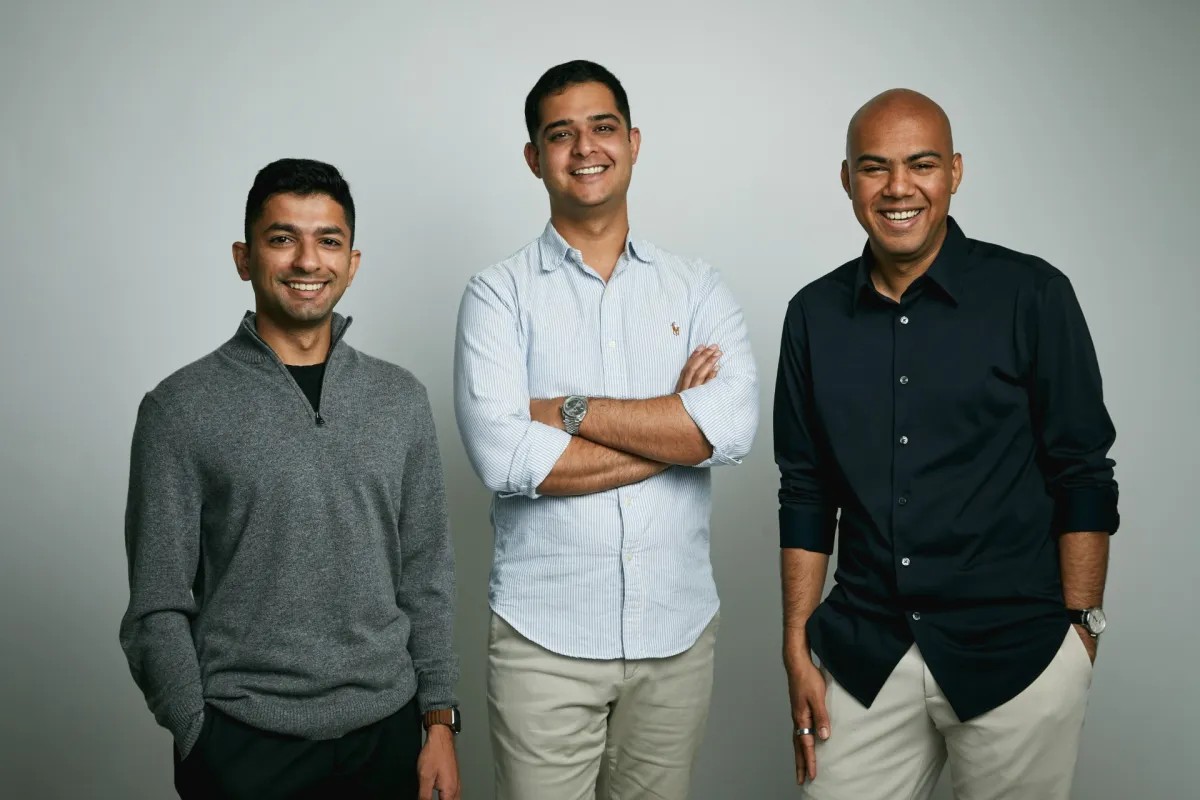
The founders met as undergraduates at the University of Waterloo. Aayush Shah and Aditya Maru were early engineers at Cockroach Labs; Jayaprakash worked at Faire. They started the company in 2024 on the bet that testing code, not writing it, would become the constraint on shipping software. Two years later, that bet has a price tag attached.
For the wider market, the round is a data point about where value is accumulating as coding agents spread. Model companies capture the subscription for the agent. Somebody still has to run the compilation, the unit tests and the security scans that decide whether the agent’s work ships at all, and that somebody now bills by the minute of compute. Sequoia’s check implies the toll booth is worth more than the road.
Customer concentration is the obvious question mark, and the company does not disclose it. Neither does it break out how much of its revenue comes from the handful of AI-native firms whose output is inflating the workload in the first place. LangChain, an early customer, said Blacksmith cut its runner costs by roughly 40%. The company’s pitch lands on GitHub Actions, the default build system for most of the industry, which means switching costs are low in both directions.
Analysts said the valuation reflects a belief that AI-written code multiplies the number of builds per engineer rather than reducing the need for them. If that holds, the volume of validation work grows with every agent deployed, and the infrastructure underneath it becomes a utility with a moat made of latency and price. If agents get better at testing their own output, part of that volume moves back inside the model.
Jayaprakash’s company now has to grow into a billion-dollar price while spending heavily on capacity that takes quarters to build. Whether a 17-fold revenue increase from a small base is the start of a durable toll road, or the loudest quarter of a code boom, is what the next twelve months will settle.