The pitch on b.ai is simple enough to fit in a social-media post: one API key, every frontier model, paid in stablecoins, no name required. Starting Nov. 20, part of that sentence runs into a policy.
OpenAI said in an Oct. 21 post that it had updated its usage policies, effective Nov. 20, to require services that provide direct access to its models, such as model routers and AI gateways, to obtain the company’s review and approval before doing so. Applications that call OpenAI models inside their own product are not covered by the requirement. The distinction is between a company that builds something with a model and a company that resells the model’s output to whoever pays.
The updated terms ask partners to maintain safeguards consistent with OpenAI’s own, to investigate suspected violations and act on them, and to coordinate enforcement so that a customer cut off on one service cannot simply move to another. They introduce a mechanism called SafetyID, which lets a customer send OpenAI an identifier that helps the company distinguish end users during an investigation without revealing who those users are. They also bar partners from using model outputs to prepare training data or reward signals for a competing model, and from extracting protected reasoning content through unauthorized access or reverse engineering.
The reasoning behind the rules is not hard to reconstruct. OpenAI describes its protections as two layers: one built into the model during training, which travels with the weights, and one in the systems around it, which includes abuse detection, key management, logging and human review. The second layer is thinnest at exactly the point where a reseller terminates a large share of traffic and hands the bill to someone it has never met.
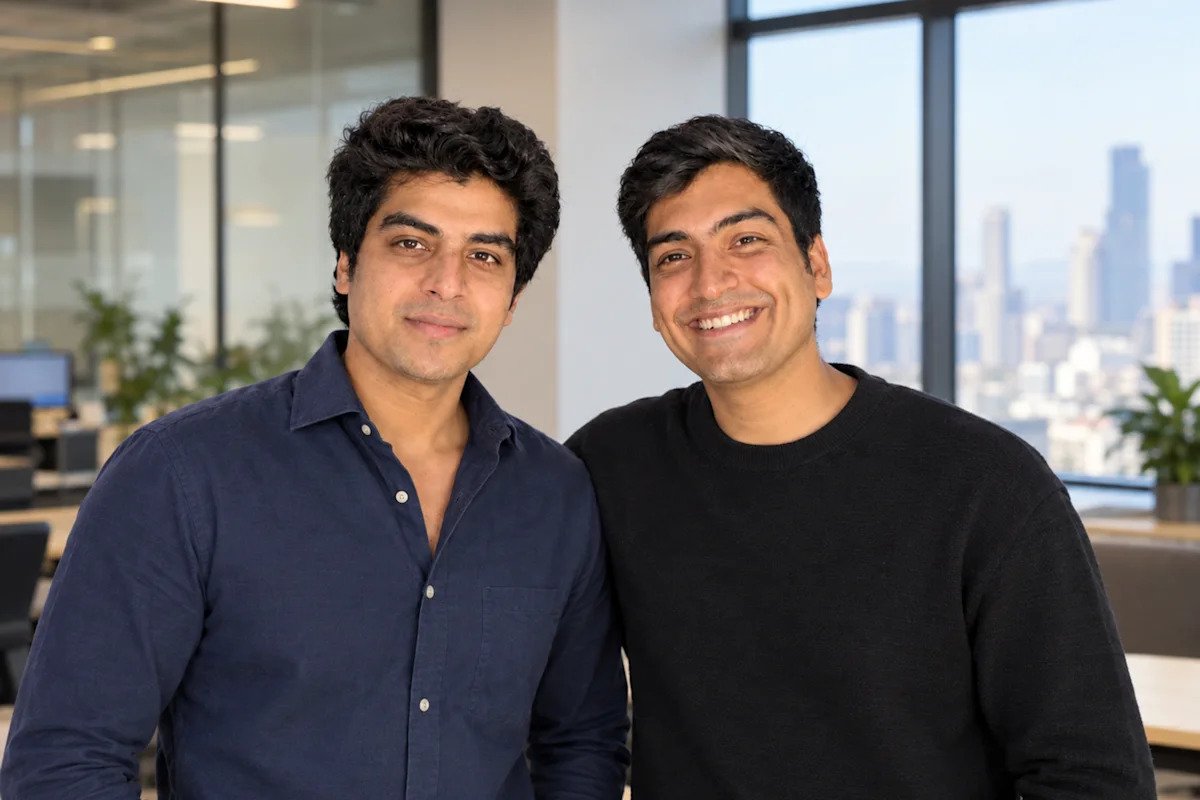
Few businesses illustrate that better than b.ai. Justin Sun, the founder of the TRON blockchain, launched the service on May 1 with a slogan about one key opening Claude, GPT, Gemini and the major Chinese models. He said the company was subsidizing at least 100,000 yuan a day, roughly 10 billion tokens. Registration passed 1.7 million users within a week, according to Sun’s public posts, and two million by early July, with peak throughput of 18.69 billion tokens in a day.
The service also carries a feature that is very much Sun’s: users pay in USDT, balances held on the platform are routed into decentralized finance to earn yield, and login runs through a blockchain address rather than a verified identity. That design is the opposite of what the new policy asks for. A partner that cannot tell one end user from another cannot investigate a specific abuse complaint, and a partner whose customers are anonymous cannot credibly promise that a ban on one platform follows them to the next.
The economics that make such services viable are documented. An audit of so-called shadow APIs published this year and accepted at the ACM CCS conference compared official endpoints with resold ones across utility, safety and model verification. It found performance gaps of as much as 47.21%, unpredictable safety behavior, and failed identity checks in 45.83% of fingerprint tests. Much of the price advantage comes from account pools, collections of subscriptions and free credits that distributors buy or harvest and then resell at 5% to 30% of list price.
OpenAI’s choice to license rather than ban is the more interesting part of the announcement. Blocking account pools and cutting off distribution is within the company’s technical reach. It has not done so, and the likely reason is that the same middlemen serve users who cannot easily pay OpenAI directly, whether because of card acceptance, regional restrictions or price. Those users have Claude, Gemini and Chinese models one click away. Removing the reseller does not send them to OpenAI’s checkout page; it sends them to a competitor.
The compliant version of the business already exists and has a price. OpenRouter routes more than 300 models through one interface, charges 5.5% on top-ups and keeps list prices unchanged, and was valued at $1.3 billion in a funding round in May, with annualized revenue above $50 million, according to a16z, an investor. Stripe agreed in August to buy the company, with reports putting the price near $7.5 billion. OpenRouter’s model depends on being visible to the model provider, and it is the sort of company that can file the paperwork.
The bottom of the market is where the policy bites. Sellers on Chinese secondhand marketplaces such as Xianyu advertise monthly plans for 44.9 yuan with no usage cap, or a million-odd tokens for one yuan. Their supply comes from the same pools, and their customers have no recourse when a key dies or an intermediary turns hostile. Researchers who bought 28 paid intermediaries and collected 400 free ones found active code injection in nine of them, attempts to steal cloud credentials in 17, and one that drained a wallet.
For b.ai, the choice comes down to what the business is for. Compliance means knowing customers, reporting on them and accepting that a suspension travels with them, which removes the anonymity that the product advertises and the float that makes the subsidy affordable. Refusal means dropping GPT from a service whose pitch is having every model at once, in a market where the other models are cheaper anyway.
OpenAI has set a date rather than issued a shutdown. Companies that want to keep reselling its models have until Nov. 20 to describe how they will police the traffic they pass along.