Wikipedia has been copied more than any reference work ever printed, and its publisher has never objected, on one condition: the copy carries credit and passes the same license along. On Oct. 30, the Wikimedia Foundation took that condition to federal court in Manhattan, where it asked a judge to make it hold for chatbots too.
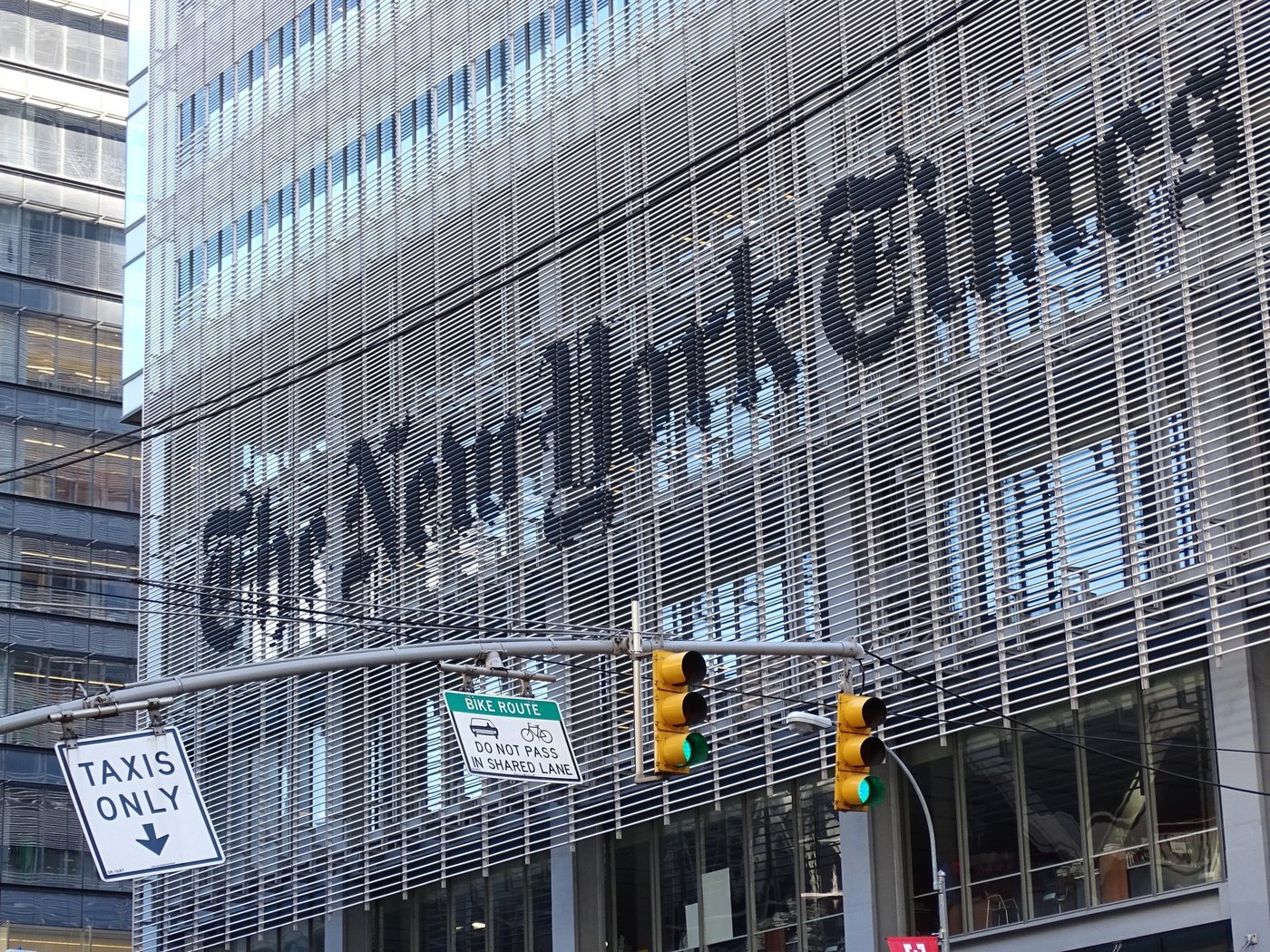
The foundation filed an amicus brief in New York Times Co. v. OpenAI, the copyright suit brought in December 2023 over the training of large language models and the passages they can reproduce. The brief splits the case into two questions that the litigation has mostly treated as one.
Training a model on copyrighted text is fair use, the foundation argued. A chatbot that reproduces that text word for word and stands in for the original is not. It asked the court to keep learning and substitution apart, and to attach attribution and license terms to any reproduction it permits.
That position is uncomfortable for both sides, which is presumably why the foundation took it. Publishers suing OpenAI have argued that the ingestion of their archives is the injury. Model developers have argued that everything from ingestion to output is transformative. The brief says the first claim is too broad and the second too narrow, and that the distance between a model that has read an encyclopedia and a model that recites one is what copyright was written to measure.
What gives the foundation standing to make the argument is its own license. Wikipedia’s more than 60 million articles in more than 300 languages are published under Creative Commons terms that allow commercial reuse on two conditions: credit the source, and carry the same terms into any derivative. That license is why the encyclopedia’s text turns up in search results, on phones and inside training sets. It is not a waiver, and the brief is an attempt to show that a machine reading it does not convert one into the other.
In practice the request is smaller than it sounds. Per-sentence attribution inside a neural network is not feasible, and the foundation does not propose it. Its ask is confined to outputs: where a model emits a passage that tracks a source closely enough to replace it, the operator should name the source and honor the license. Where the model has absorbed the material and answers in its own words, the brief would leave it alone.
Judges have been circling this split without landing on it. In 2025, federal courts in California found in separate cases brought by authors that training on books was transformative, while faulting Anthropic and Meta over how they acquired the copies. Neither ruling resolved what happens when an output comes close enough to the input to compete with it in the market.
That is the question the New York suit is built around. The Times has documented responses that reproduce its articles at length; OpenAI has argued that such regurgitation is a defect produced by adversarial prompting rather than the purpose of the product. The foundation’s brief steps into that argument with a rule that neither party proposed.
There is also a commercial reason the foundation is spending legal fees. AI assistants now answer questions that once sent readers to Wikipedia, and the traffic that its fundraising depends on has been thinning. The organization has said for two years that referrals from search and from chat products are falling, and it has begun selling licensed access to its corpus through a commercial arm that serves large technology companies. If reproduction without credit is lawful, that paid route loses much of its point.
The foundation’s own numbers make the stakes concrete. It runs on donations raised in an annual campaign, and it has warned supporters that the shift toward machine-generated answers threatens the reader relationship that the campaign depends on. A rule that lets models absorb the encyclopedia but requires them to credit it when they quote it would preserve both the mission and the revenue.
Content owners may not thank it. A brief that concedes training is fair use gives away the strongest claim publishers have, and licensing deals signed over the past three years with news organizations rest on the premise that training requires permission. The foundation is arguing that the permission is already granted, for anyone willing to follow two conditions that most model builders have ignored.
The filing also lands in a crowded field. Suits by authors, visual artists and stock-image suppliers are moving on separate schedules in different courts, and several regulators abroad are drafting their own rules for text and data mining. A ruling in Manhattan that separates learning from substitution would give all of them a template.
Nothing about an amicus brief binds a judge. But courts read them for the reasoning, and a nonprofit that has run the oldest open-license corpus in the world carries a kind of standing that a trade group does not. If the opinion adopts the distinction, the practical effect would fall on product design rather than on damages: model builders would have a reason to prefer retrieval, which cites, over memorization, which does not.
The foundation’s ask is modest by the standards of the case. It does not seek to stop the training or to extract a settlement. It asks the court to treat the license as the price of copying, and to require that the price be paid in the currency the license names: a line of credit, not a check.
Whether a court can write that rule, and whether a model can obey it at the scale of trillions of tokens, are separate questions. The first will be answered in Manhattan. The second is already being answered in every product that would rather cite a source than become one.