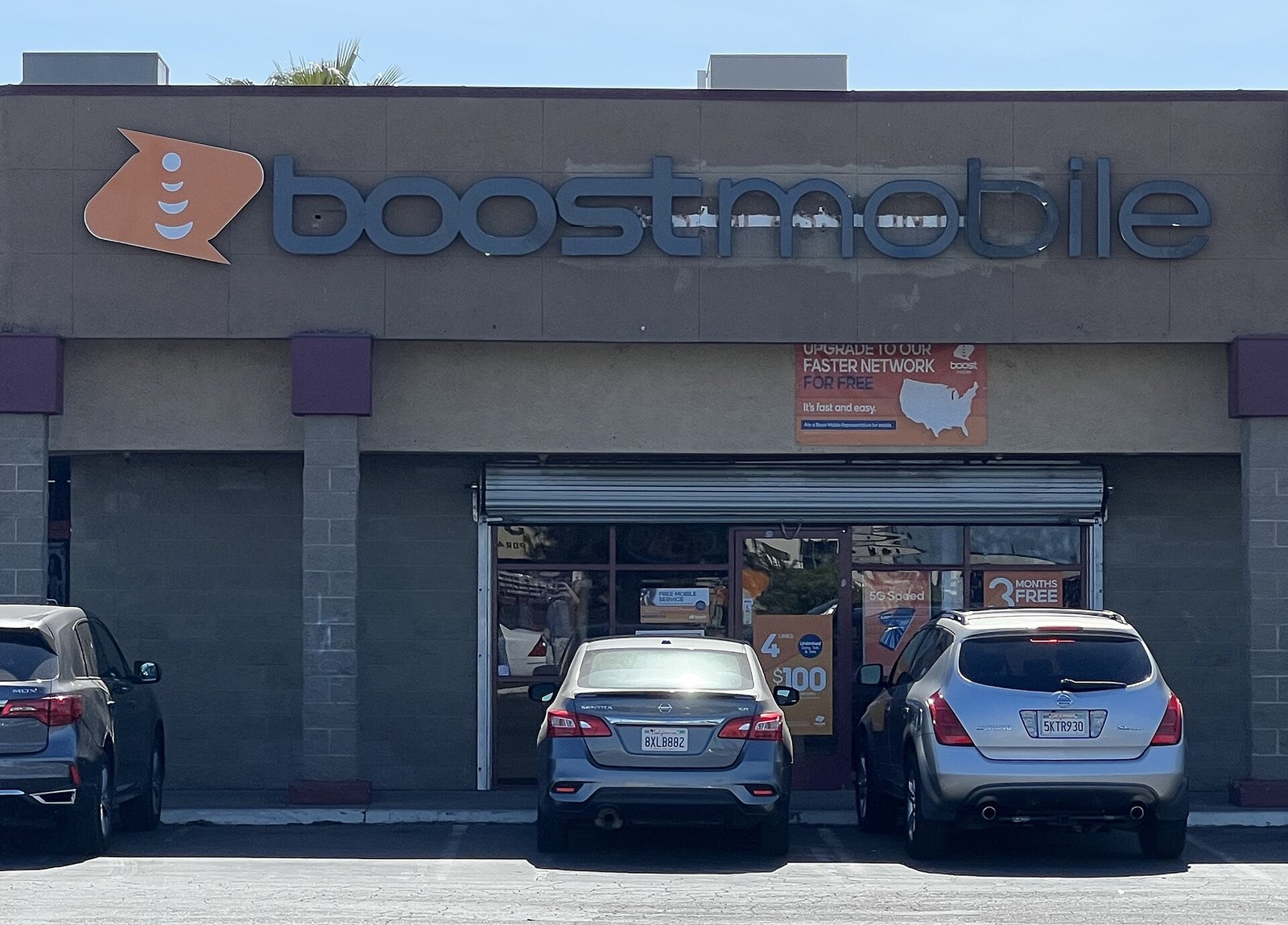
Elon Musk met Charlie Ergen last month, according to people familiar with the talks, and the subject was a subscriber base of roughly 7.4 million people. EchoStar’s Boost Mobile leases its network from AT&T and T-Mobile and resells it under its own brand. SpaceX would like that arrangement, or the business itself.
The Washington Post reported on Monday that SpaceX has been in talks with EchoStar in recent months about buying Boost Mobile outright or gaining access to its network. The discussions, described by people familiar with the negotiations, are the clearest sign yet that the rocket company intends to sell mobile service to consumers rather than only to the carriers that already use its satellites.
The strategic logic is in the name SpaceX has been using for the effort: Starlink Mobile. The company wants a hybrid network, in which its satellites carry traffic where terrestrial towers cannot reach and a ground network carries the rest. Satellites alone cannot handle the density of a city. A wholesale agreement or an acquisition supplies the ground half without a decade of tower construction.
Boost comes with 7.38 million wireless subscribers as of the end of the second quarter, mostly Boost and Gen Mobile customers, according to EchoStar’s disclosures. That is small next to AT&T, Verizon and T-Mobile, each of which counts well over 100 million connections. It is not small as a starting position for a fourth national carrier, which is how analysts have described what SpaceX is assembling.
The market reaction was immediate and asymmetrical. EchoStar shares rose about 3.4% in premarket trading on the report, while T-Mobile slipped about 2%. AT&T and Verizon also edged lower. Telecom stocks have been under pressure since SpaceX agreed to pay $8 billion for spectrum earlier this year, as investors tried to price the threat of a satellite-backed entrant with a founder who has repeatedly accepted losses to gain share.
The obstacles are contractual before they are technical. Boost’s network-leasing agreements with AT&T and T-Mobile may not be transferable to a new owner without the carriers’ consent, the Post reported. That gives two competitors a veto over the simplest version of the plan, and it explains why SpaceX is exploring a wholesale arrangement as well as an outright purchase. A wholesale deal would leave EchoStar as the counterparty of record and put SpaceX behind it in the customer relationship.
T-Mobile’s chief executive has already said no. In comments last week, Srini Gopalan called satellite service inferior to fixed wireless outside a handful of hard-to-reach areas and said he sees no room for a SpaceX-branded mobile virtual network operator on his network, ruling out the arrangement that would make Boost’s economics work if it changed hands. T-Mobile has its own satellite joint venture with SpaceX’s rival constellation partners and has spent years building the argument that direct-to-cell service is a supplement, not a substitute.
SpaceX and EchoStar did not respond to requests for comment from Reuters, which reported the Post’s account on Monday. Neither company has confirmed that talks are under way, and no price has been disclosed. EchoStar’s wireless business has been for sale in one form or another for two years, and its spectrum holdings have been the more valuable asset in every version of the discussion.
For EchoStar, the appeal is balance sheet relief. The company has been funding a network build it cannot afford at scale, and it has already sold spectrum to SpaceX. Handing over Boost’s subscribers and its wholesale contracts would remove a cash drain and keep the spectrum relationship alive. For SpaceX, the appeal is speed: a subscriber base, billing systems, retail distribution and a brand that already sells prepaid service in thousands of stores.
The cost side is where the skeptics sit. Analysts said building a consumer wireless business requires heavy spending on handset subsidies, customer service, retail overhead and marketing, all areas where the three incumbents have decades of operating experience and scale. Satellite capacity is expensive per gigabyte, and the customers most likely to need it, rural and mobile users, are also the ones the incumbents have been least able to serve profitably.
There is a corporate-finance dimension too. SpaceX listed in June in the largest IPO on record, raising $75 billion, and it has told investors it is hunting for revenue lines that can support a trillion-dollar ambition. Wireless service would add recurring subscription revenue to a business that has been lumpy and project-based. It would also add a low-margin retail operation to a company valued on launch cadence and satellite economics.
Mr. Musk has been direct about wanting to compete with the carriers rather than supply them. The $8 billion spectrum purchase gave him the raw material. A deal with EchoStar would give him the customers, the billing relationships and the regulatory posture of an existing carrier, which is a faster path to the market than building one.
Whether AT&T and T-Mobile will permit the transfer is the question the next few months will answer. Both have reasons to say no and one reason to say yes: a wholesale contract with SpaceX converts a potential competitor into a paying tenant, at least until the agreement expires.
Mr. Ergen has spent his career trading spectrum and assets at the moment they were worth most. Monday’s report suggests he is negotiating again, and that the buyer this time has satellites, a public currency and a reason to want the customers more than the towers.