In the first week of March 2020, Samsung Electronics was preparing to sell the Galaxy S20 and could not get Broadcom to approve its purchase orders. The American chipmaker wanted a three-year supply commitment, and Samsung had not agreed to one on Broadcom’s terms.
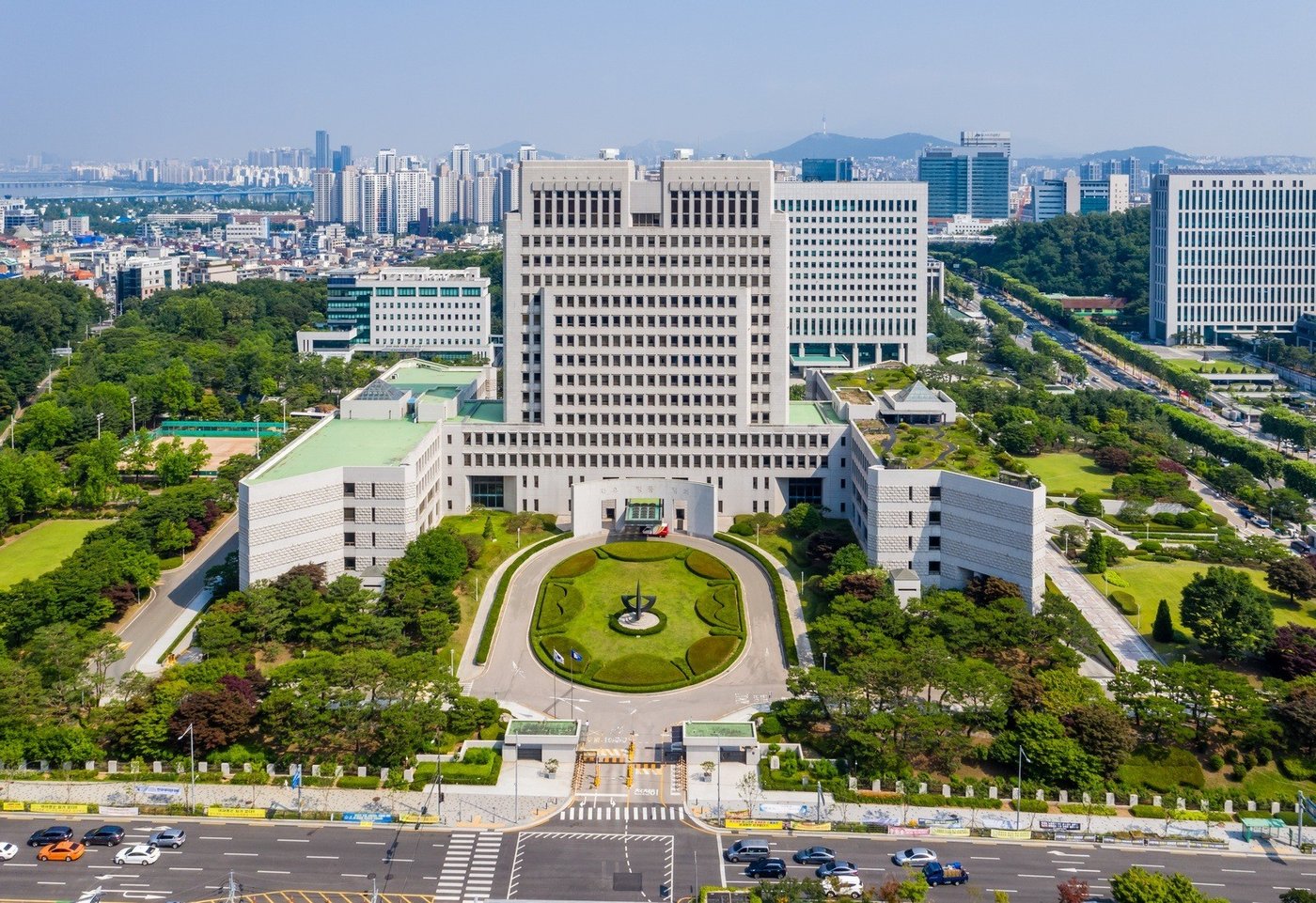
South Korea’s Fair Trade Commission later concluded that Broadcom used that moment to force the contract. On Monday, the country’s Supreme Court ended the company’s effort to overturn the penalty, dismissing its appeal in a ruling dated Oct. 27 that became public at the start of the week. The fine stands at 18.6 billion won, about $13.8 million.
The agreement Samsung signed in March 2020 committed it to buy at least $760 million of Broadcom components annually for three years beginning in 2021, with a clause requiring Samsung to compensate Broadcom for any shortfall. The parts were radio-frequency front-end components, which handle wireless signals in a handset, along with Wi-Fi and Bluetooth chips.
According to the commission’s findings, Broadcom secured the deal by suspending approvals of Samsung’s purchase orders and threatening to halt component shipments and production. Samsung, which had just launched its flagship phone, faced a line stoppage if the parts did not arrive. The regulator also found that Broadcom tried to prevent Samsung from adopting competing suppliers’ components, and estimated that the restriction on Samsung’s choice cost the company at least $160 million. Samsung put its own damages at $326.3 million.
The commission imposed the fine and corrective orders in September 2023. Broadcom challenged the decision in court that November. The Seoul High Court ruled against the company in May, finding that it had used unusually coercive measures to obtain a contract it knew was unfavourable to its customer. The Supreme Court’s dismissal leaves the regulator’s decision final.
The size of the penalty is modest against a company of Broadcom’s scale, and the contract at issue ran its term at the end of 2023. The ruling matters for the reasoning rather than the amount. Korea’s competition law prohibits abuse of a superior bargaining position, a provision that does not require proof of market dominance, only of dependence. A supplier that a customer cannot practically replace, and that uses that dependence to extract multi-year commitments, is exposed under the statute even without a large share of a defined market.
That is the pattern the commission described. Radio-frequency front-end modules sit between the antenna and the transceiver, and changing supplier requires redesigning the board, requalifying the part and recertifying the handset with mobile carriers. In the weeks before a launch, none of that is possible. Broadcom’s advantage came from timing as much as from market share, and the commission treated the timing as the offence.
Broadcom has met this argument before. In 2020 it avoided a European antitrust penalty over television set-top box chips by offering commitments on how it sold to customers, an outcome that closed the investigation without a finding of wrongdoing. The Korean case went further because the customer described the pressure and the regulator held purchase-order records showing that approvals had stopped.
For Samsung, the episode belongs to a longer effort to reduce dependence on single suppliers in radio components, work its own chip division and Korean fabless firms have pursued since. Neither company has disclosed what replaced the three-year agreement.
The case also lands in a changed market. Broadcom’s custom accelerator business and its networking silicon have made it a central supplier to the largest cloud customers, and bargaining power between chip vendors and their buyers has shifted toward the vendors as capacity has tightened. Memory makers are signing multi-year agreements with deposits and take-or-pay clauses, and the terms are being set by the seller. Nothing in Korean law prevents a supplier from asking for a long contract. The violation was in how Broadcom obtained one.
Analysts said the ruling is unlikely to change behaviour in the current cycle, when customers are volunteering for long commitments to secure supply. Its use will come later, when the cycle turns and buyers revisit terms signed at the top.
The commission’s order also requires Broadcom to refrain from the conduct, which outlasts the fine in practical terms. For a company that sells into every major handset maker, a documented finding of coercion in the market where two of its largest customers are headquartered is a reference other regulators can read.
The case took five years and produced a penalty that Broadcom can absorb in a day. That ratio is normal in antitrust, and it is why the reasoning carries more weight than the number. The violation was not a price. It was a purchase-order system that stopped approving orders at the moment a customer had no alternative, and the record of those stopped approvals is what survived appeal.
The dismissal is final. Korean antitrust rulings reach the Supreme Court once, and there is no further appeal.
The narrow effect is a fine that will be paid and an order that will be observed. The wider effect is a precedent about dependence, in a country that supplies the memory and displays inside most of the world’s phones, and that has spent a decade building an enforcement record against foreign chipmakers whose customers have nowhere else to go.
For the suppliers now negotiating contracts through 2029, the lesson is procedural rather than commercial. Long agreements are lawful. Extract them from a customer with a launch date and no second source, and the paperwork that proves the pressure is the customer’s own purchasing system. The approvals that stopped clearing in March 2020 were entries in a database, and the database kept them.