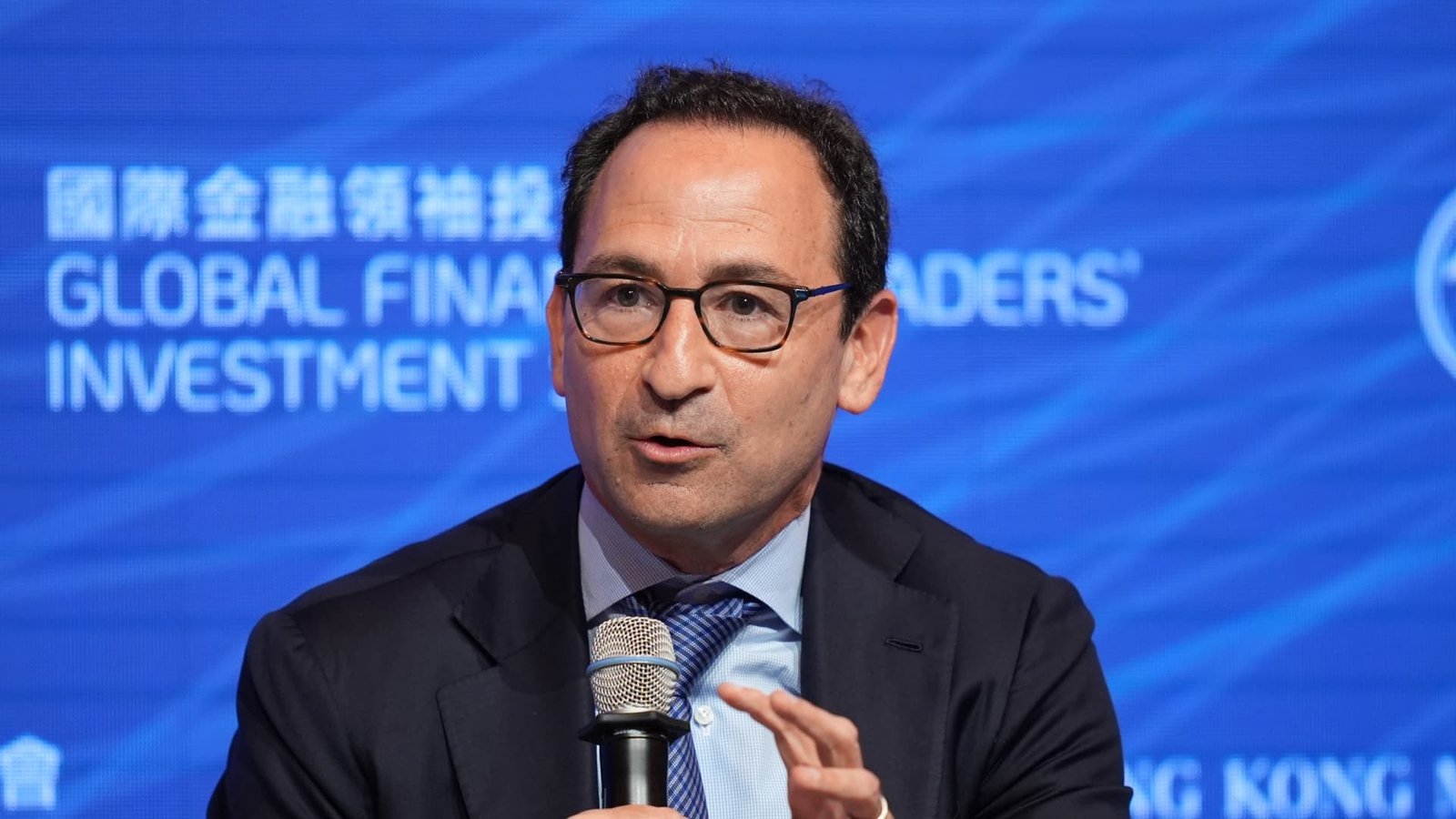
Meta Platforms asked Citigroup and Morgan Stanley to arrange investor calls for two investment-grade offerings, one in dollars and one in euros, according to people familiar with the matter. The company is looking to raise at least $20 billion, and the size could grow depending on demand. Bloomberg reported the plans on Nov. 2.
The euro tranche would be Meta’s first euro bond, the company’s debut in the single currency. That detail matters less for the dollars it raises than for what it says about the company’s funding calendar: Meta is no longer treating the debt market as a place to refinance an occasional maturity. It is treating it as a source of growth capital, in the currency where the cheapest long-dated money currently sits.
The order of events is the part worth reading closely. Meta completed a $35 billion equity offering a week before the bond calls. Standard & Poor’s cut its outlook on the company’s rating days before that. Equity first, a warning from a rating agency second, debt third is not the order a treasurer picks when the balance sheet is comfortable.
The equity sale told investors something the earnings calls had only implied. Meta’s capital spending on data centers, accelerators and the power contracts that feed them has grown faster than the cash the business generates, and the company chose to fund the gap with stock rather than with cash it does not have. A raise that size reorders the shareholder base, and companies do not do it casually.
The outlook revision added a constraint. An outlook is not a downgrade, and S&P’s move did not change the rating on Meta’s existing bonds. What it changed is the direction of travel that ratings committees are signaling, and credit investors price direction before they price level. A company borrowing more while a rating agency says it is watching pays a few extra basis points for the privilege.
Those basis points are being set in a market that has become less forgiving this autumn. Oracle priced $10 billion of notes on Nov. 2 across maturities stretching from 2029 to 2046, with coupons from 7.000% to 8.650%, according to a filing with the Securities and Exchange Commission. Oracle is a weaker credit than Meta and carries far more debt relative to its earnings, so its coupons are not a benchmark for Meta’s. They are a marker nonetheless: the market is charging real money for the bonds that finance artificial intelligence, and it is differentiating between the borrowers.
Borrowers have been arriving all year. The hyperscale cloud companies, the chipmakers, the data center developers and the private credit funds that lend to them have all been raising money against the same forecast, which is that demand for computing will keep compounding for a decade. Each new issue tests how much of that forecast the bond market will underwrite at a given price.
The euro tranche is where the technical demand is. European insurers and pension funds have liabilities denominated in euros that stretch out for decades, and they have been short of long-dated paper from large issuers. That shortage has let American technology companies borrow in euros more cheaply than they can at home once the currency hedge is priced, and the market for those deals has grown large enough that a first-time issuer can raise billions in a single afternoon.
Currency is the catch. Meta earns most of its revenue in dollars and would be paying coupons in euros, so the treasurer has to choose between hedging the exposure, which gives back part of the savings, and leaving it open, which adds a line to the risk factors. Most large issuers hedge, and the savings survive because the euro market’s demand for duration is structural rather than opportunistic.
The dollar tranche will be watched more closely by American credit investors, because it will price against Meta’s existing curve and against the recent supply from its peers. A deal of $20 billion or more is big enough to move that curve. If Meta has to pay a new-issue concession, every other technology borrower in the queue will pay it too.
There is a version of this story in which the borrowing is unremarkable. Meta generates enormous cash from advertising, its debt is small relative to its earnings, and investment-grade companies routinely borrow for capital projects. The company could fund several years of construction from cash flow if it chose to slow the pace.
The question is whether it can choose to slow the pace. The spending is committed in the form of land, buildings, power agreements and chip orders that take years to deliver, and the competitive argument inside the company is that falling behind on capacity is more expensive than carrying the debt.
Depreciation is the part that arrives later. A data center is written down over a period shorter than the life of the bond that finances it, so a company can be paying interest on a building long after the equipment inside it has been retired. That is normal for capital-intensive businesses, and it becomes a problem only if the revenue the equipment produced falls short of the forecast the bond was sold on.
None of that is decided by this sale. What the sale decides is the price at which Meta, and by extension the rest of the industry, can borrow next year. Investor calls are scheduled, the books will open after them, and the final size will be whatever the orders support.
For the bond market, the more interesting number is not the $20 billion. It is the spread on the longest tranche, because that is where a buyer states a view on a ten-year forecast in a business whose capital costs are still being discovered.