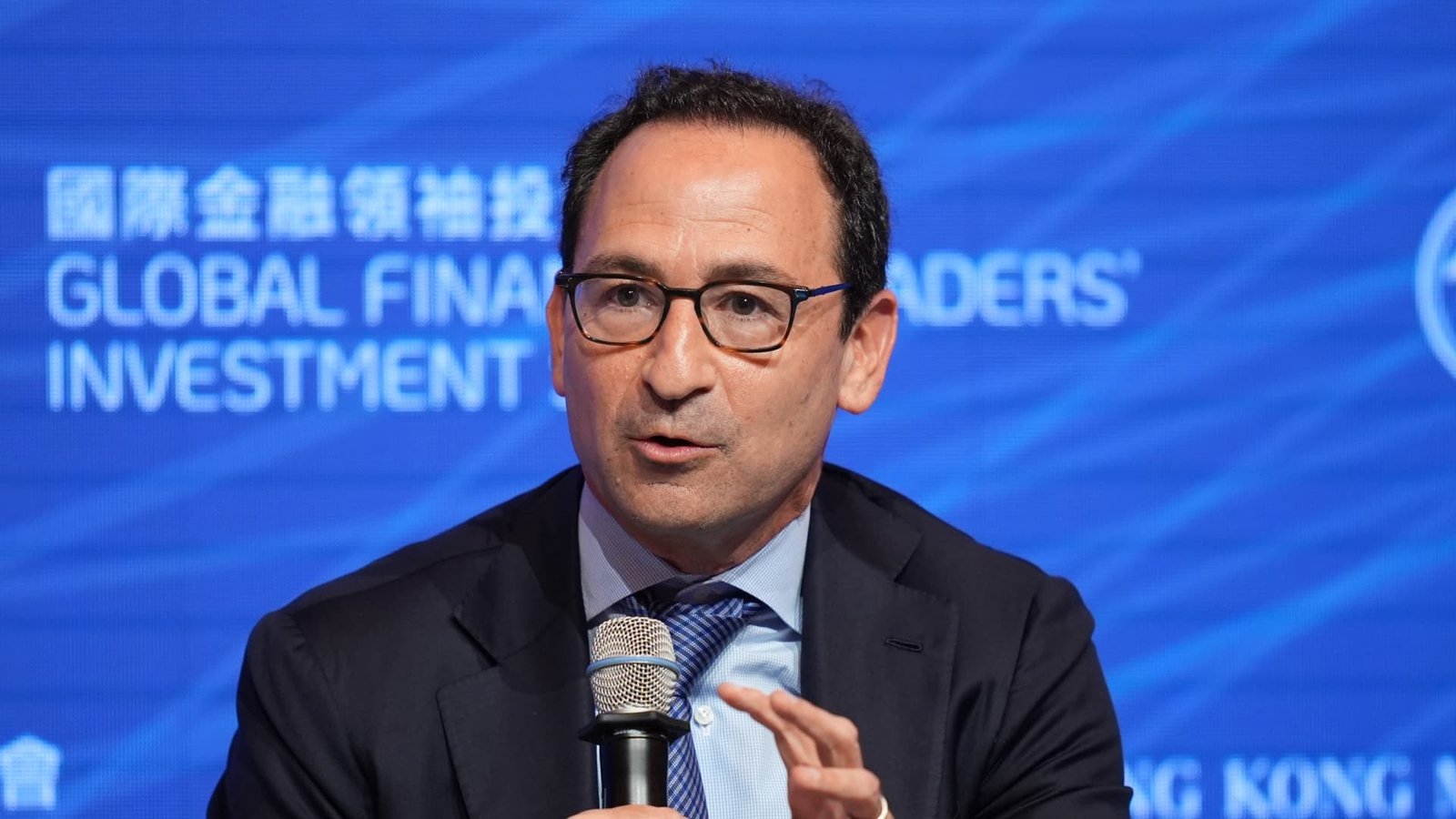
The question put to Jon Gray at a financial leaders summit this week was the one that has been circulating in credit markets all autumn: who is going to pay for the data centers? His answer was blunt. The bond market is carrying more of the bill than it should, and the people writing the checks are not being paid for the risk they are taking.
Gray, president of Blackstone, said the scale of financing required for artificial intelligence infrastructure has created a concentration problem for lenders. A bondholder receives principal and interest and nothing else, he noted, so if the assets being financed appreciate, the lender shares no part of the gain, while still absorbing the loss if the assets turn out to be worth less than expected. The sector, he said, needs more equity. He did not put a figure on how much, or say who he expected to write the checks, though his own firm has been raising money for infrastructure at a pace that suggests it has a view.
The numbers behind his argument came from the same panel. Emmanuel Roman, chief executive of Pimco, put AI-related capital spending over the next five years at roughly $10 trillion, and said some $550 billion of AI-related debt had already been issued this year. Against a global corporate bond market of about $20 trillion, that is a meaningful slice of new supply arriving in a short window. Goldman Sachs published a report the same day estimating that data centers alone would need $8.5 trillion of capital spending over five years.
Those figures describe a change in how the buildout is funded. The largest technology companies spent the first years of the AI cycle out of cash flow, which is why the spending never showed up as stress in credit markets. That has shifted. Meta has been marketing its first bond denominated in euros alongside dollar notes, Oracle priced a large note sale this week, and a queue of smaller operators has been borrowing against leases signed by customers whose credit is only as good as their own balance sheets.
The structure of the debt is what worries lenders most. A modern data center is financed with a special-purpose vehicle that owns the building and leases it to an operator, or with a loan secured against graphics processors and the contracts that pay for their use. Both arrangements work while demand rises. Both assume that a chip bought this year can be leased at a similar rate in five years, when a faster and cheaper one is on the market. Depreciation schedules in these deals are a matter of negotiation rather than engineering, and the gap between the two is where losses accumulate.
Equity absorbs that gap. Debt does not. That is the logic behind Gray’s appeal, and it is also a statement about his own business. Blackstone is one of the largest owners of infrastructure and real estate in the world, and it has been raising capital for exactly this kind of asset. When the president of a firm that sells equity stakes in infrastructure argues that a sector needs more equity, he is describing a market he would like to be paid to serve.
There is a second reason the call resonates. Private credit funds have grown quickly by lending to companies that banks no longer finance, and a large share of that lending has gone into technology and energy infrastructure. Regulators have begun asking how those loans would behave in a downturn, particularly where the same manager owns debt and equity in the same project. Gray’s warning lands in a debate that supervisors in Washington and London have already opened.
For the operators, the arithmetic is unforgiving. A gigawatt-scale campus costs billions before a single customer signs, and the customer wants capacity within eighteen months. Equity is expensive and slow to raise; bonds close in days. The temptation is to finance the first phase with debt, lease it out, and use the cash flow to raise equity for the next one. That works in a rising market and becomes a hostage negotiation when rates move.
Some of the pressure is already visible in the equity market. Shares of the companies building the infrastructure have swung sharply on earnings, and investors have begun to distinguish between operators with contracted revenue and those with announcements. The bond market has been slower to discriminate, partly because the deals are private and partly because the buyers are institutions that need yield.
None of this means the spending stops. It means the mix changes. Expect more joint ventures, more infrastructure funds taking construction risk, and more operators selling stakes in finished campuses to pension money that wants a lease and a coupon. The debt will still be there. It will just sit further back in the queue.