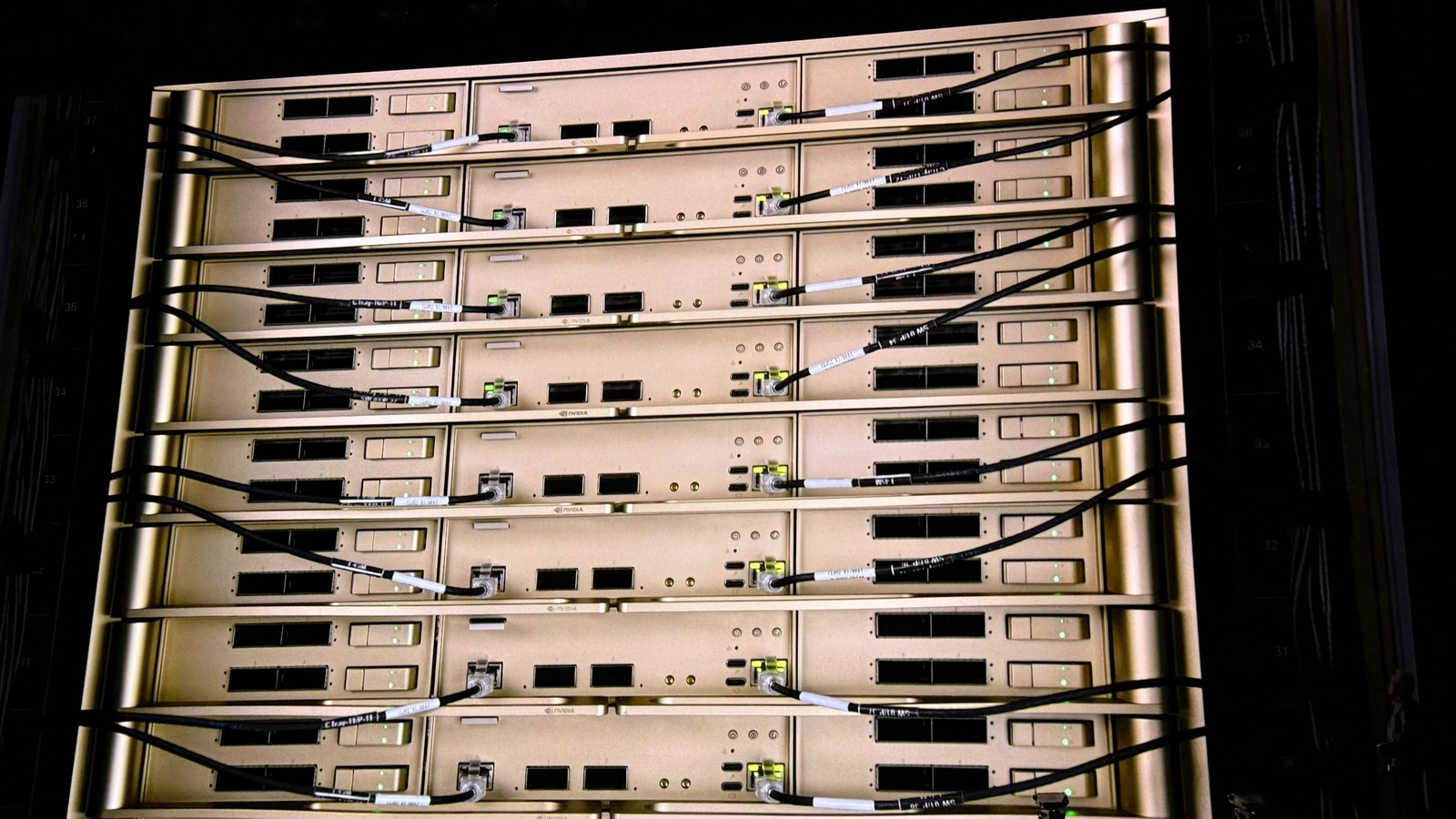
The L6 compute board is an unglamorous object: a printed circuit board carrying graphics processors, their memory, and the power delivery that keeps both fed. In Nvidia’s rack-scale systems it is also a boundary. Above it sits the chipmaker’s specification. Below it, the customer’s.
SpaceX has decided it wants to own the boundary. The company plans to buy chip packages directly from Nvidia and procure the rest of the surrounding hardware itself, according to SemiAnalysis, the semiconductor research firm, which disclosed the arrangement on X. The rack that results carries the internal name Kessel. By stepping past the L6 board, SpaceX takes design and purchasing authority over the printed circuit boards, connectors, power supplies and cooling that surround the silicon, parts that Nvidia otherwise specifies.
SemiAnalysis described the change in commercial terms rather than technical ones. It alters who buys which components, the firm wrote, and gives SpaceX more control over supplier selection and parts procurement. That is a plain sentence about a large shift.
A rack is not a bag of parts with a logo on it. It is a validated assembly in which signal integrity, airflow, voltage droop and firmware have been tuned against one another. Whoever owns the board layer owns those decisions, and whoever owns the decisions writes the purchase orders.
Nvidia’s business has come to depend on selling the assembly. Across recent generations the company has moved from shipping accelerators to shipping complete racks, with networking, switching and liquid cooling bundled in, and it prices them as systems rather than components.
Buyers who accept the whole package get a machine that works on arrival and a support line that answers at three in the morning. Buyers who take it apart keep the savings and inherit the debugging. SpaceX is choosing the second arrangement, at least at the board layer.
The approach has precedent, but the precedents are narrow. The largest cloud providers have designed their own servers for more than a decade, and a few have gone further, building custom accelerators to avoid buying the most expensive part at all. SpaceX is a different kind of customer.
It is a launch operator and a satellite-network builder, not a company that rents out compute by the hour, so its racks will feed internal work: design, simulation, and the software that flies and operates spacecraft. The company has not said what the Kessel racks will run, how many it intends to build, or where they will sit.
The appeal is arithmetic. Every component SpaceX sources itself is a component on which it can take competing bids, qualify a second supplier, or redesign around its own power and cooling constraints. The parts it stops buying from Nvidia are also, from Nvidia’s side of the table, revenue per system. If the practice spreads, the chipmaker keeps the silicon business and loses a slice of the system business, while circuit-board makers, connector suppliers and thermal vendors pick up a buyer with an engineering staff large enough to specify exactly what it wants.
The costs are less visible and arrive later. A reference design is a promise that somebody else has already found the failure modes. Racks that run hot, boards that resonate at the wrong frequency, power supplies that trip under a load transient: these are solved problems when you buy the assembly and open questions when you build it. SpaceX has deep hardware engineering, but data-center hardware is a different discipline from rocket hardware, with different tolerances, different duty cycles and a different definition of downtime.
There is a supplier-relationship question as well. Nvidia allocates scarce parts, and allocation functions as a form of pricing power that never appears in a contract. A customer that buys packages while refusing the board is asking the chipmaker to surrender margin and stay the sole source of the thing that matters most. Whether that request is granted depends less on goodwill than on how tight supply is the week the order lands.
In a shortage the answer is no. In a glut the answer comes with a discount.
Analysts said the arrangement will be watched by other large buyers, particularly those with the engineers to replicate it and the volume to make it worth Nvidia’s attention. One customer taking the board layer is a negotiation. A pattern of them doing it changes how the most expensive hardware in the industry gets sold, and who carries the warranty when it fails.
The more interesting question is what SpaceX does with the freedom it has bought. Skipping a vendor’s board only pays if you can specify something better for your own workload, and the workloads inside a rocket company are not the ones a cloud provider tunes for. If Kessel turns out to be a cheaper way to buy the same machine, it is a procurement win with a short shelf life. If it turns out to be a machine built around a different constraint entirely, Nvidia will eventually have to explain why its reference design was the wrong shape for a customer of that size.