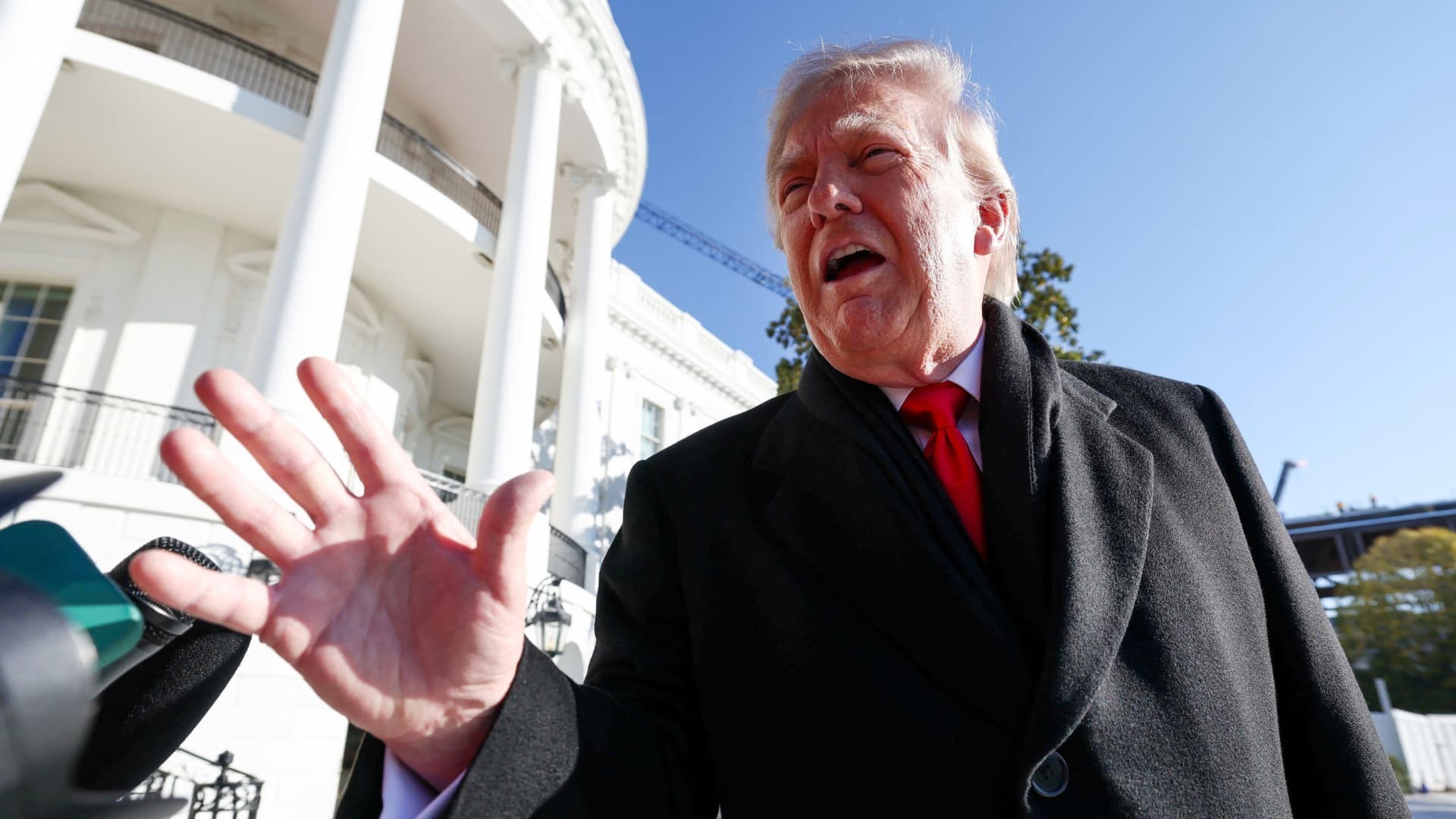
The Wall Street Journal reported on Nov 15 that the Trump administration intends to designate more than twenty AI companies — among them Nvidia, Amazon, Microsoft, OpenAI and Anthropic — as national champions, with help winning overseas orders attached to the label. Nothing on the list is final and the White House has not confirmed it. If it happens, what changes is the role of the American government in its own most valuable industry: from writing rules that everyone follows to choosing a roster that everyone else competes against.
The shape of the proposal is easier to describe than to evaluate. According to the report, the designation comes with assistance in pursuing foreign contracts and in competing with global rivals. The list and the specific support instruments are not settled, no funding has been described, and no timetable has been given.
A designation without money is not nothing, which is the part worth thinking through. Governments can open doors with advocacy, tie export credit and development finance to a preferred supplier, fold a company into procurement conversations with allied states, and put its executives on the delegations that negotiate standards. Each of those is cheap for a treasury and expensive for a competitor.
There is precedent in other sectors, and it cuts both ways. Defence procurement has always run on a preferred supplier list, and the chip industry has lived for years with a policy apparatus that decides which firms may ship which tools. Both arrangements delivered capability. Both also produced incumbents that were hard to dislodge and governments that ended up defending a company’s commercial choices in public.
The contradiction is sharper here because the same administration is the regulator. Antitrust review, export licensing and procurement rules all run through the executive that would be handing out the label, and a firm on the champions list is simultaneously a beneficiary and a potential defendant. That is workable while the policies agree and awkward the moment they diverge.
Export control is the clearest case. A champion’s ability to win overseas orders depends on licences its own government issues, and those rules have been tightened repeatedly on national security grounds. A company told it is a national asset in one meeting can be told in the next that a shipment to a particular customer is denied, and foreign buyers notice the sequence.
The foreign reaction is the risk the report cannot address. Other capitals read a champion list as a target list: if Washington is backing these firms for their markets, then procurement there becomes a question of alignment. Data localisation rules, security reviews and local-content requirements are the standard instruments, and they are available to governments that would never say out loud why they reached for them.
The boundary of the list is the second unresolved problem. Twenty-some companies is a small number in an industry with thousands, and the difference between being named and being left out is a difference in access that nobody has defined. Firms that build the models and firms that rent the compute will read the same announcement very differently.
What the companies want is legibility: a government that argues for them abroad, clear rules on what they may sell where, and a predictable process for the licences they need. What they cannot easily accept is a designation that makes them instruments of policy in markets where they would rather be vendors.
The missing funding mechanism is being read in two directions. One reading is that the administration wants influence without appropriations, which is cheaper politically and quicker to announce. The other is that money arrives later through vehicles not yet drafted, and that the current reporting describes the label rather than the instrument behind it.
Reversibility is the quieter problem. A designation issued by one administration can be withdrawn by the next, and companies making decade-long investments in overseas markets need to know whether the backing survives an election. A label that can be removed is a subsidy that can be repriced, and foreign customers will price that risk into the contract.
That is why the mechanism matters more than the roster. If the support is advocacy and access, it will be judged by whether contracts get signed. If it is licensing relief or finance, it will be judged by appropriations and by courts. So far the reporting describes the first and leaves the second entirely open.
The label also changes what the government must then do about failure. A champion that loses a market to a state-backed rival becomes a political problem rather than a commercial one, and the pressure to escalate — through subsidies, through export rules, through procurement exclusion — grows with the stakes the designation created.
None of this makes the idea wrong. Governments have backed strategic industries for as long as there have been strategic industries, and the AI build-out has a security dimension that no serious official disputes. The question is what the state is willing to put behind the word champion, and whether it can do so without becoming the reason its own companies lose abroad.
Until the list is published and the instruments are written, the only thing established is the direction of travel: Washington has concluded that neutrality in this industry is no longer a policy it can afford. The rest is administration. Administration is where champion lists usually go to die, and the companies named in a leak have no way of knowing yet whether they were handed an asset or a liability.