
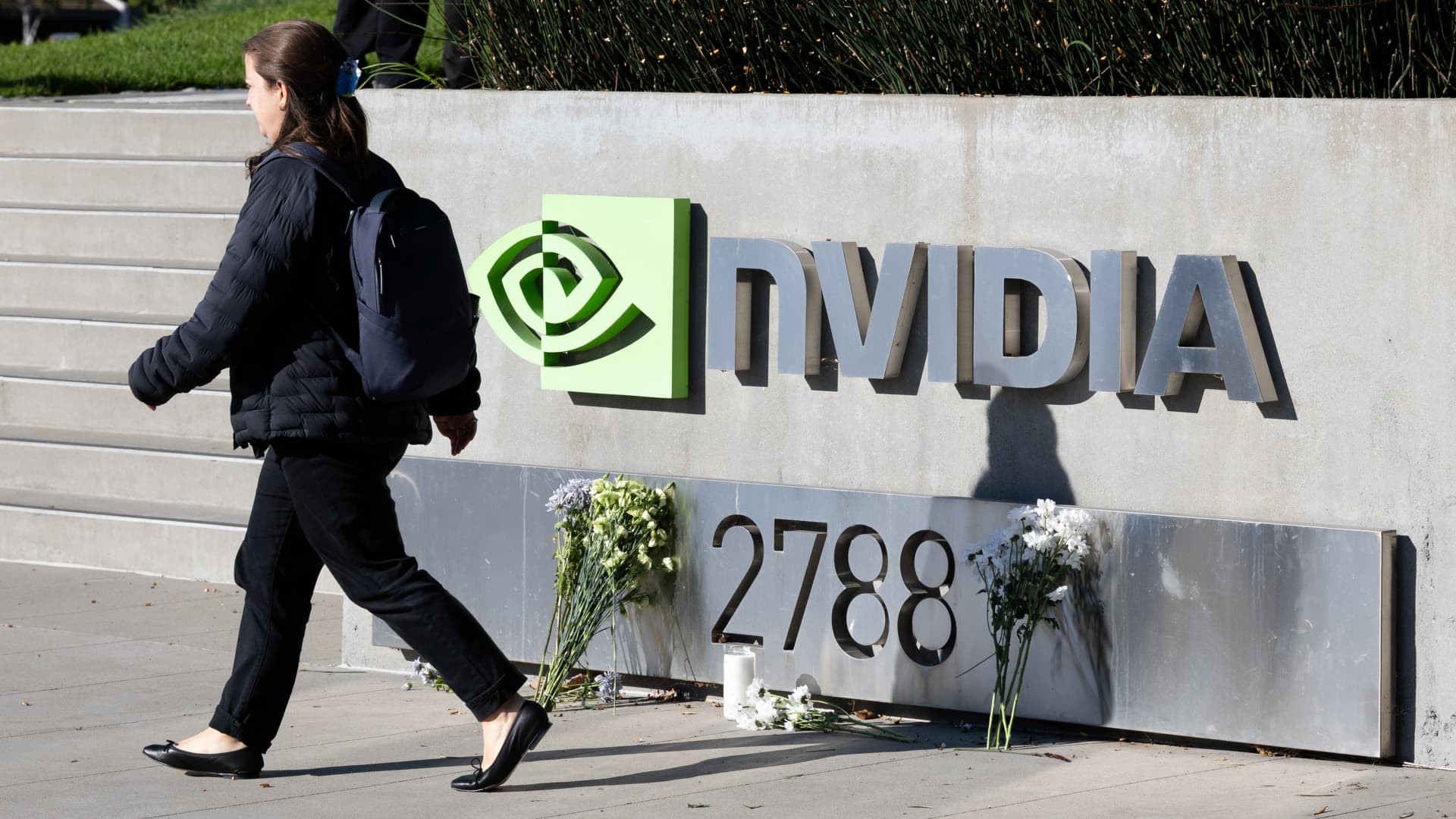
Treasury Secretary Scott Bessent said in a Fox News interview on Nov 15 that Nvidia’s board should be replaced outright and that its next chief executive should come from outside the company. He also questioned how the company books revenue, arguing that sales attributed to Singapore had been inflated while other markets were contracting. The same day, the Financial Times reported that Jensen Huang had discussed returning as chief executive with people close to him.
Two decisions, one day, pointing in opposite directions. One is a founder testing whether the company he built still wants him back. The other is a cabinet officer telling a public company who should run it. Neither has produced a filing, a vote or a search committee, and both have already moved the share price.
Bessent’s motive is stated as an accounting concern. A company that reports growth in one small market while the rest of its business shrinks invites the question of whether that growth is demand or a routing decision. He framed the answer as a reason to change the board and the management, not to demand a restatement, which leaves the allegation standing without a mechanism to test it.
Huang’s motive is harder to read because it arrives through allies. One of them said Silicon Valley is assembling a war room to lobby for his reinstatement and to seek support from the White House. A war room is what you build when the argument is political rather than financial, and this one seems aimed at two audiences at once: a board that has to vote and an administration that has already spoken.
The company is currently run by Colette Kress, its chief financial officer, as interim chief executive. Shares were lower again in premarket trading on Monday. An interim arrangement that stretches through a public fight over revenue accounting is the worst version of the arrangement, because the person taking analyst questions has no authority to settle the question they are asking.
An overhaul of the board is a heavier ask than a change of chief executive. Directors at large companies serve staggered terms, so a wholesale replacement means either a wave of resignations or a proxy campaign that runs to the next annual meeting. Bessent named neither mechanism, and he did not say who would pick the new directors.
Founders returning to companies they left is a recognised pattern, and markets usually read it as reassurance. Political pressure on the composition of a board is not a recognised pattern, and investors have fewer precedents for pricing it. The two landing on the same company in the same week is what makes this unusual rather than merely dramatic.
A war room in this situation does three things. It counts votes on the board, it lines up public endorsements from customers and large holders, and it works the political channel. The third only functions if the administration has a view. Bessent’s interview is evidence that it does, and evidence that the view is not the one Huang’s allies are lobbying for.
The revenue question deserves plain language. Companies book sales where the customer is billed, and a small market can carry a large share of reported revenue if that is where the buying entity sits. That is legal if it is disclosed. What Bessent is alleging is that the geography flatters the trend, which is a claim about disclosure quality rather than about fraud, and disclosure claims are settled by documents rather than by interviews.
Replacing a board outright is not something a Treasury Secretary can do. It is something shareholders do, through votes and proxy fights, or something directors do by resigning. What an interview can accomplish is to make the argument in public, which changes the price of every board member’s next decision without changing a single rule.
For an outside chief executive, the cost of accepting the job now is inheriting a strategy built around one person, a revenue story under public attack and a board that a cabinet officer has told to resign. That is a mandate to clean up, and clean-up mandates are unpopular with the employees who built the thing being cleaned.
For Huang, the cost of coming back is the terms. A founder who returns after a board was pressured to replace it returns with less authority than he had when he left. The first question he would face is what he knew about the revenue geography while he was running the company, and a war room does not answer that question.
What the market is pricing is neither outcome but the delay. Every week without a permanent chief executive is a week in which customers with multiyear contracts, suppliers with capacity commitments and analysts with models have to guess who signs next year. Guessing gets expensive well before it gets resolved, and the guessing is now being done in public.
The cost of these two decisions will land on whoever takes the job, not on the men arguing about it. Bessent has spent political capital on a board he cannot appoint. Huang has spent the credibility of a returning saviour on a board he does not control. Nvidia will pay both bills in the currency it has least of, which is time.



