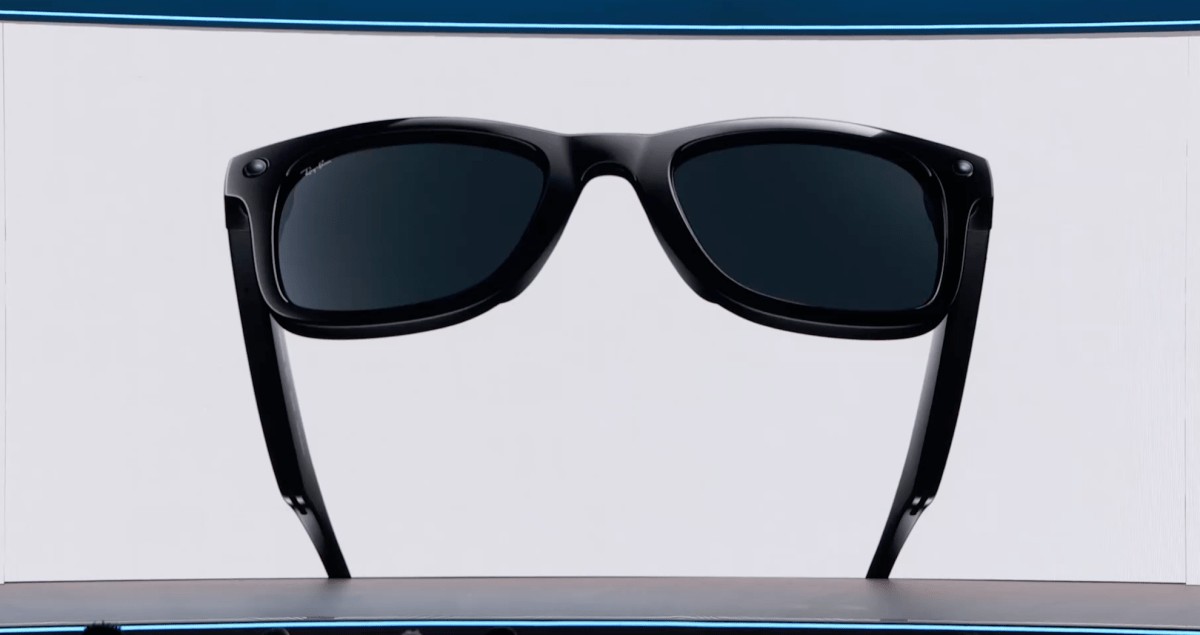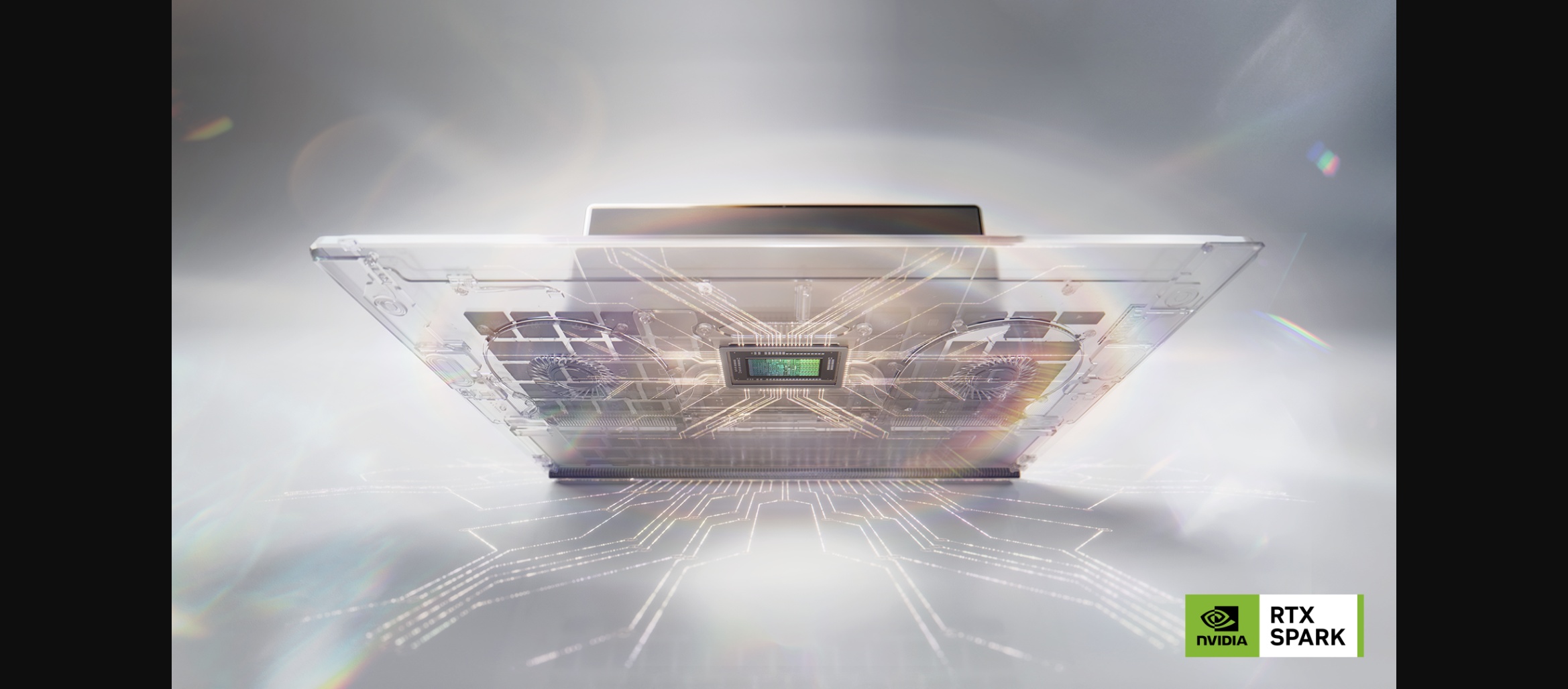
SEATTLE — The laptop looked like every other premium ultraportable on the Build 2026 stage: thin metal chassis, edge-to-edge display, the kind of machine executives carry to meetings. Then the presenter flipped it over. Where a chipmaker’s logo usually sits, there was an NVIDIA mark, and the room understood what it was seeing. Microsoft’s Surface Laptop Ultra is the first computer to ship with NVIDIA’s new RTX Spark processor, and the first time the company best known for graphics cards has taken a real seat at the PC table.
NVIDIA formally introduced RTX Spark this week, an AI chip built for personal computers. The Surface launch is the opening act. Microsoft executives described the machine as the flagship of a new line of AI PCs, and NVIDIA’s Jensen Huang, appearing by video from Taipei, called it “the PC we have been waiting for.”
The move ends a decades-old arrangement. For thirty years, the personal computer has run on a two-company architecture: Intel or AMD made the processor, and Microsoft made the operating system, an alliance so durable it has a name, Wintel. NVIDIA has always been in the machine, but as a component vendor selling graphics chips to gamers and workstation users. RTX Spark makes NVIDIA a supplier of the main processor itself, and it is taking direct aim at the PC business.
That is a direct challenge to Intel and AMD, whose client chip divisions have been the stable revenue base of both companies. Intel’s client computing group still generates more than half of its revenue. AMD’s Ryzen line has been its most consistent growth engine. Both now face a competitor with the deepest software ecosystem in computing, CUDA, which developers have spent a decade building on. “NVIDIA does not need to win every socket,” said one semiconductor analyst. “It needs to win the AI sockets, and those are exactly the ones growing.”
The competitive pressure is not limited to Intel and AMD. Qualcomm has spent two years positioning its Arm-based Snapdragon processors as the standard for AI PCs, the machines that run Microsoft’s Copilot features locally. RTX Spark walks into that pitch with a native advantage: it can run the same CUDA-accelerated models developers already use on NVIDIA data-center hardware, with no translation layer. A person close to Qualcomm said the company is studying the RTX Spark stack but declined to comment further.
For Microsoft, the partnership solves a problem of its own. The Surface line has never been a volume business, but it has always been the template the company shows the industry for what Windows should run on. Shipping a Surface powered by an NVIDIA PC chip is a strong signal to every OEM that RTX Spark is a legitimate Windows platform, and it gives Microsoft a hedge against the risk of depending on a single silicon partner.
The technology story matters as much as the business story. RTX Spark packages the AI acceleration NVIDIA has sold to data centers into a chip that fits in a laptop, with the power budget to match. Microsoft demonstrated Windows features that run entirely on the chip, with no connection to the cloud: real-time video translation, local document summarization, and a voice assistant that answers without sending audio to a server. For enterprise buyers worried about sensitive data leaving the building, that is the sales pitch.
Pricing will decide how fast the transition moves. NVIDIA has not published RTX Spark pricing, and the Surface Laptop Ultra carries a premium price tag typical of first-generation hardware. Analysts said the chip will need to land in the mainstream $800-to-$1,200 band within two product cycles to threaten Intel and AMD where they make their money, not just in the halo of premium laptops.
The PC market is also the arena where NVIDIA’s ambitions meet its own customers. The company’s data-center business, which now dominates its revenue, relies on the same cloud providers that are building AI services for PCs. If RTX Spark moves AI workloads onto the device, it could eventually slow the growth of cloud AI demand, an irony not lost on analysts. “NVIDIA is selling the hammer and the house at the same time,” one said.
The immediate stakes are simpler. PC processors are a market of roughly 250 million units a year, and every unit pays a royalty to a chipmaker. NVIDIA has shown it can take share in one silicon market after another, from gaming to data centers to networking. The PC has been the one market it could not crack. RTX Spark is the first credible attempt, and the Surface Laptop Ultra is the beachhead.
Whether the beachhead holds depends on developers and OEMs. A chip wins when software is written for it, and OEMs put it in machines people actually buy. NVIDIA has the software base. Microsoft has given it the launch. The rest of the PC industry is now deciding how fast to follow.