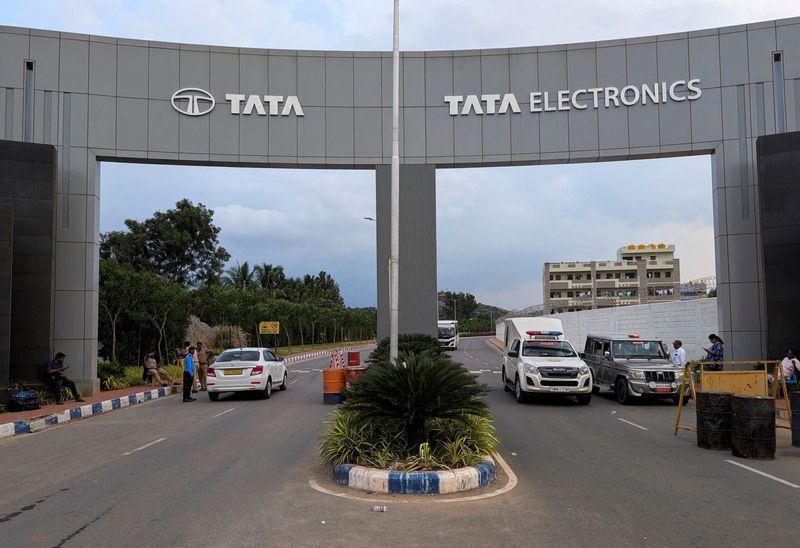
The warning reached the factory this week, and it carried the weight of an ultimatum. India’s environmental regulator has accused Tata Electronics’ plant in the southern town of Hosur of discharging wastewater that polluted groundwater and farmland in the surrounding area, and has told the company it faces an order to halt production if it cannot provide a satisfactory explanation, according to officials familiar with the matter.
The plant makes components for Apple’s iPhones, and its position in the supply chain makes the case more than a local environmental dispute. Tata is Apple’s second-largest supplier in South Asia, and the Hosur facility sits at the center of Apple’s bet that India can become a serious manufacturing base for its best-selling product. The country is on track to produce about 26% of the world’s iPhones this year, according to industry estimates, up from a small share just a few years ago.
Environmental disputes are familiar terrain in Hosur. The town, in Tamil Nadu’s Krishnagiri district, sits in one of India’s fastest-growing industrial belts, where electronics factories have spread alongside farms that depend on groundwater. Local farmers have complained for years about discharge from industrial units, and the regulator’s current action follows inspections and water samples that, officials said, showed contamination in wells used for irrigation and drinking.
The accusation lands at a delicate moment for Tata Electronics. The company, a division of the salt-to-software conglomerate Tata Group, has become the most visible Indian-owned player in Apple’s supply chain, taking over a factory in Karnataka that previously belonged to Taiwan’s Wistron and building new plants across the south. The same Hosur campus drew attention in late 2024, when a fire halted production of iPhone components for weeks, a disruption that rippled through Apple’s global inventory planning.
For Apple, the episode is the latest in a series of supply-chain headaches in India. The company has pushed hard to diversify assembly beyond China, where it still makes the bulk of its devices, and India has been the clearest beneficiary of that strategy. Government incentives, cheap labor and improving infrastructure have drawn Apple’s partners deeper into the country. But the operational record has been uneven, and each disruption gives executives in Cupertino fresh evidence of the gap between policy ambition and factory-floor reality.
The pollution case also tests the politics of Apple’s India expansion. State and federal governments have courted Apple aggressively, offering production-linked incentives and fast-tracked approvals, and the central government has made the growth of iPhone assembly a showpiece of its industrial policy. Environmental regulators, however, operate under their own mandate, and a high-profile plant accused of poisoning farmland is not the kind of case that gets quietly resolved. The regulator’s warning explicitly holds out the possibility of a production halt, a step that would cost Tata revenue, Apple inventory and the state government its showcase factory.
People close to Tata Electronics said the company is cooperating with the regulator, has submitted data on its effluent treatment systems and believes the contamination claims predate its operations at the site. The company has also said it is expanding its water-recycling capacity. Regulators have given Tata a window to respond, and a final decision is not expected this week.
The stakes extend beyond one factory. Apple’s India strategy depends on a cluster of suppliers operating at high volume and high quality, and any of them can become a bottleneck. Analysts who track the supply chain said the pollution case is the kind of event that changes how Apple allocates orders: when a supplier carries regulatory risk, the safest response is to shift volume elsewhere.
India’s ambitions, meanwhile, run in the other direction. The country wants to be seen as a reliable, modern manufacturing base, and it measures progress in the share of iPhones assembled on its soil. Every incident at a flagship plant, whether a fire or a pollution allegation, feeds the argument that the infrastructure of industrial India has not caught up with its targets. The outcome of the Hosur case will be watched closely in New Delhi, in Cupertino and in every electronics factory in the south, because it will set the terms for how environmental enforcement and export ambitions are balanced.
There is also a financial dimension that neither side can ignore. Tata Electronics is preparing for an eventual public listing, according to people familiar with its plans, and a prolonged regulatory fight at its most important plant would complicate that story. Apple, for its part, has made India a pillar of its diversification pitch to investors worried about China risk, and it needs the Indian supply chain to look not just productive but clean. A factory under threat of closure is a headline neither company wants, and both have reason to hope the dispute is resolved quietly and quickly. The regulator, for now, holds the pen.