Broadcom Chief Executive Hock Tan told investors on September 14 that Anthropic will become the company’s largest customer for custom chips next year, a position he expects it to hold through 2028. The prediction came during an earnings discussion in which Tan said demand has already exceeded the company’s forecast of $115 billion in AI revenue for fiscal 2027.
Tan said AI processor revenue would roughly double again to about $230 billion in fiscal 2028. The figures describe a custom-chip business that has become the center of Broadcom’s growth story, as cloud providers and AI labs turn away from buying only off-the-shelf graphics processors and toward silicon designed for their own workloads.
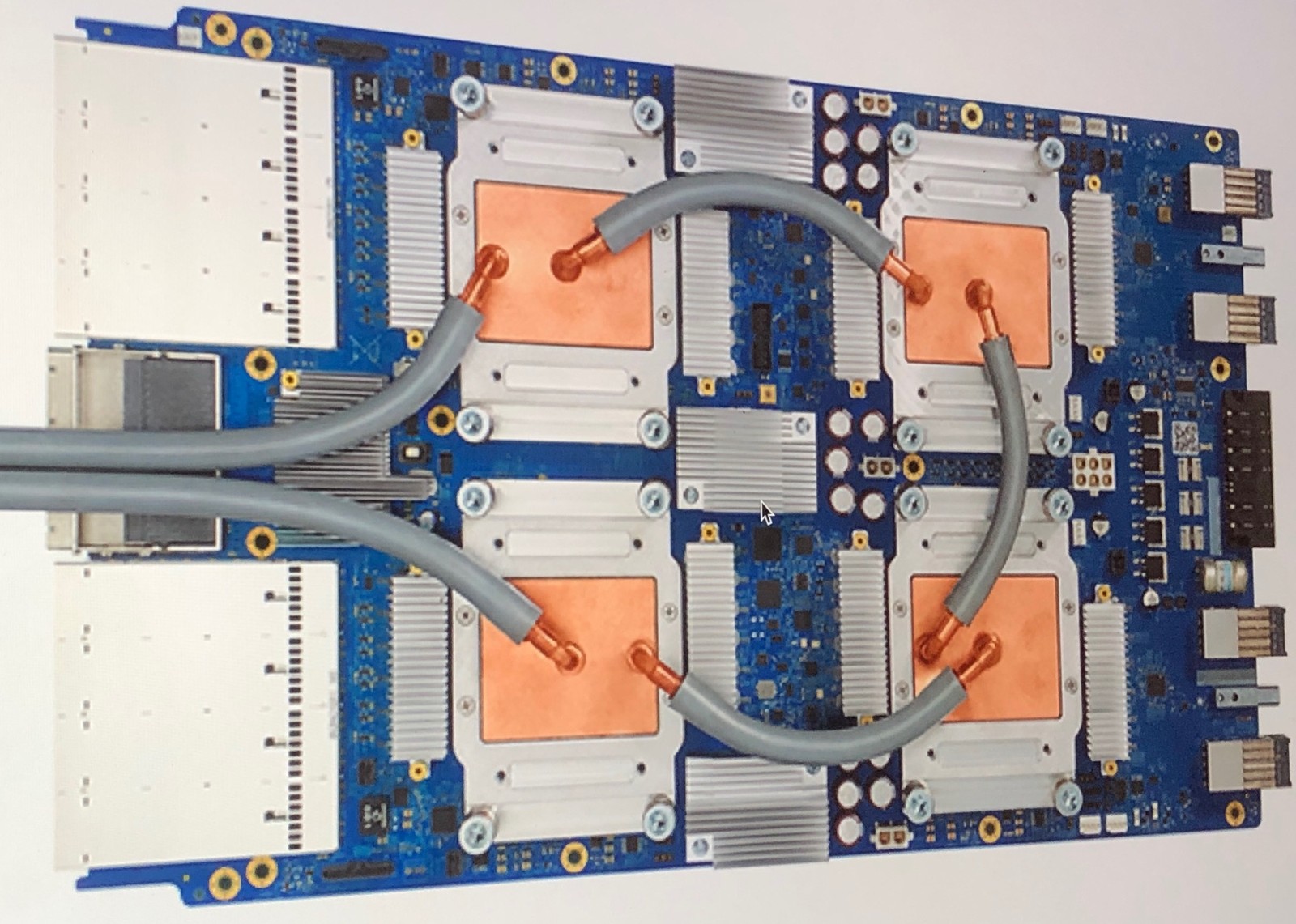
Broadcom has six core custom-chip customers, and Tan has disclosed that the list includes Google, Meta, Anthropic, and OpenAI. The company designs accelerators, called XPUs, that these customers deploy at enormous scale in their data centers. The economics of the arrangement give Broadcom a share of a market that analysts now measure in the hundreds of billions of dollars.
The delivery schedule Tan outlined is aggressive. Broadcom expects one gigawatt of Google’s seventh-generation TPU, code-named Ironwood, in 2026. It then plans another five gigawatts of the next version, TPU v8i, in 2027, followed by an additional ten gigawatts in 2028. Tan said the company would deliver about $350 billion worth of AI chips to these customers over two years.
Anthropic’s rise on that list is the notable detail. The AI lab has become one of the industry’s biggest spenders on compute, and its move toward custom silicon means more of that spending will flow to Broadcom rather than to the makers of standard GPUs. Tan said Anthropic would become the largest XPU customer next year, surpassing Google.
The forecast matters because it ties Broadcom’s growth to a small number of companies whose own fortunes are tied to the AI race. If any one of them slows its spending, the effect on Broadcom would be immediate, analysts said. For now, the customers are spending faster than Broadcom can forecast.
Broadcom’s custom-chip business grew out of a string of acquisitions and engineering relationships with hyperscalers, and it has built a franchise designing networking and accelerator chips that a short list of companies buy in volume. The business requires deep partnerships rather than a catalog of standard products, which is why the customer list has stayed small.
The $115 billion and $230 billion figures are far above what Broadcom was projecting only a couple of years ago. The company has raised its AI outlook repeatedly as customers have expanded their plans, and Tan has argued that the custom-silicon trend is durable rather than a one-time buildout.
Tan’s comments landed the same week that the AI sector was debating whether the pace of spending is sustainable. A prominent call for the industry to slow down had rattled semiconductor stocks from Tokyo to New York. Broadcom’s numbers pushed in the other direction, describing customers who are still ordering more.
The power figures tell their own story. A gigawatt of chips is a measure of the energy a data center must supply, and it reflects the physical scale of the AI buildout. Delivering sixteen gigawatts over three years, as Tan outlined, implies data centers that rival the output of power plants.
For Anthropic, the shift toward custom silicon is part of a broader pattern. The company has committed to enormous compute contracts, and it has said it needs the kind of purpose-built hardware that custom chips provide. Becoming Broadcom’s top customer would show how far that strategy has come.
OpenAI, the other AI lab on Broadcom’s disclosed list, has also signaled large custom-silicon ambitions, and Meta has been building its own accelerators through the company for years. Together the four named customers represent much of the spending that will determine whether the custom-chip market fulfills Tan’s projections.
Analysts cautioned that forecasts this large are sensitive to execution. Building and delivering hundreds of billions of dollars of chips requires wafer capacity, packaging, and networking components that are all in short supply. Broadcom has said it is managing those constraints, but the room for error is small.
Broadcom’s custom-silicon work also spans the networking gear that connects accelerators inside a data center, a business that grows in lockstep with the chips themselves. Tan has said the two franchises reinforce each other, because a customer that buys Broadcom’s accelerators usually buys its switches and optics as well.
Even so, Tan’s message was unambiguous. The AI buildout, at least as measured by Broadcom’s order book, is still accelerating. Whether that holds depends on the customers who have placed those orders, and on the economics of the models they are trying to build.