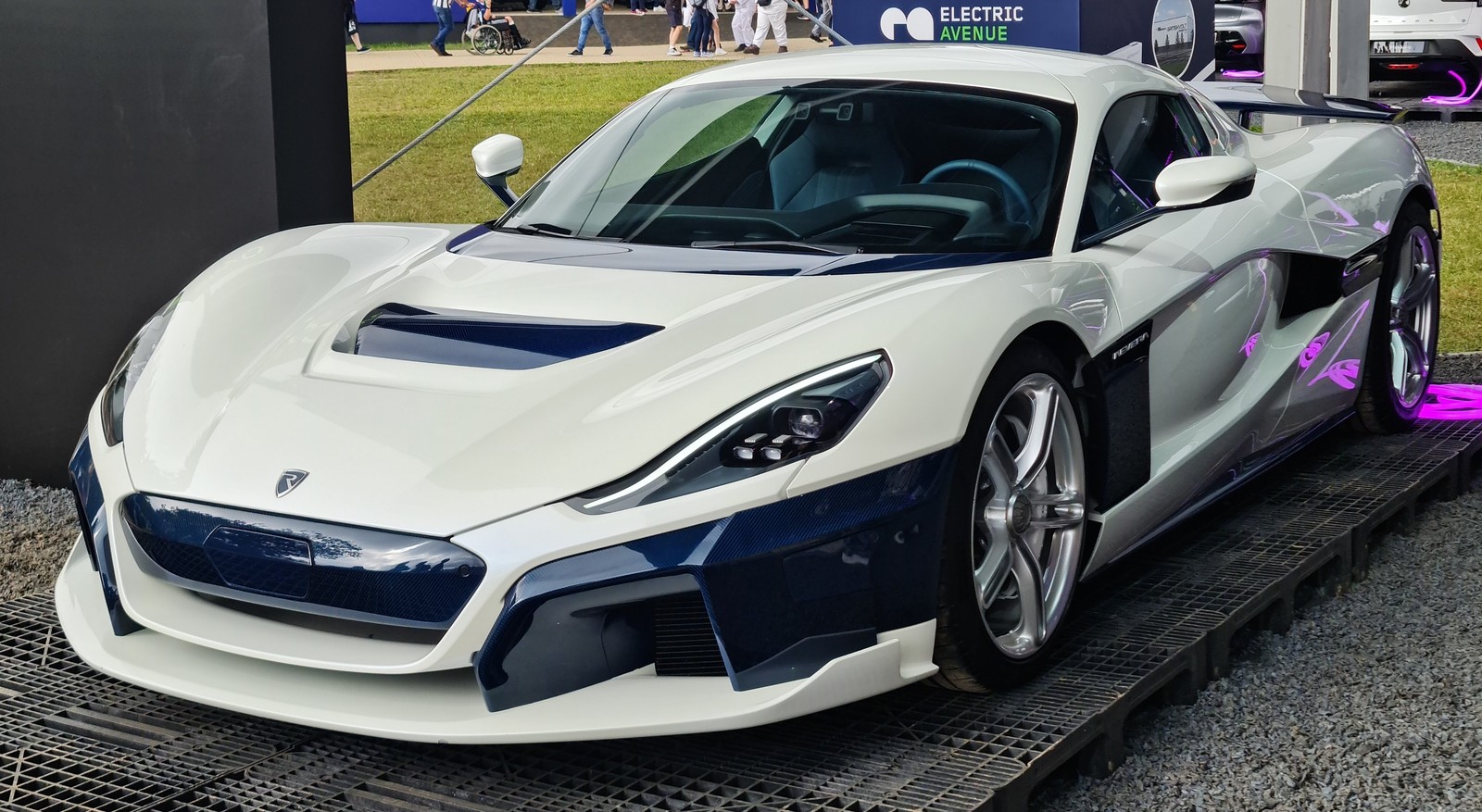
Porsche has sold its stakes in Bugatti Rimac and the Rimac Group, closing the book on an experiment that paired a century-old sports-car maker with a young electric-supercar company. The German automaker said the transaction, completed September 13, brought in roughly one billion euros, of which about 250 million euros will go toward shoring up pension obligations. The buyer is HOF Capital.
The sale ends a relationship that began when Porsche saw in Mate Rimac’s Croatian startup a path into the top end of the electric market. Porsche took a stake in Rimac in 2018 and later folded Bugatti into a joint venture with Rimac, handing the Croatian engineer control of one of the most storied names in motoring.
The exit removes Porsche from the supercar joint-venture structure and returns the cash to a balance sheet that has come under pressure. Porsche’s parent, Volkswagen Group, has been cutting costs and selling assets as it grapples with weak demand in China and the high cost of its electric transition.
Porsche did not characterize the deal as a retreat, but the timing is telling. The company has been reducing complexity and focusing capital on its own electric models, including a broader rollout of battery-powered versions of its core sports cars. A stake in a low-volume hypercar venture no longer fits that agenda.
Bugatti’s modern revival began when Volkswagen acquired the name in 1998 and relaunched it with the Veyron, a car that cost far more to build than it ever earned. The brand has never been a volume business; its value lies in what it does for the engineers who make it and the parent that owns it.
The Rimac Group, meanwhile, has grown beyond its boutique origins. It supplies battery and electric-drive technology to other manufacturers and has positioned itself as a supplier of high-performance components, a role that now outweighs its original business of building six-figure supercars. Bugatti Rimac produces the Bugatti line under Rimac’s leadership.
The roughly one billion euro consideration is small relative to Porsche’s own revenue, but directing part of it to pension obligations shows how even secondary transactions are being used to strengthen balance sheets across the industry. Porsche’s pension obligations have been a known drag on the parent company’s finances, and Volkswagen has repeatedly discussed the cost of funding them.
Analysts said the sale makes strategic sense even if the price is modest. The Bugatti Rimac venture produced few cars and little profit, and Porsche’s attention is elsewhere: on electrifying its 911 and Cayenne lines and on defending its position in China, where domestic electric brands have taken share.
The Rimac relationship had symbolic value that the numbers never quite justified. It gave Porsche a story in the electric hypercar segment and a connection to one of the industry’s most-watched engineers. But hypercars are a marketing business more than a profit center, and Porsche already has the strongest marketing assets in the industry.
The buyer, HOF Capital, is an investment firm whose appetite for a supercar maker signals that someone still sees value in the segment. The firm now controls the Bugatti brand alongside Rimac’s wider operations, taking on both the prestige and the small volumes that come with it.
For Porsche, the transaction is the latest step in a broader portfolio cleanup. The company has said it will focus spending on the models and markets that generate returns, and the Rimac exit fits that pattern. Cash from the sale returns to a parent that is conserving every euro.
The sale also simplifies Porsche’s reporting. The company will no longer account for a stake in a low-volume venture whose results mattered little to its headline numbers but which required management attention. In that sense, the deal is less about the money than about removing a distraction.
For Rimac, independence under a new owner opens a different chapter. The company has built technology that other automakers buy, and it will now pursue that business without a Porsche shareholder looking over its shoulder. Whether the founder can turn the supplier business into the story the sports cars once told is the question the sale leaves open.
Rimac himself has said little about the sale, and Porsche has offered no detail on how it chose HOF Capital as the buyer. The deal was announced without the fanfare that accompanied the original joint venture, a reflection of how far the relationship’s ambition had shrunk from its founding promise.
Porsche’s exit does not change the hypercar market’s basic shape. A handful of small makers still compete for a clientele of collectors, and the economics remain brutal. The difference is that Porsche, which once wanted a seat at that table, has decided its money belongs elsewhere.