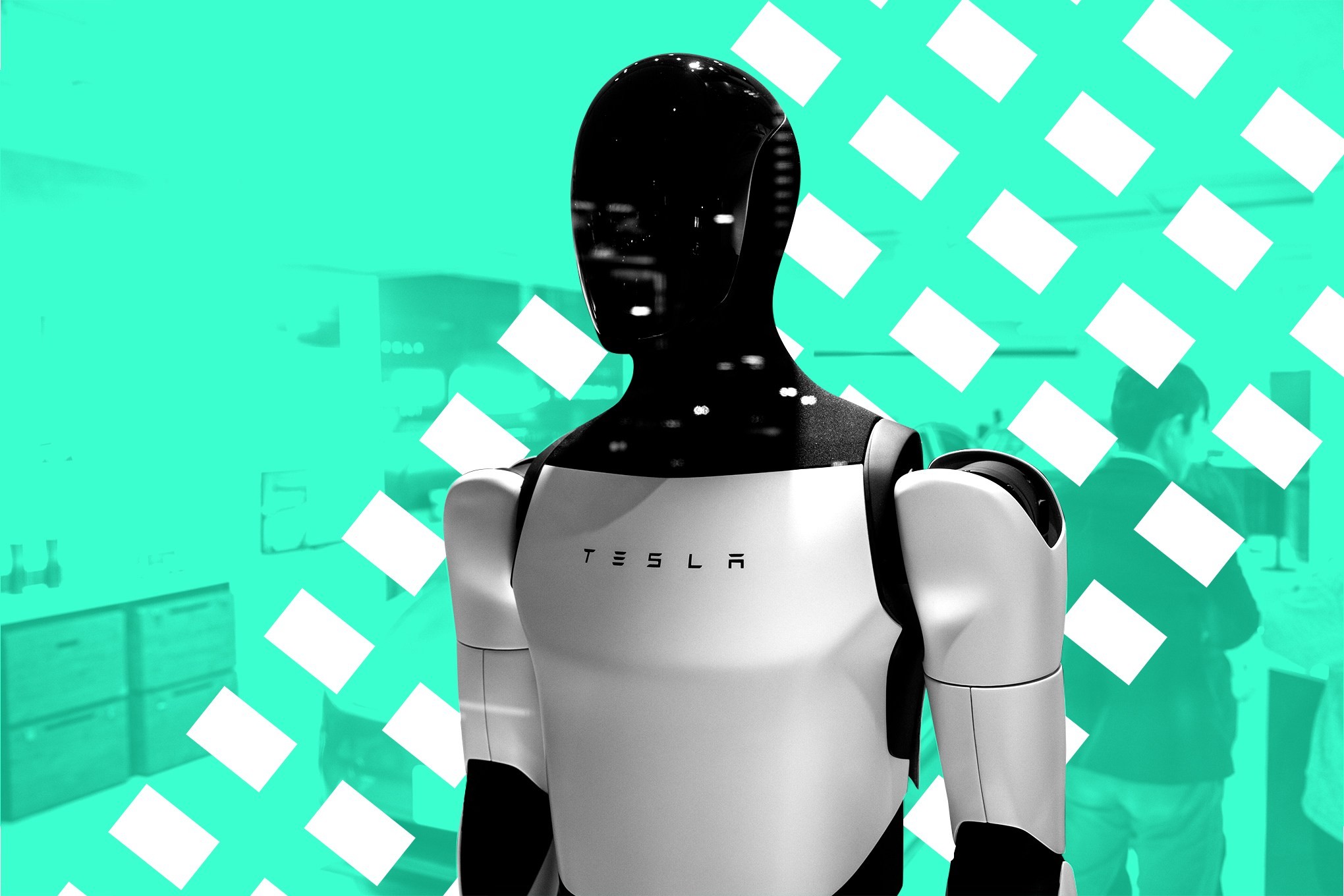
On the production line that used to build the Model S and Model X, Tesla now assembles humanoid robots. The conversion happened last month. Since then, output has run at several hundred units a week, according to The Information, against a target Elon Musk has described publicly of 20,000 a week.
The bottleneck is not the software or the battery. It is the hands. Even in the current V3 version, the hands and forearms contain more than 100 screws and small components that workers assemble by hand, which caps how fast a robot can be completed no matter how quickly the rest of the machine comes together.
Tesla has made improvements elsewhere. The battery and camera packages have been upgraded, and engineers have been working on a sensor-equipped glove intended to extend the durability of the mechanical hands. That glove is still in development, which leaves the most failure-prone part of the robot without a solution.
Deployment plans are correspondingly modest. The robots are performing a limited set of tasks inside Tesla facilities for now, and the company has leaned toward leasing them rather than selling, a structure that keeps early units close to the engineers who built them.
Hands have been the hard problem in humanoid robotics for decades. A human hand has more than 20 degrees of freedom and a sense of touch that lets it adjust a grip without being told to, and reproducing that in a package small enough to sit at the end of an arm requires actuators, tendons and sensors that all have to survive millions of cycles. Most demonstrations that look impressive on video involve hands that would not last a week of industrial use.
Mr. Musk has described Optimus as the product that will eventually make Tesla the most valuable company in the world, a claim that has carried a growing share of the company’s valuation. The gap between that framing and several hundred units a week is the central tension in Tesla’s automation story.
The robot program is not the only one facing a slower schedule. In Europe, a vote on supervised Full Self-Driving that had been expected in October has been postponed, according to the agenda published on the European Union’s website.
A technical committee meeting on October 6 has been given 25 minutes to continue discussing the Netherlands’ authorization request. The next realistic window for a broader decision is December. The vote had been expected to open the system to more markets after a long regulatory review.
Approval across the bloc requires a qualified majority: 15 member states representing at least 65 percent of the population. That threshold is what turns a technical question into a political one, since countries can be persuaded individually and still fail to reach the required weight.
Seven countries have approved the system on their own: the Netherlands, Lithuania, Estonia, Denmark, Belgium, Slovenia and the Czech Republic. France has said it will not recognize the Dutch approval, and Sweden has asked Tesla to remove speed-limit settings before it will sign on.
Tesla has argued that the system is safe and that the patchwork of national approvals is the problem rather than the product. Regulators have moved at different speeds, and the company’s own timelines have assumed a pace that the European process has not matched.
Supervised Full Self-Driving in Europe has so far been limited to a narrow set of features, in part because vehicle systems sold in the bloc must satisfy rules agreed through the United Nations Economic Commission for Europe, which sets a higher bar for automated steering than some national authorities apply. German manufacturers have won approvals for limited hands-off systems on specific highways, which gives regulators a reference point for what they are willing to permit.
The commercial stakes are straightforward. Europe is one of Tesla’s largest markets, and software features carry margins that hardware does not. Every month of delay is a month in which the company cannot charge for the feature that supports much of its valuation argument.
The robot program has a similar history of demonstrations that raise questions. Optimus was introduced in 2021 as a performer in a suit and appeared in later years walking, balancing and sorting objects. Each showing has been followed by the same question about how much of the behavior was written in advance.
The production line conversion also reveals something about the car business. Model S and Model X volumes have fallen as buyers moved to the Model 3 and Model Y, and repurposing that capacity for robots puts the space to use while the company waits for a product that does not yet exist at scale.
Mr. Musk’s response to the delay was a single word on social media: “Sigh.” The comment says more about the company’s expectations than any guidance it has given. Two of Tesla’s most valuable future programs, one physical and one regulatory, are both waiting on constraints the company does not fully control.
Tesla has not said when it expects Optimus output to reach four figures a week, or what the European decision in December would do to its revenue forecasts for the region.