Taiwan Economic Daily reported on September 29, citing supply chain sources, that TSMC is evaluating a second U.S. manufacturing base that could hold as many as six advanced fabs, with Dallas among the candidate sites. The total investment, the report said, could exceed the $265 billion the company has already committed to Arizona.
TSMC did not confirm the report, and the company rarely comments on speculation about where it will build next. TrendForce and MarketWatch picked up the Taiwanese outlet’s account, but no announcement followed. In an industry where a single fab costs tens of billions of dollars and takes years to plan, the distance between a study and a decision is the whole story.
The timing is the telling part. The report landed days after Taipei approved another tranche of TSMC’s U.S. investment, a $44 billion tally of approvals stretching back to December 2020. The sequence suggests the company’s American plans are still growing, and that the money cleared so far is only the part that has been filed.
The gap between the two numbers is itself the story. The $44 billion Taipei has approved is what has been formally filed and cleared. The $265 billion figure attached to Arizona reflects the full arc of fabs, packaging plants and research facilities the company has said it intends to build there. A Dallas site would push the total far past even that.
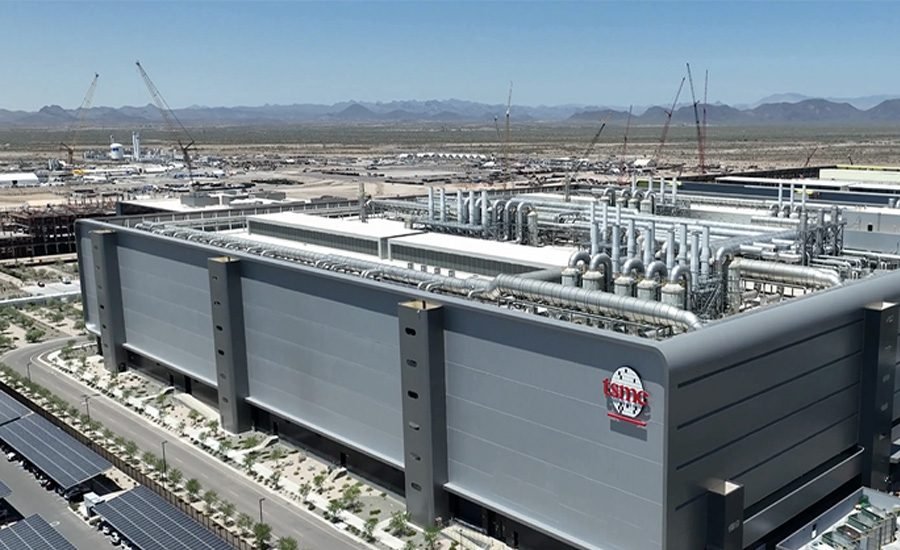
The scale of what is being floated is what separates this from a rumor. Six advanced fabs would be a second Arizona, and Arizona itself is already the largest concentration of leading-edge manufacturing the United States has seen in decades. The company has committed to a string of plants there, and the first began producing chips in late 2024. A second site on the same scale would redraw where the world’s most advanced silicon is made.
Dallas, if it survives the process, would put TSMC in Texas rather than Arizona, alongside a state that has courted chipmakers for years. Texas already hosts Samsung’s fabrication plant in Taylor and a sprawling Texas Instruments complex, and it has offered subsidies and land to whoever would bring more. The state’s political leadership has made a point of pitching itself as friendlier to manufacturing than the coasts.
The economics are the part TSMC would have to convince itself of. Building in the United States costs more than building in Taiwan, and moving the newest processes abroad raises questions about cost, yields and a skilled workforce. The company has answered those questions in Arizona by signing up the customers that give it pricing power and by extracting incentives from a government eager to keep the industry’s crown jewel on American soil.
The pressure to build in the United States comes from more than economics. Customers want a second source of supply outside Taiwan, and Washington has tied subsidies and export approvals to onshore manufacturing. For TSMC, adding American capacity is partly a business decision and partly an insurance policy against the politics of the strait.
The demand side keeps pulling harder. Apple, Nvidia and AMD have added to their orders for TSMC’s most advanced process, and the company has raised its target for 2-nanometer output accordingly. When its biggest customers are asking for more of the newest silicon, the pressure to build that capacity where those customers want it only grows.
What a second base would mean, if it ever gets built, is a further shift of advanced manufacturing toward the United States and away from the island where it was perfected. TSMC’s leadership has framed the American buildout as a hedge, a way to keep serving the world’s largest market from inside it whatever the politics. A Dallas site would extend that hedge by a whole order of magnitude.
The company is not choosing only between Arizona and Texas. TSMC has opened a plant in Kumamoto, Japan, and is building another in Dresden, Germany, spreading capacity across the markets that buy its chips. A second American site would be the largest of those bets, and the one carrying the most political freight.
The company has reasons to keep the idea quiet. A formal commitment of six more fabs would carry a price tag north of a quarter trillion dollars, and it would trigger a fresh round of political negotiation over subsidies, water, power and workers. Until the numbers are real, the report is best read as a signal of intent rather than a plan.
What remains open is whether the math holds. The Arizona buildout is still proving itself, and the 2-nanometer ramp there is just beginning. TSMC is weighing the largest bet in its history on the proposition that American fabs can eventually match Taiwan on cost and speed, and the Dallas report is the first hint that the bet may be bigger than even Arizona suggests.