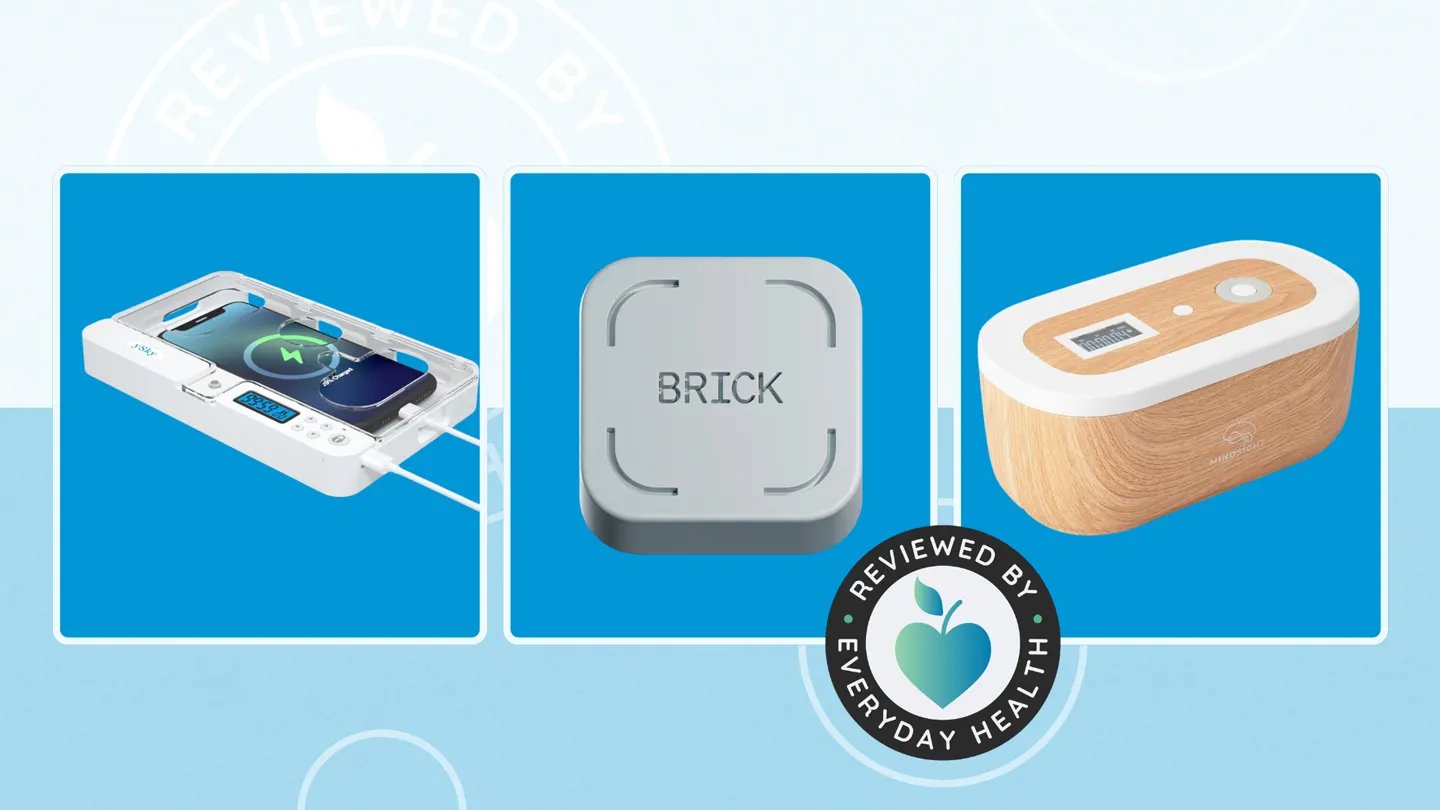
The box sits on the desk, closed, and for the next few hours the phone is inside it. The person who put it there did not act on a whim; he did it earlier in the day, when he was thinking clearly, knowing that by evening he would want the phone back and would invent reasons to open the box. The arrangement is timed and physical, and there is no key in the room. David Eagleman, the Stanford neuroscientist, describes a setup like this as the only honest answer to a problem that willpower alone keeps losing.
Eagleman’s argument rests on how the brain changes with use. The organ rewires itself constantly, strengthening the pathways that get exercised. A person who spends hours a day swiping short videos is training a brain that expects stimulation every few seconds and finds stillness almost intolerable. He calls the result a short-video brain, wired to chase instant reward and to reach for the screen the moment attention flags.
The mechanism is well mapped. Short-video platforms are engineered around variable reward, the same principle that keeps a gambler at a machine. Each swipe may or may not pay off, and the uncertainty itself is the hook. Repeated often enough, the behavior becomes automatic, running below the level of conscious decision. By the time a user asks why they are still scrolling at midnight, the habit has already outrun the part of the mind that asks the question.
For adolescents the math is worse. The prefrontal cortex, the region that weighs consequences and resists impulse, is the last part of the brain to mature, finishing its development well into the twenties. A teenager holds a device whose algorithms are tuned by thousands of engineers against a still-forming capacity for self-control, and the contest is not a fair one. Eagleman says the rational system simply cannot out-argue the reward system in real time.
Which is why he does not put much faith in discipline. Telling someone to scroll less asks the weakest part of the brain to beat the strongest part at the moment of maximum temptation. His prescription is to move the decision to a time when the weak part is not in charge. He calls it a Ulysses contract, after the hero who had his crew tie him to the mast so he could hear the sirens without steering the ship onto the rocks.
In practice the contract is a lockbox. The phone goes in for a fixed number of hours, with no override, and the commitment is made once, in advance. The limits are set by time, by space and by the device itself, not by an act of will repeated every few minutes. When the craving arrives, there is nothing to argue with; the phone is simply not available. The decision was already made, by an earlier self who was thinking clearly, on behalf of a later self who will not be.
The framing matters because it changes who is being asked to do the work. Self-control under this model is not a muscle to be flexed in the moment but a structure to be built in advance. Eagleman likens it to not buying ice cream rather than trying to refuse it while it sits in the freezer. The environment does what the will cannot be trusted to do.
The broader point extends past any single app. The attention economy is built to capture the same reward circuitry, and the fight against it, in Eagleman’s telling, is an architectural problem rather than a moral one. People are not weak for losing a contest that was designed to be unwinnable; they are under-equipped. The answer is to change the conditions of the contest, and a locked box is a small, concrete way to do that.
For parents, the implication is uncomfortable but clear. Asking a teenager to manage screen time by force of character asks the brain region least able to do it to perform at the exact moment the product is strongest. The kinder and more effective move is to set the limits in advance and make them physical. The phone does not have to be present for a child to be fine without it, and an hour without it is rarely the catastrophe the craving insists it will be.
None of this means abstention for its own sake. Eagleman’s point is narrower: that the decision about how much is enough should be made in the clear light of day, by a person who has not just been fed a few dozen rewards. The lockbox is not punishment; it is protection, the present self drawing a line the future self can be trusted to cross. The question is not whether people have the will to stop. It is whether they will give themselves the equipment.