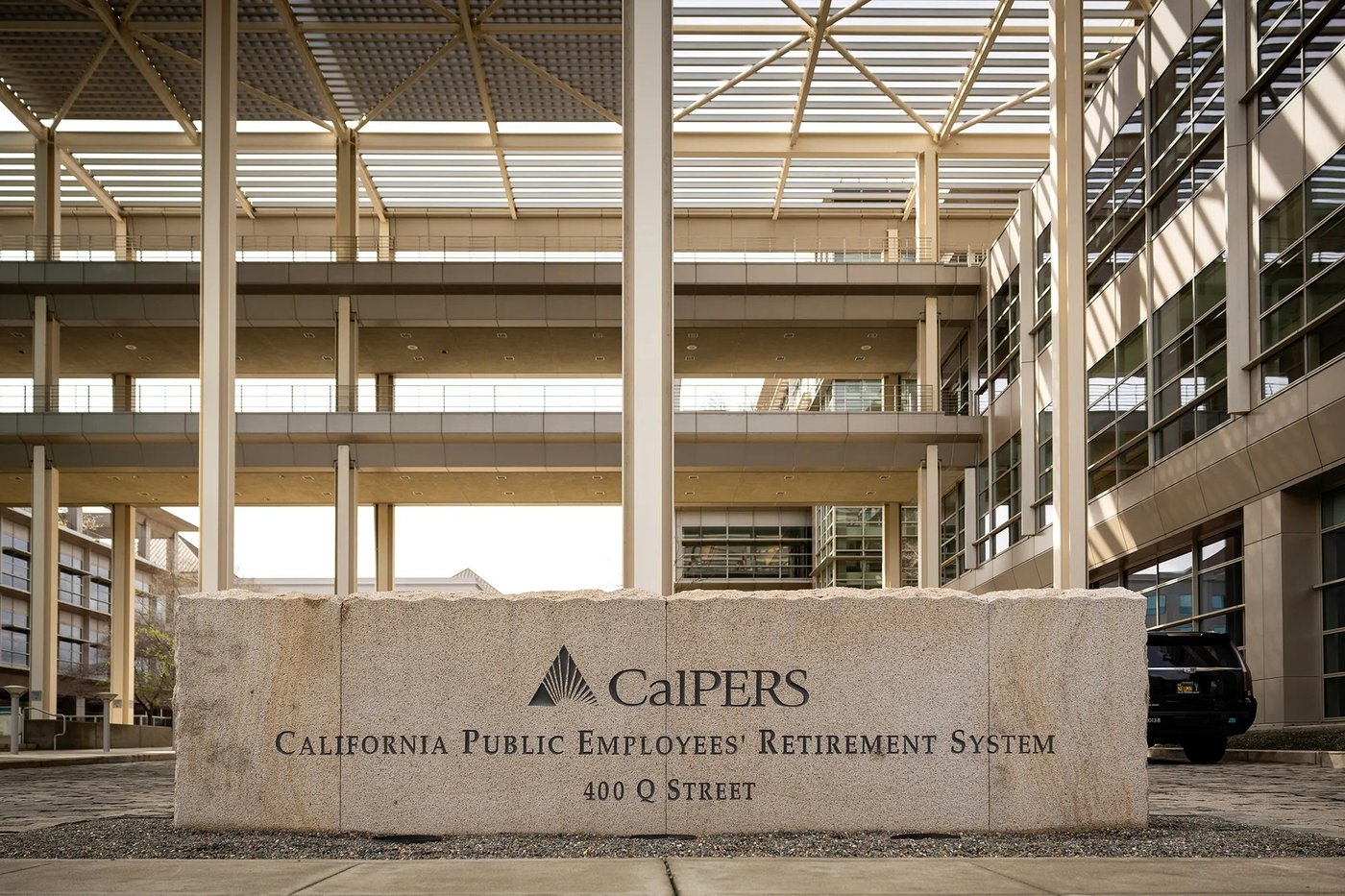
For most of the past decade the simplest trade in American public pensions was to own the whole market and let seven technology companies carry the result. Calpers has begun to step away from that. The fund’s latest numbers show a deliberate retreat from the stocks that have driven the index for years.
The California Public Employees’ Retirement System cut its directly held shares in Apple, Microsoft, Alphabet, Amazon, Nvidia, Meta Platforms and Tesla by 26% during the first half of 2026, according to figures the fund discussed with the Financial Times. The proceeds were spread across hundreds of smaller positions. A larger share of new money went to private markets.
Anton Orlich, the fund’s deputy chief investment officer, set out the reasoning in detail. Public equity valuations are already high, he said, and returns have become concentrated in a small group of very large companies. That combination leaves relative performance exposed, while private assets are priced more attractively.
Calpers managed $637.1 billion as of June 30 and returned 14.8% net over the trailing twelve months. Those are the figures of an institution with room to be patient. They also explain why the reallocation is being read as a judgment on the market rather than a reaction to it.
The timing has drawn attention. The shift was made before technology shares came under pressure this autumn, which means the fund was selling into strength rather than scrambling afterward. Public filings will show the full shape of the portfolio only when the next quarterly report lands.
Concentration has defined U.S. equities for years. The largest companies now account for a bigger slice of the S&P 500 than at any point in the index’s modern history, and much of that weight sits in a single industry. For a fund that must pay benefits on a fixed calendar, that is a structural exposure rather than a theoretical one.
Calpers is not a hedge fund. It holds positions for decades, reports against a policy benchmark and answers to a board that answers to beneficiaries. Orlich’s argument is that the benchmark itself has become a concentrated bet, and that matching it exactly is no longer the conservative choice it once appeared to be.
Analysts said the move will be watched by other large pensions weighing the same question. A consultant who advises public funds on allocation described the shift as an early version of a conversation now taking place in boardrooms across the country, with most funds still at the discussion stage.
Private equity and private credit are the fund’s answer. Calpers has been raising its allocation to private markets for several years, drawn by the promise of steadier reported values and access to companies that never list. The trade-off is familiar: less liquidity, valuations that lag public prices and fees that compound quietly.
Some of the caution in the sector is mechanical. When public markets fall, private holdings become a larger share of a portfolio through arithmetic alone, forcing funds to slow new commitments. Calpers is moving the other way while prices are high, which is either discipline or poor timing depending on what happens next.
The fund’s own results cut both ways. A 14.8% return is a strong year, and much of it came from the same large technology positions now being trimmed. Giving up part of that exposure means giving up part of the return that produced it, at least while the group keeps outperforming.
There is a governance dimension. Public pension boards face pressure to justify active decisions when a passive index would have done the job. Spreading money across hundreds of names makes the portfolio harder to explain and easier to criticize if the concentrated bet keeps winning.
People close to the fund said the private-markets build is expected to continue, with the pace set by deal flow rather than by any fixed schedule. The seven stocks remain in the portfolio. A 26% reduction is a smaller position, not an exit, and the fund still holds billions of dollars of the same shares it was buying five years ago.
For the market, the signal is modest but hard to ignore. Calpers is one of the largest pools of retirement money anywhere, and its allocation choices get copied by smaller plans that cannot afford their own research. When a fund of that size starts treating the index leaders as a risk to be managed, the argument travels.
Chief investment officers at rival funds have made similar noises without acting. Several have said publicly that concentration is a topic of internal review while their reported holdings barely move. Calpers is unusual in having done something and then described why.
The counterargument is straightforward. The seven companies still generate enormous cash flow, still dominate their markets and still trade at premiums that have been justified by earnings. Selling them after a long run of outperformance has cost patient investors money every time it has been tried over the past decade.
Orlich’s case rests on a simpler observation: the price of concentration has risen while the benefit has not. Whether that view holds depends on a question no allocator can answer in advance, which is whether the companies at the top of the index can keep earning the premiums investors have already paid for them.
The next disclosure will carry more weight than the commentary around it. If the reduction deepens, Calpers will have made a multi-year call on the largest trade in American equities. If it stalls, the 26% will look like a rebalance dressed up as a thesis.
Either way, the fund has put a number on a doubt that many of its peers share privately. It sold a quarter of its stake in the market’s winners before the winners had a chance to answer.