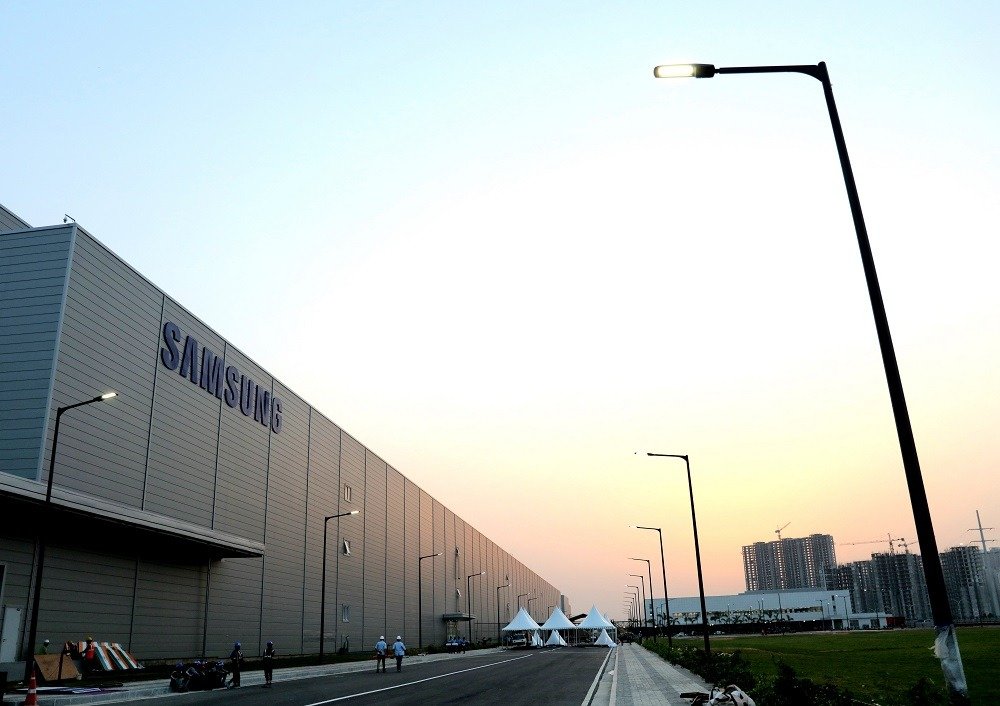
New Delhi published the details of its new handset manufacturing program, and by the following week supply-chain teams in Suwon were running the numbers again. Reports on Oct. 23 said Samsung Electronics plans to use the scheme to raise exports of phones made in India, and is weighing additional investment to expand capacity there.
The structure of the program explains the interest. India’s earlier incentive rounds paid out against incremental production, measured mostly in sales value and often in units sold domestically. The new scheme puts more weight on exports, paying a higher subsidy for handsets shipped abroad. For a company that already runs one of the largest phone factories in the world outside New Delhi, that is a subsidy aimed precisely at the part of its business that India has not yet captured.
Samsung’s Indian footprint is substantial and old. The Noida plant in Uttar Pradesh has been expanded repeatedly and is regularly described by the company as among the biggest telephone manufacturing sites anywhere. A second plant near Chennai in Tamil Nadu handles appliances and, increasingly, handsets. Both sites sit inside a policy architecture that has spent a decade trying to move India from assembly for local buyers to assembly for the world.
Vietnam is the base that any Indian expansion would be measured against. Samsung assembles roughly half of its phones there, according to company disclosures and analysts’ estimates, a concentration built over fifteen years and supported by a deep supplier network. Moving volume out of Vietnam is not a matter of finding a building. It is a matter of rebuilding the tier of parts makers that sits behind the final assembly line.
That is why the reports describe a conditional plan rather than a commitment. People familiar with the discussions said the shift would depend on two variables: how long memory chip costs stay elevated, and whether the global handset market keeps contracting.
Memory is the awkward part of the arithmetic. Samsung is the world’s largest maker of memory chips, and prices for the DRAM and NAND that go into a phone have climbed as data-center demand for AI hardware has absorbed supply. At the group level, that is excellent news. Inside the handset division, it means component costs rise while retail prices are hard to lift.
The division has been here before. When memory prices spiked in earlier cycles, the mobile business absorbed margin compression while the chip business reported record operating profit, and the group’s overall numbers looked healthy while one unit quietly lost ground. Analysts said the same split is likely if the current tightness persists into next year.
A shrinking market makes the cost problem worse, because volume is the only lever that spreads fixed costs across more units. Global smartphone shipments have been flat to slightly down for several quarters, with growth concentrated in the premium tier and in replacement demand rather than first-time buyers. India is one of the few large markets still adding volume.
India’s own demand is part of the appeal. It is the second-largest phone market by shipments, and average selling prices are rising as buyers trade up to mid-range devices with better cameras. Building where the customer is shortens the supply chain and reduces exposure to freight and tariff changes.
Tariffs have moved up the list of concerns for every handset maker with Asian assembly. Duties on goods shipped into the United States have been adjusted repeatedly, and the relative advantage of one production base over another can change with a single notice. Spreading assembly across Vietnam, India and Brazil is the standard answer, and Samsung already runs all three.
Competition for the subsidy is real. Apple’s contract manufacturers have been expanding in India for years, and Indian conglomerates have built phone assembly businesses that now ship at scale. The incentives are finite and allocated against verified incremental output, which means Samsung would be competing for the same pool of money as the companies that assemble its biggest rival’s products.
There is also a lesson in how these programs have performed. Earlier incentive rounds in India were undersubscribed against their targets, with disbursements slowed by audit requirements and documentation. Companies learned to treat announced subsidies as a discount that may arrive late rather than a certainty, and to size their commitments accordingly.
For Samsung, the decision is less about India than about concentration risk. Vietnam has served the company well, and it will keep serving it. But a single base carrying half of global handset output is a vulnerability that a board can see on a slide, and the new export subsidy gives the company a financial reason to reduce it without admitting that the reason is risk.
What to watch is the shape of the investment rather than the headline number. A land purchase and a new building signal a decade-long commitment; a lease on an existing shed and a second shift signal a hedge. Reports so far describe a review, not an approval, and the company has not disclosed a figure.
The larger question is whether export incentives change where phones are made or only who books the profit on them. Assembly is the least valuable link in the chain, and a subsidy for shipping finished goods rewards exactly that link. India has been trying to climb toward components, where the margin sits, and the new program does less for that ambition than the earlier ones did.
Samsung will take the discount and ship the phones. Whether the parts follow the assembly is the part of the plan that no subsidy notice can settle.