The three national wireless carriers have spent years telling investors that a fourth network in the United States is close to economically impossible. This week the market started pricing the possibility that someone is going to try anyway.
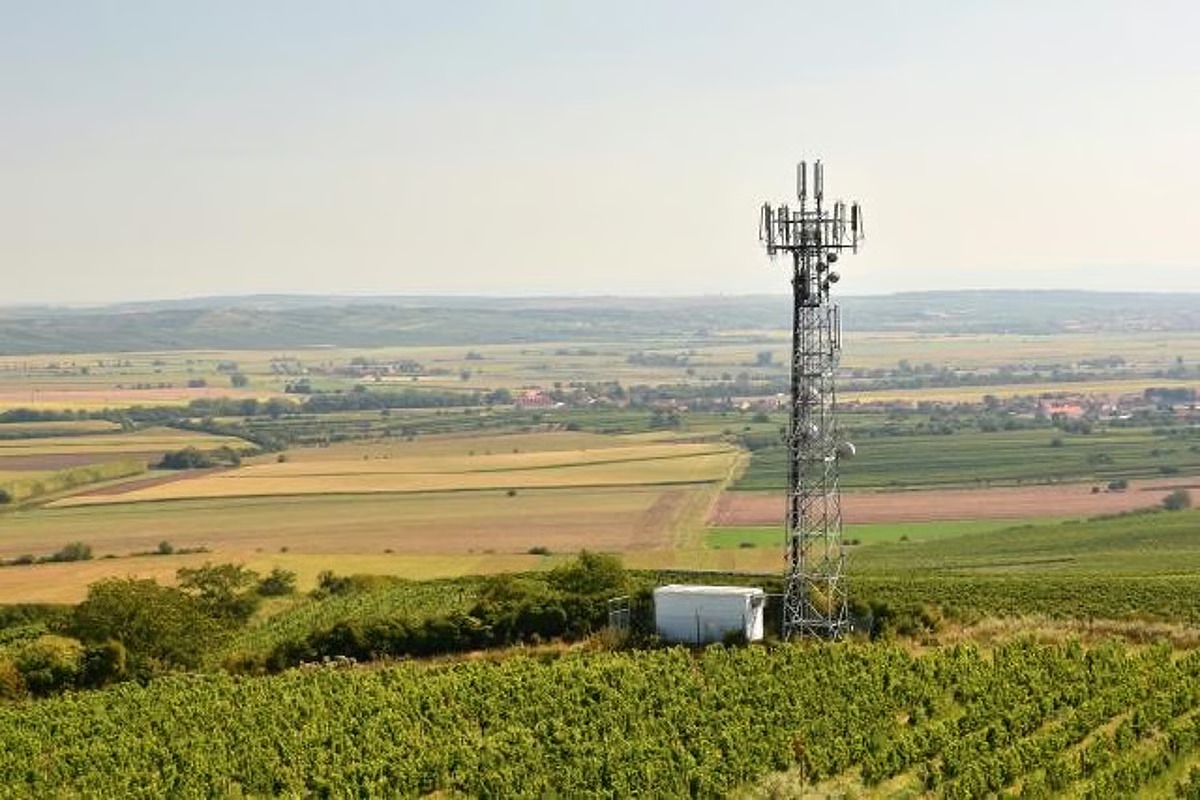
SpaceX is negotiating with at least one large communications infrastructure company for access to no fewer than 80,000 ground sites across the country, according to Bloomberg, which reported the talks on Thursday. Reuters relayed the report the same day. The sites would support a mobile network that SpaceX would operate itself, rather than one it rents capacity on.
The reaction was immediate. AT&T fell about 4% in intraday trading, Verizon about 3% and T-Mobile about 5%, according to the same reports. Those moves are small in absolute terms and large in meaning: investors treat ground infrastructure as the moat that keeps the U.S. market at three players.
SpaceX declined to comment on the negotiations. The company did disclose in its quarterly financials, published the same day, a $561 million investment gain from its stake in the Boring Company, evidence that its balance sheet now carries assets well beyond launch and satellite broadband.
The pieces of a fourth network have been assembling for more than a year. Starlink previously agreed to buy spectrum licenses from EchoStar, giving it airwaves to transmit on. Spectrum without sites is a license to broadcast into a market you cannot serve indoors; sites without spectrum are real estate with no signal. The reported negotiations are the step that connects the two.
Site access is the slowest part of building a network in the United States. Each location involves a lease, a zoning process, backhaul, power and, often, a landlord who has learned to charge for all four. Tower companies own much of the inventory, and the 80,000 figure is a footprint larger than most regional carriers operate.
Analysts said the talks make strategic sense for SpaceX and little sense for the companies it would be leasing from, which is why the infrastructure owner’s identity matters. A tower company earns rent from a fourth tenant without competing with it; a fiber or wholesale provider may see the arrangement differently.
The competitive logic is straightforward. Starlink already sells direct-to-cell service through a partnership with T-Mobile, which lets ordinary phones connect to satellites when terrestrial coverage fails. That arrangement gives Starlink a share of a carrier’s revenue. Owning the network would give it the customer, the billing relationship and the margin.
Satellites alone cannot do the job in cities. Capacity per square mile is limited by physics, and dense areas need ground sites with fiber backhaul to carry the traffic. That is why every satellite venture that has tried to compete with terrestrial carriers has ended up buying or leasing ground infrastructure.
EchoStar is the cautionary example. The company spent years assembling spectrum and a retail wireless business, then found that building a network costs more than the subscriber base can support, and it has been selling assets to stay funded. Access to sites is the cheapest part of that equation; the expensive part is everything attached to them.
The obstacles are not trivial. Handsets must support the spectrum SpaceX holds, and device certification cycles run on the carriers’ timetable as much as the manufacturer’s. Capital spending on 80,000 sites would be substantial even for a company with SpaceX’s fundraising capacity, and the build would take years.
Regulators add another layer. Spectrum holdings come with buildout obligations, and a new entrant that misses them can lose the licenses. Foreign-ownership rules apply to wireless carriers in ways they do not to satellite broadband, and SpaceX’s ownership structure has drawn scrutiny in the past.
For the incumbents, the threat is less about losing subscribers next quarter than about the pricing umbrella. A fourth network with a distinctive brand and a reputation for covering places the others do not could compress margins in rural and suburban markets first, where the cost of adding a site is lowest relative to the revenue it captures.
For the tower owners, the arithmetic runs the other way. A fourth tenant on an existing site is incremental rent at almost no incremental cost, which is why tower companies have generally welcomed new tenants rather than fought them.
The report, which cited people familiar with the discussions, cautioned that the talks are at an early stage and could still collapse over price or over the terms of access, which in past deals have included revenue-sharing arrangements that new entrants found expensive. It did not identify the infrastructure company, and SpaceX declined to say whether more than one is involved.
What the report establishes is intent. A company that buys spectrum, negotiates for tens of thousands of sites and publishes financials showing it can absorb a large capital program is no longer describing a satellite business with a side project. It is describing a carrier.
The question now is timing, and whether the three incumbents spend the next two years treating this as a headline or as a buildout. The first test is whether a site agreement is signed before the spectrum buildout deadlines start to bite.